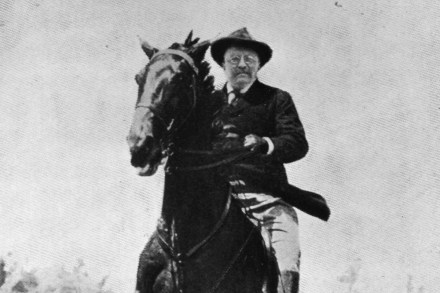
Theodore Rossevelt

How Trump can win the Nobel Peace Prize

Openly, President Trump has expressed a desire to win the Nobel Peace Prize. This is understandable. It is “the world’s most prestigious prize.” That is the judgment of the Oxford Dictionary of Contemporary World History. The prize is associated with some golden names: Albert Schweitzer, Andrei Sakharov, Mother Teresa. All of those were Nobel peace laureates. Of course, Yasser Arafat was too. The history of the prize is messy, like history itself. Last month, the Pakistani government nominated Trump for the Nobel Peace Prize. That was for his intervention in the Pakistani-Indian clash over Kashmir. The Indians were less keen on his intervention, but that is another matter. A veteran Pakistani politician, Senator Mushahid Hussain, had a wry, realistic comment.
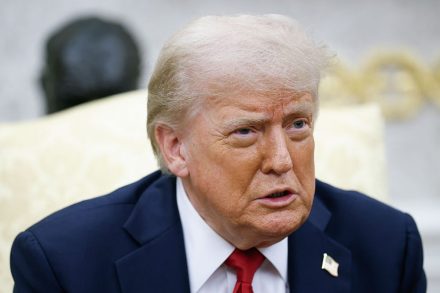

Trump

‘I had two jobs: to run the country and to survive’: an interview with President Trump

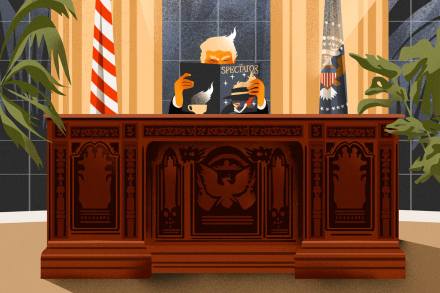
From the moment you enter Donald J. Trump’s Oval Office, you are surrounded, not by staff or Secret Service, but by presidents. In his second term, he has chosen to envelop himself in Americana to an unprecedented degree. He faces Franklin D. Roosevelt whenever he sits at his desk. Looking back are Teddy Roosevelt, Lincoln, McKinley, Polk, Jackson, Jefferson, and alone among them as a non-president, Franklin. Ronald Reagan looks over his shoulder for every decision he makes. “We took them out of the vaults. We have incredible vaults of things,” he tells me. “They have 3,900 paintings.” It’s a roster of the greatest American leaders assembled in an oval around him in their most sterling depictions. They serve as motivation.

Trump’s attitude on Executive Orders is nothing new

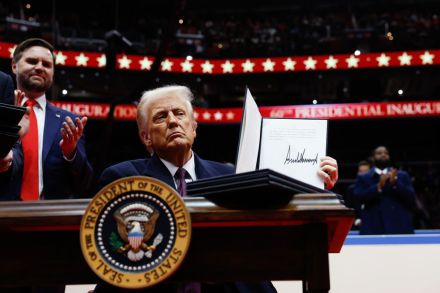
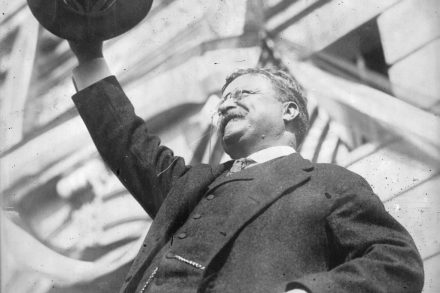
President Donald Trump wasted no time implementing his agenda after taking the oath of office on Monday. He’s issued more than two dozen Executive Orders (and counting), touching everything from immigration to affirmative action to trade. The orders may align with his campaign promises, but underscore a broader trend in American politics: the increasing reliance on executive power over congressional votes. The attitude is far from new. The rise in Executive Orders can be traced back to the beginning of the twentieth century. Theodore Roosevelt issued 1,005 Executive Orders from 1901 to 1909. Woodrow Wilson wrote 1,767 from 1913 to 1921. Herbert Hoover issued 1,003 from 1929 to 1933.

Donald Trump’s Roosevelt moment

Donald Trump loves to repeat this famous line at his rallies: “At the end of the day, they’re not coming after me. They’re coming after you, and I’m just standing in the way.” While his strongest supporters believe it, ever since he descended that escalator, his detractors have depicted him as a self-obsessed, egotistical megalomaniac. After what transpired in Butler, Pennsylvania, last night, when a bloody-faced Donald Trump stood up after almost losing his life, waving his fist in the air, asking his audience to “fight,” there should be no doubt: Donald Trump has a lot of courage and the strong sense that he is fighting for a cause greater than himself.

roosevelt

Adieu, Teddy Roosevelt

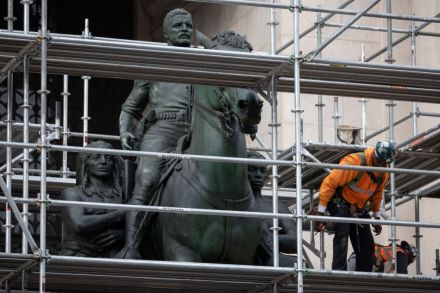
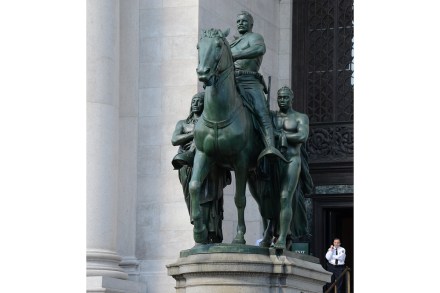
It is a custom to offer a blindfold to prisoners facing a firing squad. Just so, the authorities covered the statue of Teddy Roosevelt that has stood in front of the American Museum of Natural History before it is carted off to its new home in North Dakota. Everywhere one turns, America’s past is being dismantled. Just last month, a statue of Thomas Jefferson that had graced New York’s City Hall for 187 year was removed.  At schools and colleges across the country, images are being covered or removed, buildings renamed, history rewritten. It’s open season on the past. Back in June 2020, I wrote about the decision to remove the statue of Roosevelt from in front of the institution he help to found.

roosevelt

Whatever happened to the heroes?

Thomas Carlyle, in ‘Heroes, Hero-worship and the Heroic in History,’ divided heroes into six categories in order of human greatness as he conceived it: the hero as divinity, as prophet, as poet, as priest, as man of letters and as king, the heroic ruler of men who in Carlyle’s own description is the actual philosopher-king. In the modern world, kings have been replaced by prime ministers, presidents, strongmen and dictators; that is to say, by politicians of one sort or another. No one with the qualifying virtues of such a man would descend to the moral level of a tyrant, while no mere politician is endowed with the wisdom, gifts and virtues either of a kingly philosopher or a philosophic king, whom no democratic electorate would elevate to the office anyway.

heroes

The Great Self Hate

A group of children recently gathered one morning near the Soldiers’ and Sailors’ Monument in Riverside Park. The adults in charge handed out brightly colored pieces of chalk and soon the sidewalk and plaza were cheerfully adorned with mottos such as Black Lives Matter, Black Trans Lives Matter, Tell Me Why the Police Need Tanks, Let Justice Roll Down, and — my favorite — Burn It Down.  Burn down the Soldiers’ and Sailors’ Monument? No need. New York City has had it roped off for years as it crumbles away.   The 96-foot monument was in its time a tribute to the New York soldiers and sailors who fought for the Union during the Civil War. The cornerstone was laid in 1899 by Gov.

great self hate

Teddy Roosevelt saw this mob coming

So now they have come for Teddy Roosevelt. The large bronze statue of TR on horseback, flanked by a black man and an American Indian, will be removed from the spot it has graced since 1940 in front of New York’s Museum of Natural History. Why? According to Warren Wilhelm Jr — known to some as Bill de Blasio — the statue is being moved (to where no one yet knows) ‘because it explicitly depicts Black and Indigenous people as subjugated and racially inferior.’ Does it? I don’t think so. I think both flanking figures exude strength and dignity. I also think they stand in solidarity with the jovially commanding figure of Roosevelt.

theodore roosevelt