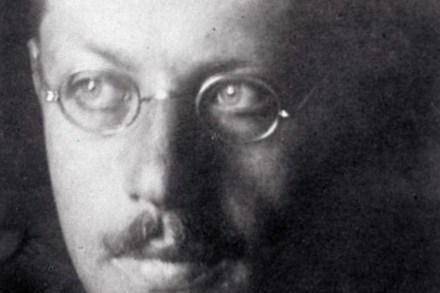
How the paralysed Franz Rosenzweig continued to translate the Bible
In the early years of the 20th century, a young philosopher named Franz Rosenzweig (1886-1929) set himself the task of revitalising German Jewry – of bringing German Jews in from what he saw as the periphery of assimilation to the centre of a living faith. He thus became one of the pioneers of a Renaissance in German Jewry that occurred during the turbulent years of the Weimar Republic (1919-33). This short, dense biography by Paul Mendes-Flohr, an expert on 19th- and 20th-century Jewish thinkers, who died in 2024, aged 83, also highlights Rosenzweig’s existentialism (which saw him break from the western philosophical tradition by elevating subjective experience over abstract theorising) and his influence as an educator.