The picture of dorian gray

The Picture of Dorian Gray is headache-inducing

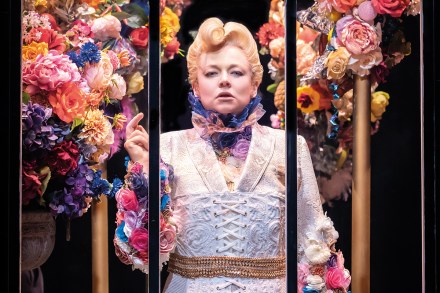
The Picture of Dorian Gray begins on an unadorned note. Sarah Snook sits alone on an otherwise empty stage, facing a camera which projects her image on to a giant vertical screen. Chameleon-like, she switches instantaneously between two characters: the awkward but sincere painter Basil and his more debonair – and dastardly – friend Lord Henry. Snook may be Australian and a woman, but borne on her considerable gifts we are transported to Victorian England. With no props save a paintbrush for Basil and a cigarette for Lord Henry, Snook chops and changes between the two men: she contorts her face into nervy, painful subservience for Basil and her voice into a high, febrile whine.
Dorian

The curious influence of Oscar Wilde on Hollywood

From our UK edition

The Importance of Being Earnest was NBC’s first coast-to-coast broadcast of a play in 1929. It was ideal for radio, partly because Oscar Wilde’s crisp dialogue obviated any need of facial expressions or gestures. Epigrammatic speech, as Noël Coward found, was a signifier of modernity in the 1920s. Beyond that, as Kate Hext shows, the America of Calvin Coolidge and Herbert Hoover had a sinewy and hardy sympathy for the Anglo-French fin-de-siècle literary mode of the 1890s known as Decadence.

Promising material squandered: BKLYN – The Musical reviewed

From our UK edition

BKLYN — The Musical gives itself a headache for no reason. What does ‘BKLYN’ mean? Perhaps it’s a random jumble of letters caused by a muffin landing on the keyboard. A punter who sees the title once and later looks it up online is unlikely to recall the precise order of the letters, and his search will probably fail. And he’ll have trouble discussing the show with his friends because he won’t know how ‘BKLYN’ is pronounced. It turns out that the show’s heroine is called Brooklyn, and the writers decided to capitalise her name and extract three of its letters. Sensible theatre-makers don’t create problems like this for themselves.