What this new history of Brexit gets right
From our UK edition
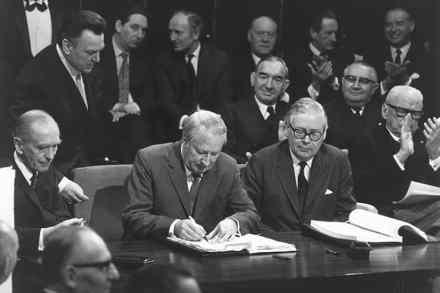
Why did the United Kingdom leave the European Union? Perhaps it might be better to ask why did it ever join. Tom McTague attempts to answer both questions in this panoramic history of British – and continental – politics from 1942 to the present day. It is to the author’s great credit that he approaches a debate which has polarised politics and shattered friendships with disciplined, but never anaemic, detachment. It is hard to think of many books which leave one admiring both Edward Heath and Enoch Powell more. McTague has set himself a formidable task in seeking to explain the two most consequential decisions of British postwar politics. That he does so not just with fair-mindedness but mastery of narrative sweep and fresh perspective makes this a significant achievement.