The enlightenment

Blame the Enlightenment for species extinction

From our UK edition

As if she hadn’t got enough on her plate already, the high-powered Danish journalist and mother of three Lea Korsgaard decides to track down all Danish butterfly species in a single summer. She knows nothing about butterflies, claims to be unsure about what has sparked her unusual ambition and sets about learning a new language – of nature, lepidoptera and obsession – with a disarming lack of expertise. The nature-quest narrative is an eccentric but surprisingly well-populated subgenre of nature writing. Midway through my own journey to find all British butterfly species in one year, I was devastated to discover that there was an earlier book on the same undertaking by Robin Page.
The melancholy genius of Joseph Wright of Derby

From our UK edition

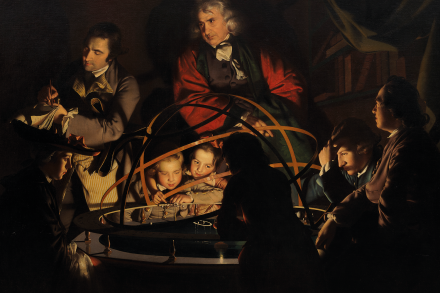
If you lived in the 1760s and were affluent enough – and curious enough – science could be a family affair. The instrument maker Benjamin Martin actually marketed scientific equipment for amateurs, complete with an instruction manual listing simple, edifying experiments for home enjoyment. And so in 1768, in ‘An Experiment on a Bird in the Air Pump’, Joseph Wright (1734-97) painted a group of family and friends attempting Experiment 42 in Martin’s manual. You’re sure to have seen it: a darkened room with a white bird wilting in a glass bulb while the faces of the participants – a magus-like scientist, a fashionable couple, a frightened little girl burying her face in her dad’s coat – are half-illumined in a pure, almost supernatural light.

Liberty is a loaded word

From our UK edition

Just about everyone is for liberty, but we mean different things by it. Far-right libertarians want almost all constraints on their actions removed. They desire free markets, no unions, low taxes, free speech and the freedom to be very rich. The oppressed want freedom from tyranny: in extremis, they want to be free from jail and free to live without the threat of arbitrary arrest and torture. The moderately oppressed want more freedom than they have now, but within the context of a functioning democracy that is more equal, and more supportive, than the kind of society imagined by the right. They make a distinction between liberty and licence (complete freedom) of the kind that results in the pike dining at leisure on the minnows.

The Georgians feel closer to us now than the Victorians

From our UK edition

‘The two most fascinating subjects in the universe are sex and the 18th century,’ declared the novelist Brigid Brophy when the ban on Fanny Hill was lifted in 1963. Penelope Corfield’s big, handsome, enjoyable book goes a good way to illustrating Brophy’s assertion. Part source book, part interpretive history of the long 18th century (1688-1837), it is also a guide and gazetteer to the continuing presence of Georgian England in our towns and minds. The world before 1688 is largely unfamiliar to us. The 18th century, however, with its lovable rogues, its introduction of constitutional monarchy, its rights of man and its sexual libertines, is akin to ours.

There’s nothing a white person can do about racism, says Dr Kehinde Andrews

From our UK edition

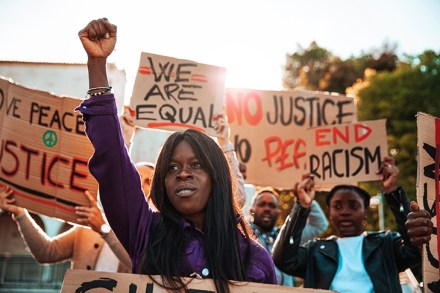
After the death of George Floyd last year, and the subsequent Black Lives Matter protests around the world, racism is one of the hot-button issues of our time. And, according to Kehinde Andrews’s new book, The New Age of Empire: How Racism and Colonialism Still Rule the World, it is embedded deeply in the West: A central thesis of this book is that White supremacy, and therefore anti-Blackness, is the fundamental basis of the political and economic system and therefore infects all interactions, institutions and ideas. Andrews maintains this uncompromising tone throughout.

Mozart the infant prodigy was also a child of the Enlightenment

From our UK edition

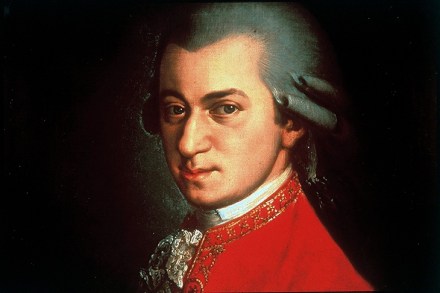
‘My dear young man: don’t take it too hard,’ Joseph II counsels a puppyish Mozart, the colour of his hair unknown in nature. ‘Your work is ingenious. It’s quality work. And there are simply too many notes, that’s all. Just cut a few and it will be perfect.’ ‘Which few did you have in mind, your majesty?’, Mozart enquires, the sinisterly oleaginous F. Murray Abraham as Salieri quietly registering the subtle brilliance of Mozart’s grinning lèse-majesté. Those interested in the subject of Miloš Forman’s 1984 film Amadeus are today faced with a not dissimilar predicament: which of the millions of words written about Mozart should we cut?

The truth according to social justice

We have reached a point in history where the ideas that sustain the liberalism and modernity at the heart of western civilization are at great risk. The precise nature of this threat is complicated. It arises from at least two overwhelming pressures, one revolutionary and the other reactionary, that are at war over which illiberal direction our societies should be dragged. Far-right populist movements claim to make a last desperate stand for liberalism and democracy against a rising tide of progressivism and globalism. They are increasingly turning toward leadership in dictators and strongmen who can maintain and preserve ‘western’ sovereignty and values.

social justice

What the new nationalism means

This article is in The Spectator’s March 2020 US edition. Subscribe here. For most of the past 200 years, the left, whether revolutionary or liberal, derived power and popularity from being on the side of freedom. If you resented the economic, social and political privileges enjoyed by hereditary aristocrats and landowners, you were on the left. If you chafed against the restraints imposed on what you could read, write, say, think or do by established churches or majoritarian cultural Christianity, you had reason to support one left-wing movement or another — philosophes and Jacobins in the 18th century, liberals in the 19th century, the American Civil Liberties Union in the 20th.

email