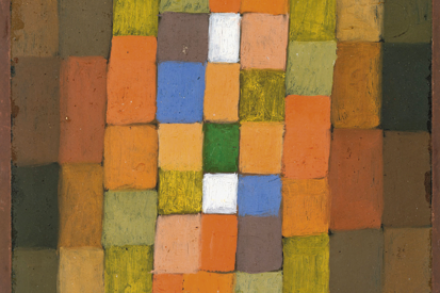
Is Paul Klee really a great modern master?
From our UK edition
There is a school of thought that sees Paul Klee (1879–1940) as more of a Swiss watchmaker than an artist, his paintings and drawings too perfect, too contrived. Viewing this new exhibition at Tate Modern, one might add that they are also too mannered and precious. I had been looking forward to this show, but going round it I found myself all too frequently impatient and disappointed. Yet Klee is a great modern master, you say; can he be dismissed so easily? Perhaps it is all in the selection of work, for Klee was prolific even though he died young, with a total output of about 10,000 paintings, drawings and works on paper, more than a thousand of which he made in the last year of his life.