Sweden

The shameful hypocrisy of Sweden’s ‘first feminist government’

From our UK edition

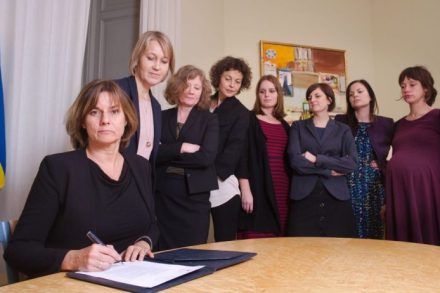
A couple of weeks ago I named the Labour MP Tulip Siddiq as my pious political hypocrite of the week, mainly for being silent on her bigoted aunty while strikingly vocal about a total stranger. I’m afraid that I was so overwhelmed by applicants for last week’s award that I have only just emerged from the pile of entries. However, I am now in a position to reveal the latest recipients of this increasingly coveted prize. Pipping even Speaker John Bercow to the award are the brave sisters of the Swedish government. Here is a photo from earlier this month of Isabella Lovin (Sweden’s Deputy Prime Minister, Minister for International Development Cooperation and Climate and spokesperson of Sweden’s Green Party).

Sweden: Multiple thrills, minimal risk

From our UK edition

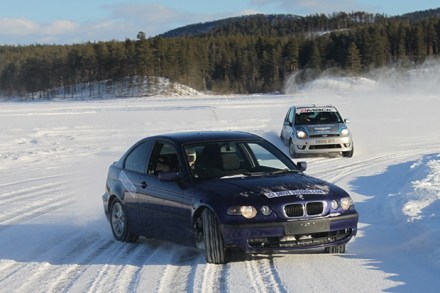
All too often in life there’s a gap between expectation and reality. Not with driving on ice. The expectation is tantalising, but the reality is demanding, exhilarating, and so much fun you’re surprised it’s legal. I’ve been doing it for 13 years, taking groups of around 15 on an annual trip to Sweden. Every single time it’s an absolute joy to witness the hilarity, thrills and sense of satisfaction that our guests enjoy in just three days. We start each visit with a little bit of theory for the technically minded — though nothing really prepares you for driving on a frozen lake. The fundamental skill to master is how to manage the gap between you telling the car to do something and it actually happening.

It’s not only Germany that covers up mass sex attacks by migrant men… Sweden’s record is shameful

From our UK edition

We’re closing 2016 by republishing our ten most-read articles of the year. Here’s No. 5: Ivar Arpi's piece, which was written following the mass sex attacks on women celebrating New Year’s Eve in Cologne. In his article, Arpi says that authorities in Sweden covered up similar incidents involving migrant men    Stockholm It took days for police to acknowledge the extent of the mass attacks on women celebrating New Year’s Eve in Cologne. The Germans were lucky; in Sweden, similar attacks have been taking place for more than a year and the authorities are still playing catch up. Only now is the truth emerging, both about the attacks and the cover-ups.

A bit player in the great drama

From our UK edition

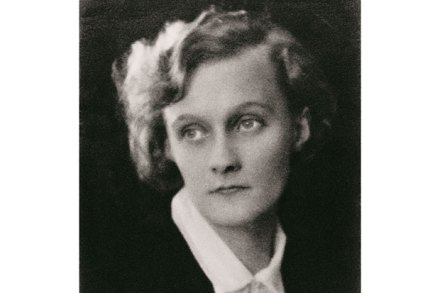
There’s a glorious scene in Astrid Lindgren’s first Pippi Longstocking book in which her fearless, freckled heroine strides to the centre of a circus ring and briskly lays out the World’s Strongest Man. Like most of the adults who expect to control her, he quickly learns that his inflated size, age and title are no match for the child’s bold pin-wielding attitude. As a little fan myself in the early 1980s I probably giggled as the strongman toppled. But reading it to my own children this summer I also felt a deep lurch of sadness. The strongman’s name was Adolf, and the book (published in 1945) was written as an equally ridiculous Adolf was sending train loads of bright little Pippis to their ‘final solution’.

The Spectator podcast: The Swedish model. How not to welcome refugees | 3 September 2016

From our UK edition

For a certain type of social democrat, no country gets them quite as hot and bothered as Sweden. As Toby Livendell writes in this week's Spectator cover story, Sweden has long regarded itself as a humanitarian superpower, taking in 650,000 asylum seekers in the last 15 years. But by far the biggest issue is integration. And this was brought to stark British attention last week when a Birmingham schoolboy was murdered with a grenade in Gothenburg. So, what has gone wrong in Sweden? To answer that question, Lara Prendergast is joined on the Spectator podcast by Fraser Nelson and Ivar Arpi. Ivar says: 'Basically the Swedish idealism ran into a big wall called reality in the autumn of 2015.

Sweden’s refugee crisis

From our UK edition

 Stockholm For a British boy to be killed by a grenade attack anywhere is appalling, but for it to happen in a suburb of Gothenburg should shatter a few illusions about Sweden. Last week’s murder of eight-year-old Yuusuf Warsame fits a pattern that Swedes have come slowly to recognise over the years. He was from Birmingham, visiting relatives, and was caught up in what Swedish police believe is a gang war within the Somali community. Last year, a four-year-old girl was killed by a car bomb outside Gothenburg, another apparent victim of gang violence.

The Spectator podcast: The Swedish model. How not to welcome refugees

From our UK edition

For a certain type of social democrat, no country gets them quite as hot and bothered as Sweden. As Toby Livendell writes in this week's Spectator cover story, Sweden has long regarded itself as a humanitarian superpower, taking in 650,000 asylum seekers in the last 15 years. But by far the biggest issue is integration. And this was brought to stark British attention last week when a Birmingham schoolboy was murdered with a grenade in Gothenburg. So, what has gone wrong in Sweden? To answer that question, Lara Prendergast is joined on the Spectator podcast by Fraser Nelson and Ivar Arpi. Ivar says: 'Basically the Swedish idealism ran into a big wall called reality in the autumn of 2015.

The power of song

From our UK edition

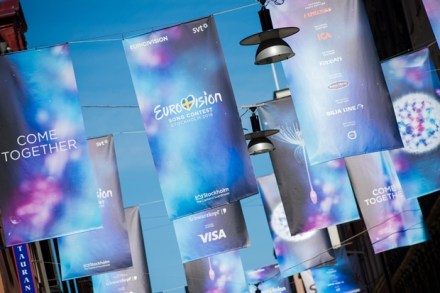
You might not think that the Eurovision Song Contest (screened live from Stockholm tonight) could have any connection with how we might choose to vote in the coming referendum. Surely it’s just a string of naff pop songs stuck together with fake glitter and a lot of false jollity? The songs are uniformly terrible, the show so overproduced it’s impossible not to mock its grandiosity, the idea that it conjures up the meaning of Europe laughably misplaced. But in a programme for the World Service that caught my attention because it sounded so counterintuitive, Nicola Clase, head of mission at the Swedish embassy in London, tried to persuade us otherwise.

Swedes tell Britain: if you leave the EU, we’ll follow

From our UK edition

If Britain were to leave the European Union, would it survive? Britain is one of the least enthusiastic members of the EU, but other more globally-minded countries are tiring of the protectionism and insularity in Brussels. Reformers in Sweden are aghast at the prospect of Brexit, seeing Britain as their main ally in trying to fight off protectionism (a recent study found an 89pc alignment of our interests, 88pc with the Dutch and Danes). But as many in Britain come to conclude that this fight is lost, and we're better off out, many Swedes are coming to the same conclusion. According to a poll by TNS Sifo, the largest polling firm in Sweden, 36 per cent of the Swedes would wish to leave the EU if Brits vote to leave, and just 32 per cent would stay.

A civilisation under siege

From our UK edition

[audioplayer src="http://rss.acast.com/viewfrom22/thedeportationgame/media.mp3" title="Douglas Murray and Don Flynn from the Migrants' Rights Network discuss deportation"] Listen [/audioplayer]There are two great deportation games. One is the carousel which Rod Liddle describes — but even this, for all its madness, pales alongside the border-security catastrophe unfolding on the continent. Thanks to geography and a few sensible decisions by our government, Britain has so far been spared the worst of the migrant crisis. But we should pity most of the other European countries, because they are losing control not just of their borders but of their civilisation and culture — the whole caboodle.

Why can’t the Swedish authorities be honest about crime and immigration?

From our UK edition

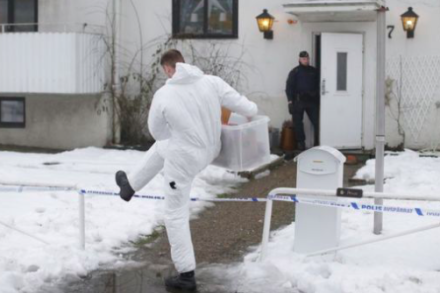
It’s hard to recognise Sweden from the news reports we're reading nowadays. Yesterday, a 15-year-old at an immigration centre stabbed and killed one of its female employees in Mölndal, near Gothenburg. It’s the kind of story that shakes the country to its core. Sweden has taken a staggering number of unaccompanied children - some 20,000 in the past four months - so the government has to act in loco parentis. To keep them out of trouble, as well as educate and accommodate then. It’s a very tough ask, a job that many Swedes fear is simply beyond the competence of government. In such circumstances, appalling things can happen. A police spokesman had this to say: 'It was messy, of course, a crime scene with blood.

Taharrush Gamea: has a new form of sexual harassment arrived in Europe?

From our UK edition

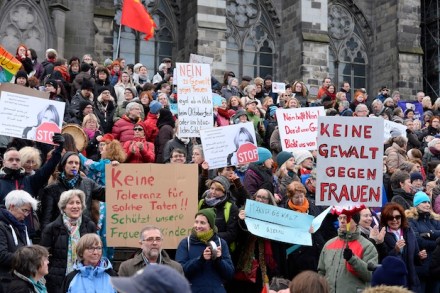
The Swedish and German authorities say they have never encountered anything like it: groups of men encircling then molesting women in large public gatherings. It happened in Cologne and Stockholm, but is it really unprecedented? Ivar Arpi argues in the new Spectator that it may well be connected to a phenomenon called ‘taharrush gamea’, a form of group harassment previously seen in Egypt. So what is taharrush gamea, and should Western police be worried? Here’s what we know. ‘Taharrush’ means sexual harassment – it’s a relatively modern word, which political scholar As'ad Abukhalil says dates back to at least the 1950s. ‘Gamea’ just means ‘collective’.

Sweden’s shameful cover-up

From our UK edition

   Stockholm It took days for police to acknowledge the extent of the mass attacks on women celebrating New Year’s Eve in Cologne. The Germans were lucky; in Sweden, similar attacks have been taking place for more than a year and the authorities are still playing catch up. Only now is the truth emerging, both about the attacks and the cover-ups. Stefan Löfven, our Prime Minister, has denounced a ‘double betrayal’ of women and has promised an investigation. But he ought to be asking this: what made the police and even journalists cover up the truth? The answer can be discovered in the reaction to the Cologne attacks. Sweden prides itself on its sexual equality and has even pioneered a feminist foreign policy.

A better way

From our UK edition

To say that the Paris attacks could have happened in Britain is not enough. Such attacks are being attempted here with terrifying regularity —seven have been thwarted so far this year alone. MI5’s official assessment is that a terrorist attack on British soil is ‘highly likely’. Our security services have so far been very good at keeping us safe. But as the IRA famously put it, spies have to be lucky all of the time, terrorists have to be lucky only once. So it is impossible for Britain to view events on the continent with any sense of complacency. Still, the Prime Minister was justified in pointing out last week that the more we learn about what happened in Paris, the more it justifies the policies that Britain has pursued.

The shocking rise of anti-refugee attacks in Sweden

From our UK edition

Sweden, perhaps the most open country in the world, is on course to take almost 200,000 asylum seekers this year. Adjust for population size and that's like the UK taking a refugee city the size of Birmingham. It can't cope. Yet political refusal to admit this is incubating concern - sending voters towards the anti-immigrant Sweden Democrat parties. But most shockingly, a trend is emerging of attacks on immigrants. I look at this in my Daily Telegraph column today. [datawrapper chart="http://static.spectator.co.uk/qjCco/index.html"] Sweden's government and opposition parties both dislike talking about immigration; they are too quick to dismiss concerns as xenophobia.

Special effects | 1 October 2015

From our UK edition

Maybe what we love about radio is the way that most of its programming allows us the luxury of staying content with ourselves, of realising that it’s OK to be no more, or less, than average. There’s no spangle, no sparkle on the wireless; nothing to make us feel we should be aspiring to live in a fake and fantastical world of gilded lives, to be uber-rich, super-tanned, ultra-happy. On the contrary, you could say most radio is a celebration of Ms or Mr Average. Think of all those short stories, plays, features and real-time, real-voice recordings which take us right inside (too far inside, some might say) the banality of most domestic situations.

Following the fickle fish

From our UK edition

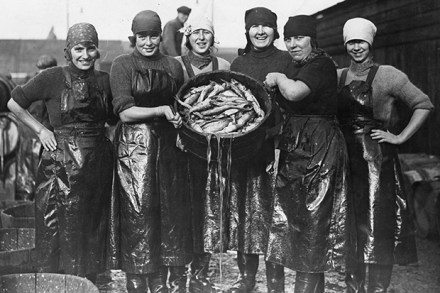
Fish stories come in two varieties: the micro-version of a hundred riverside bars, blokeish boastings of rod-and-line tussles with individual fish in which man and beast are fairly evenly matched. Then there is the macro-version, the one that tells of the fate of entire stocks — the cod of the Grand Banks, the European hake, the bluefin tuna of the Mediterranean, the haddock of the Atlantic, the whale everywhere. In this version, technology and greed have the upper hand and the narrative invariably moves from scenes of boundless plenty to ones of catastrophic scarcity. Donald S. Murray’s Herring Tales is one of these. As a native of Lewis, a Gaelic speaker, he recalls Stornaway crammed with herring boats; you could cross the harbour on their decks.

Barometer | 10 September 2015

From our UK edition

Old bags The government announced details of a compulsory 5p charge for single-use plastic bags in shops. Plastic bags have only been around since 1960, when they were first produced by the Swedish firm Akerlund and Rausing, later to give the world the Tetrapak. The first store to use them was Strom, a shoe-shop chain whose owner had complained paper bags were too weak. The first plastic bags had cord handles; a design with integral handle was patented in 1965 by the Swedish company Celloplast, which went on to enjoy a decade of monopoly. Places of refuge David Cameron said that Britain would take 20,000 more Syrian refugees over the next five years. According to UN High Commissioner for Refugees, the UK had a population of 126,055 in 2013, the 25th highest in the world. Who had the most?

The anti-immigration Sweden Democrats are now the no1 force in Sweden, polls show

From our UK edition

On the Swedish election before last, there was shock that the populist Sweden Democrats ended up with a foothold in parliament. Even more shock when they did well enough in last year's election to topple the conservative-led government. Sweden's parliament works on coalitions, but no party wants to do any kind of deal with Sweden Democrats. They're regarded as toxic, beyond-the-pale. But now, according to a shock YouGov poll today, they're the no1 party in Sweden. At first it was argued: let these lunatics come to parliament! They're nuts, let everyone see how mad they are! In fact, they've been coming pretty well-prepared to debates in the Swedish Parliament - even the ones that are not televised.

Summer listening

From our UK edition

Just back from a few nights in Sweden to find the perfect programme on Radio 3. It was one of those interval shorts that are always such a nightly bonus during the Proms season. That 20-minute space between concert halves is the perfect length for listening. On Sunday night it was Kate Clanchy’s turn to fill in between Sibelius symphonies and what better topic than The Summer House (produced by Julian May), or rather the stuga, mokki, sommerhus or dacha beloved of Scandinavians and Russians, where Sibelius would retreat to write those symphonies redolent of dark woods and deep waters. Here the hassle and routine of city life are abandoned and days are spent chopping wood, gathering cloudberries or just soaking up the long-awaited sunlight.