Survival

Four months adrift in the Pacific: a couple’s extraordinary feat of endurance

From our UK edition

It is every writer’s dream to glimpse, peeping out from behind a news story or feature, the contours of a book. Brian Masters was eating his breakfast on 12 February 1983 when he read in the morning papers reports of the arrest of a mildly spoken Jobcentre employee accused of strangling a number of men with whose flesh he had blocked the drains in his flat in Muswell Hill. Masters wrote to Dennis Nilsen. Nilsen wrote back: ‘Dear Mr Masters, I pass the burden of my life on to your shoulders.’ After Nilsen had filled 50 prison notebooks, Masters embarked on Killing for Company, surely the grisliest yet most poignant biography of a serial killer ever written.


The last battle: The Future, by Naomi Alderman, reviewed

From our UK edition

The sirens sound in the street. The lockdown order comes. The images on the television are of chaos and illness, total societal collapse. The apocalypse is here, and where are the rich? Already holed up in their survival compounds, ready to ride out the end of the world before emerging to take control of what’s left of it for themselves. Billionaire preppers and their plans for Bond-villain bunkers have now pervaded the public imagination to the extent that this year we have two novels dealing with the phenomenon. First there was Eleanor Catton’s Birnam Wood, which took inspiration from Peter Thiel’s efforts to build a bunker in New Zealand.

65 is a better B-movie than it has any right to be

Growing up, one of my favorite books was Gary Paulsen’s Hatchet, the story of a boy whose plane crash-lands in the Canadian wilderness and who must then fend for survival with only a single tool. 65 tries to pull off something similar, but with dinosaurs and sci-fi weapons. And bizarrely enough, it's a far better B-movie than it has any right to be. Yes, the setup of this film is seriously convoluted. Adam Driver stars as Mills, a long-haul space shipper who works for a spacefaring human civilization based on a planet other than Earth. When his vessel collides with an unexpected asteroid belt, he’s forced to crash-land on Earth — 65 million years before the present day. That’s right: this film takes place a long time ago, but in a galaxy not quite so far away.

Heading west to escape liberal tyranny

As our nation navigates a “return to normalcy” in a post-Covid world, one return most workers won’t be making is to the office. And as an estimated 40.7 million American professionals plan to be working fully remotely within the next five years, expect the great political divide to widen as liberals and conservatives move farther apart, both ideologically and physically. With working from home becoming the norm, “home” for many people is changing. “Anywhere from 14 to 23 million Americans are planning to move as a result of remote work,” an Upwork.com study taken at the height of the pandemic found. “[N]ear-term migration rates may be three to four times what they normally are.” Where are workers moving to? Away from cities, for starters. A majority (52.

My polar journey puts coronavirus isolation into perspective

From our UK edition

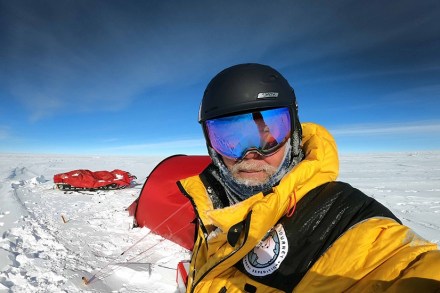
I arrived on Novolazarevskaya base on the northern coast of Antarctica in a Russian plane, flown by an ex-USSR air force pilot and his crew. I was here to begin the longest non-mechanised polar journey ever done by man — 5,306 km to the summit of Dome Argus, the highest and coldest point of the Antarctic plateau. The next morning, I headed south towards the Somo Veken glacier with my drop-off team. Over 14 hours we climbed to 9,000 feet and passed between majestic mountains jagged and untouched. Eventually we stopped between two peaks. This was Thor’s Hammer, my start point. After we unloaded the sleds, the cars turned, headed north and were gone. The silence drilled into me, as did the intense cold (-28˚C). The two sensations partnered to raise fear as I put up my tent.