Superheroes

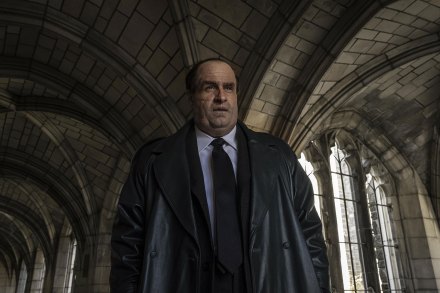
Like The Joker, but less pretentious: The Penguin reviewed

From our UK edition

Doctor Who fans may remember that after the show’s triumphant return in the early 2000s, we found out that showrunner Russell T. Davies had agreed with BBC mandarins to rid the franchise of some of its more unwieldy elements in order to make it palatable to casual viewers. Gotham City has long been the perfect backdrop for old-fashioned noir, and the city is on fine fettle here Watching the debut episode of The Penguin, HBO’s new crime series (available on Sky Atlantic), based on a popular Batman villain, I suspected a similar game was at play. The series might be visibly set in the Batman universe, but it’s also very much detached from the nerdiness that emanates from DC Comics. Think the film adaptation of The Joker, only much less pretentious.
The death of Superman

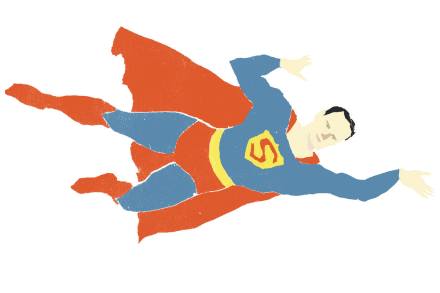
In 2003, the Scottish comic book writer Mark Millar penned a three-part illustrated series for DC Comics titled Red Son. In it, he creates an alternate Superman universe that hypothesizes what would have happened had the Kryptonian orphan’s rocket landed in Soviet-occupied Ukraine, instead of Kansas, in 1953. Superman becomes a state agent for Joseph Stalin’s Kremlin. Instead of saving the world in the name of “truth, justice and the American Way,” he fights as “the champion of the common worker,” for socialism and the expansion of the Warsaw Pact.

superman

What is the point of the DC superhero films?

Say what you like about the Marvel Cinematic Universe (or the MCU, for short) — and I do, frequently — but you can’t deny that it has a grim efficiency. The MCU impressively herds tens of millions of unsuspecting moviegoers into theaters to watch the latest incomprehensible special effects behemoth, with a wildly overqualified and suitably embarrassed cast. As I write this, the latest installment to threaten audiences is Ant-Man and the Wasp: Quantumania. Now I don’t know what Quantumania is, and I will be perfectly happy to never find out. But as the previous film, Ant-Man and the Wasp (the titles lack a certain finesse), made more than $600 million at the box office, I accept I might be in the minority.

Black Panther’s claws are still sharp

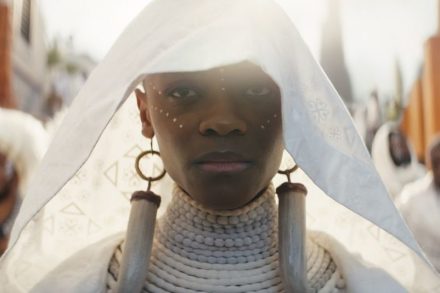
Heading into this film, director Ryan Coogler confronted a virtually impossible situation: the sudden, tragic passing of his franchise’s leading man. Chadwick Boseman’s untimely 2020 death casts a long shadow over Black Panther: Wakanda Forever. The fact that the movie is coherent at all is remarkable. That’s probably underselling things, though. From an action standpoint, Wakanda Forever is a serviceable — if somewhat less inspired than its predecessor — Marvel epic. Beneath all the CGI, it’s a surprisingly meditative passing of the torch. Following the death of King T’Challa (Boseman) from an unspecified illness, the cloistered Afrofuturist nation of Wakanda reels.

black panther wakanda forever

Evocative tribute to the orphaned caped crusader: Superheroes, Orphans & Origins at the Foundling Museum reviewed

From our UK edition

Instead of wasting money, like other museums, on extravagant architectural statements, the Foundling Museum in Brunswick Square has sensibly chosen to welcome visitors with a written statement. In 2014 it commissioned the poet Lemn Sissay, who spent his teenage years in a children’s home, to create a memorial in its entrance hall to the many parentless heroes and heroines in fiction. ‘Heathcliff was a foundling… Harry Potter was fostered… Dorothy Gale was adopted… James Bond was fostered…’ The list goes on, running to more than 100 names. Sissay’s mural will trigger a lightbulb moment for any dimwit like me who has failed to notice this narrative trope – and there are further revelations in the show downstairs.

Relentless and shouty: BBC2’s Then Barbara met Alan reviewed

From our UK edition

BBC2’s one-off drama Then Barbara Met Alan (Monday) told the true story of how two disabled performers on the cabaret circuit of the 1990s fell in love and campaigned together successfully for disability rights. Most of the cast and a lot of the crew were people with disabilities themselves, and the programme provided a startling reminder of how recently Britain was still a country that made little provision for the disabled – and, even more startlingly, of how controversial the idea of such provision then seemed. The central performances were rivetingly good, and the overall sense was of a heartfelt tribute being paid to a couple who did much to improve the lives of many thousands of people.

The true superhero is Douglas Wolk – who has read through 27,000 Marvel comics

From our UK edition

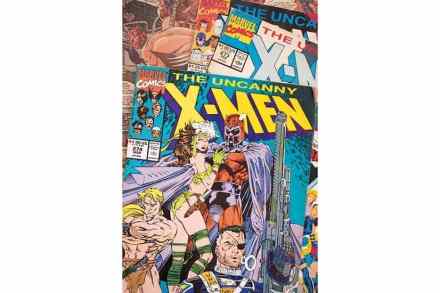
In March 1963, the Fantastic Four had a fractious encounter with Spider-Man and a dust-up with the Hulk — a busy month which effectively launched the Marvel Universe as an ecosystem of characters whose individual stories all contributed to one giant narrative. There is nothing quite like it: an endless, collaborative roman-fleuve of wildly variable quality, constructed over several decades by hundreds of writers, artists and editors, driven by a combination of personnel changes, marketing schemes and hasty improvisations. As a 14-year-old Marvel nut, I had a decent handle on it; but now, if I nostalgically check out a character’s Wikipedia page, I’m swamped by an unfathomable splurge of deaths, resurrections, shifting alliances and parallel universes.

Audiences don’t want woke: comic-book writer Mark Millar interviewed

From our UK edition

Mark Millar has a raging hangover but he couldn’t be more chirpy or enthusiastic. ‘People say they get worse as you get older but I get reverse hangovers where I feel amazing. I wake up at four or five and I’m ready to go!’ I’ve caught him on a Sunday morning, on his way to Mass, after an exhausting three weeks in which he has been doing up to 45 interviews a day to promote Jupiter’s Legacy, his blockbuster superhero series for Netflix. He ought to be nervous: this is his first big project off the blocks since (in 2017) the studio bought up his publishing company Millarworld for a reported $50-100 million. Instead, as ever, he’s fizzing with energy, enthusiasm and optimism. The reason, he explains, is that he was born with a kind of superpower.

Boys will be boys

In The Dark Knight, one of the best superhero movies, the Joker presents Batman with a serious dilemma: he must choose between saving his romantic interest, Rachel, or Gotham’s ‘white knight’ DA, Harvey Dent. Batman makes the ‘wrong’ decision and runs off to save Rachel, only to discover the Joker has tricked him, and sent him to Harvey instead. The moral gray area isn’t that rare in modern superhero movies. Tony Stark (Iron Man) is otherwise a pompous, drunken lothario. Thor and Hawkeye react to a crushing defeat in battle by becoming a fat, lazy shut-in and a vigilante, respectively.

boys

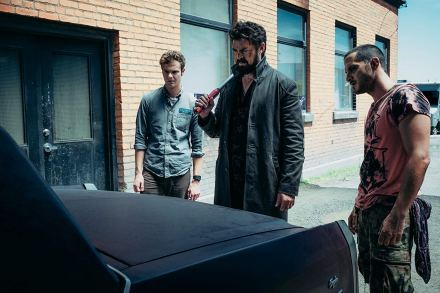
Sick, puerile, inappropriate and delicious: Amazon Prime’s The Boys reviewed

From our UK edition

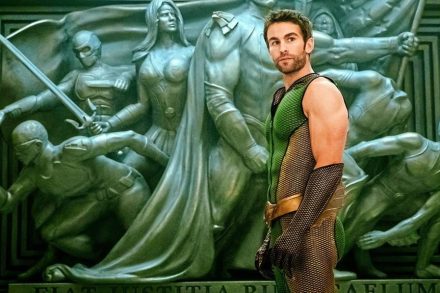
There’s a delicious scene in the new season of Amazon’s superheroes-gone-bad series The Boys. The chief superhero Homelander (Antony Starr) is introduced by a minion to a potential new member of his elite superhero group, the Seven. Homelander watches this bright new talent performing wonders in a gym-style training zone: the young man is agile, eager, skilled with weaponry; but perhaps his most valuable features, the minion suggests, are that he is disabled and belongs to an ethnic minority. This could play really well with the youth demographic, who are into that kind of woke stuff, the aide suggests. The potential recruit approaches Homelander, sweet, modest and starstruck.

Cartoonish deaths, dark humor and the worst British accent since Dick Van Dyke

The Boys (Amazon Prime) is a superhero series for people who hate superheroes. That's me all over, which is probably why I've loved every moment of four episodes I've seen so far. It's based on a comic book by Garth Ennis (Preacher; Punisher) who also hates superheroes. 'Personally, not having grown up with superheroes, I find them completely moronic,' he said in a recent interview I could only access by having to use a VPN hider to pretend I wasn't in the EU (seriously we can't leave that overregulated dump soon enough). And: 'The notion that the medium I work in is dominated (and, sadly, defined) by such a stupid genre is not one that feeds my sense of idealism.' Ennis claims to object to superheroes on moral grounds: they are glibly escapist and ignore the world's real problems.

the boys