Strait of Hormuz

Iran and America’s new protection racket

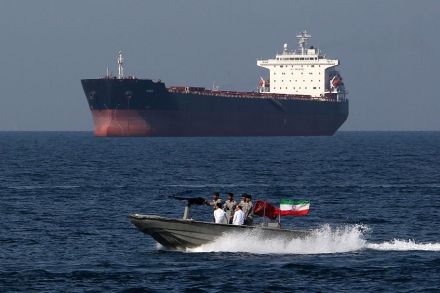
“Whoever rules the waves rules the world” – Alfred Thayer Mahan. Would Donald Trump have attacked Iran on February 28 if the Supreme Court had not ruled against his tariffs on February 20? The two issues may seem unrelated. Yet, as a fascinating piece by Captain John Konrad has pointed out, a closer inspection of Trump’s international agenda reveals his administration’s intense focus on trade, energy and maritime control – and that might help explain the otherwise inexplicable folly of the situation in the Strait of Hormuz.  Trump is determined to bring about an American Golden Age. That involves controlling gas and oil, aggressively reducing China’s expanding control of shipping lanes, and

Strait of Hormuz

Iran and the crisis in the European mind

The politics of the Iranian war feature an observable gap between interest and action for nearly all parties. The Americans possessed overwhelming casus belli versus Iran for nearly half a century, and did not act upon it until three weeks past. The Iranians possessed none against America for just as long, but exerted themselves with religious fanaticism to bring this war upon themselves. The Arab autocracies of the Persian-Gulf region find themselves under direct attack from the Iranians, but do not respond in kind. The Chinese observe a core strategic proxy and key commodities supplier taken off the chessboard – for the second time in under 90 days – and

Europe

What Signalgate tells us about Iran

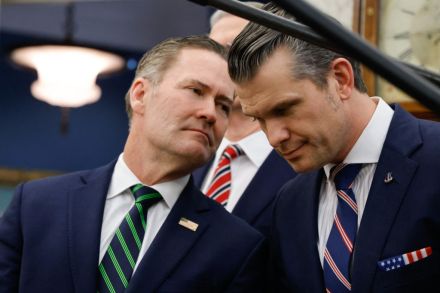
Remember Signalgate? It was quite the story, and worth revisiting now in light of Operation Epic Fury, the ongoing crisis in the Strait of Hormuz and its dire implications for the global economy.  In March last year, Donald Trump’s then National Security Advisor, Mike Waltz, somehow added Jeffrey Goldberg, the editor-in-chief of the Atlantic, to a Signal messaging group for senior government officials to discuss top secret military action against the Houthis in Yemen. The group included the Vice President J.D. Vance, Secretary of State Marco Rubio, Defense Secretary Pete Hegseth, Director of National Intelligence Tulsi Gabbard, White House Chief of Staff Susie Wiles and deputy chief of staff Stephen Miller,

hegseth signalgate walt

Trump has been caught flat-footed on Iran

Donald Trump has become something of a sole man. His cabinet members and White House visitors report that the president has developed a penchant for handing out $145 Florsheim shoes in an effort to up their sartorial game. In his Life of Johnson, Boswell reported that Dr. Johnson recoiled at an “eleemosynary supply” of shoes as an impecunious student at Christ Church, Oxford and threw them away with indignation. Trump’s followers have no such freedom of action. “All the boys have them,” one official told the Wall Street Journal, which ran a picture of his administration leaders obediently lined up and wearing the same shiny black leather numbers. The war increasingly resembles a prolonged exercise in folie de

Will the war in Iran really weaken China?

Analogies in international politics are tricky and easily abused, yet they remain irresistible because they can illuminate patterns that are otherwise hard to see. Consider the present moment.  Just as Ukraine has become a growing burden for Washington and its Western allies, Iran is now a strategic burden for Moscow and Beijing. The US, particularly under the Trump administration, appears to be placing less emphasis on supporting Ukraine. Something similar may be happening in reverse with Iran.  Moscow continues to provide Tehran with assistance – most notably intelligence on US military targets – but the broader pattern suggests caution rather than deep commitment. Beijing, despite its close ties with Iran,

China Iran

The Iran war has exacerbated the failure of European energy policies

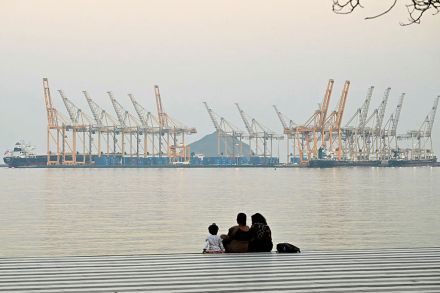
The history of the global trading system is a story of narrow and vulnerable waterways: the Suez and Panama Canals, the St. Lawrence Seaway, the Straits of Dover and the Skagerrak, which defends the entrance to the Baltic. But none has the power to seize up the global economy as much as the Strait of Hormuz. Barely 30 miles wide at the narrowest point and bounded on one side by the state of Iran, this passage is used for a quarter of the world’s oil supplies and a fifth of its liquified natural gas (LNG). As we have now discovered, the consequences of disruption are severe: on the day that

energy