Stoke-on-Trent

The joy of willow-pattern ceramics

From our UK edition

My granny used Spode willow-pattern crockery for everyday use. There was another grander service for Sunday lunch, also blue-and-white chinoiserie: Booths dragon, picked out with a gold border. Willow pattern evokes for me the taste of slightly stale ginger biscuits, which I liked very much, and coronation chicken, which I was less keen on. The idea of owning a table service now seems close to antediluvian; too formal and too much washing-up, although this was a ritual that mattered greatly to Granny. People now prefer plates that give a dull clunk when flicked, rather than fine china’s dulcet ping. Such changes of fashion were a factor in the 2008 closure of the Spode factory in Stoke-on-Trent, which had been producing willow-pattern plates since the 1790s.
Energy prices are shattering Britain’s remaining potteries

From our UK edition

The ceramics industry of Stoke-on-Trent is one of the great survivors of the Victorian era. At its height, some 70,000 people were employed by the likes of Wedgwood and Spode to work in the potteries. Despite the Clean Air Act of 1956 – which banned coal-fired kilns – the deindustrialisation of the 1980s and the struggle to compete against the rise of cheaply made Chinese goods, the industry lives on and still employs around 7,000 people, manufacturing everything from teapots to tiles for the London Underground. In 2022, some companies saw their six-month energy bills rise tenfold Stoke can at times seem like it’s living in the ruins of its past – but while the ceramics sector is no longer a large industry, it is still hugely important to the city.

Could AI lead to a revival of decorative beauty?

From our UK edition

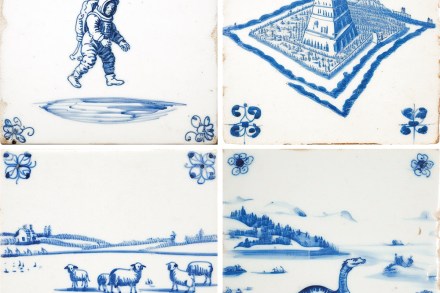
In front of me is what appears to be an authentic Delft tile. The surface of the tile is mottled, and painted on to it is a picture of a man. The blue tones blur and fade into the edges. Delicate brush strokes are visible if you peer closely. It looks as though it were made many years ago. Except it wasn’t. It was designed this morning by artificial intelligence and created in a small factory near Stoke-on-Trent, using some of the most advanced printing technology available. ‘Josiah Wedgwood would have loved what we are doing… I suspect William Morris would have hated it,’ says Adam Davies, the co-founder of the company creating these tiles.