Society

Why DC loves to hate Partiful

If you’re under 50, you may have noticed that Partiful has quietly annexed the American social calendar over the past year or two. The event-planning app, founded by former Palantir employees, began as another Silicon Valley toy, but it didn’t stay regional for long. Its loud dashboard aesthetic spread quickly through the Bay Area and then achieved escape velocity in Washington, DC. I wouldn’t be surprised if the strong cultural current between tech and defense is what created near-perfect conditions for a social revival in nerd world. While I understand a bit of snobbery over the aesthetics, I’ve been surprised by the constant performative disdain I’ve observed accompanying its rise. Everywhere I go, I hear people say they “hate” Partiful.

partiful

Beautiful interiors can’t guarantee a beautiful marriage

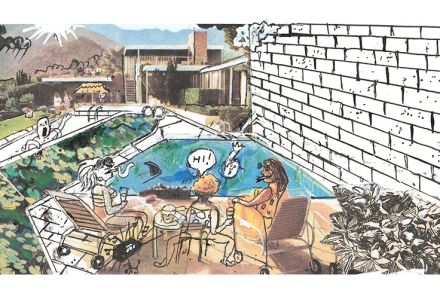
I remember poring over the photos when they first appeared in Architectural Digest in early 2023. Even back then, before Lily Allen wrote what Rolling Stone called “the most brutal album of the year,” I knew in my gut that her marriage to that actor guy she met on Raya – whatshisface? David Strangerbeard? – wouldn’t last. Because looking at the pictures of their house made me feel queasy. There was something off about it. It just wasn’t right. It didn’t bode well. It’s not that the house wasn’t gorgeous. It was – and still is – spectacular. A double-width brownstone in the slouchiest artisanal urban village on Earth: Carroll Gardens, Brooklyn.

Against flakes

A new drinks-party-shirking method has taken hold in society. I call it “Lastminute.non.” Previously, the way of not going to someone’s party was to write a polite message of refusal at least a week in advance, giving the host or hostess ample time to absorb the sad but inevitable fact that various friends would not be able to attend – usually for copper-bottomed reasons, such as that they had other plans for the evening or would be away on holiday. The new trend seems to be to accept an invitation, and then, mere hours before, to duck out of it. This means that from breakfast time onward throughout the day of the party, the host will receive a steady stream of apologetic messages. It happened to me last month, on the day of the launch of my debut novella at a bookshop.

dr strangelove

The Dr. Strangelove taxonomy of DC types

I tweeted the other day that my social life in Trump’s DC is just getting dinner or drinks with a different Dr. Strangelove character every week. It sounds like an exaggeration, but it’s not. Not really. Every week brings its own apocalypse – and the cast of characters responds accordingly. Find here a taxonomy of DC types: Dr. Strangelove (The theorist) The end of the world approaches and only the strong will survive it. Hands trembling slightly from too much caffeine and suppressed grandeur, he (it’s always a he) declares his grand theory of the world in so many words. Women, of course, will be spared. Perhaps you, too, will be counted among the lucky ones. Oh, you’re over 30? If you just read a little more Spengler. Learned a little more about semiconductors.

Humans are more than just apes

Revolutions in science happen like Mike’s bankruptcy in Hemingway’s The Sun Also Rises: slowly, then suddenly. For the past two decades, neuroscientists have been interested in the ways that the human brain differs from those of other primates. The prevailing assertion among primatologists was that our genome is only 1 to 2 percent distinct from chimps’. Then in April, a team of more than a hundred of the world’s top geneticists published an article in Nature revealing that it’s actually ten times as different. This has enormous implications. After all, if humans aren’t just souped-up chimps – as primatologists have often suggested – then many widely accepted ideas about our nature must be reconsidered.

apes

Robin Westman and the unstoppable tide of ‘slop violence’

On Wednesday, doing my laundry, I decided to turn on the TV for the first time in decades. Breaking news: a school shooting in Minnesota. It’s been years since a story like this made me cry. How could you cry at every mention of gun violence when you live in a place like the Midwest? I have been aware of gun violence in schools since I was a child myself. I remember first hearing about a school shooting when I was six years old. A little boy had shot his sister. I cried and cried and cried – I cried for the child that died, and I cried for the child who’d killed her. It remains one of my most traumatizing memories. The last shooting that made me cry was Sandy Hook. I was at dinner when a friend showed me Adam Lanza’s photo on his phone. Twenty first-graders dead.

robin westman

Taylor Swift: queen of the normies?

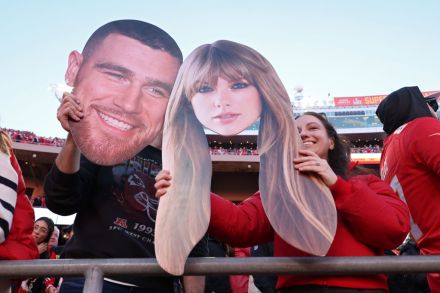
Politicos used to know how to take the temperature of the nation. They could talk to their cab driver. They could sidle up to the man fixing their toilet. There was the Iowa farmer, the diner waitress. There was Walter Cronkite.  Now there is only Taylor Swift. In a society that increasingly consists of mutually unintelligible niches – like multivolume works of Sonic the Hedgehog erotica or reenactments of the War of the Austrian Succession in Roblox – Swift can still fill huge arenas at short notice. Her fans cut across every social and economic class. To a political nation that's often baffled by this new society, Swift has become the great barometer.

Taylor Swift

How AI will reignite woke

Ever since roughly 2010, politics on both sides of the Atlantic has been dominated in large part by the ‘Great Awokening’, a sudden upsurge among graduate professionals of a kind of radical identitarian politics usually called ‘wokeness’. It has come to define most of the left while the right has reactively defined itself by its opposition. This radical politics appears to be detached from economics and material concerns (a point made forcefully by old-fashioned socialists in places like Jacobin magazine). However, the rise of cultural radicalism among both public and private sector managers has a material cause. That cause is elite overproduction.

Woke

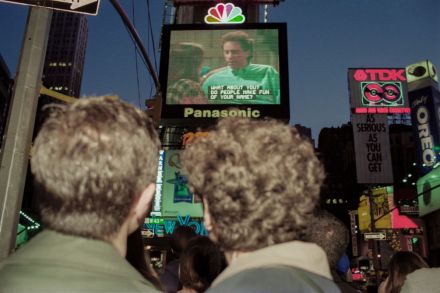
Don’t mourn the death of TV

The online American right is positively obsessed with the nineties. It’s easy to establish the cause here: a surfeit of Gen X and early millennial users, many of whom are fresh converts from within the last decade. Social-media posts by conservative users depicting America’s cities, beaches, and nightclubs from this era regularly achieve staggering virality. The memorialization of these things is justified by presenting them, perhaps not wrongly, as evidence of the cultural homogeneity that America has lost in the past quarter century. There is one tendency among these that I find particularly troubling – lamenting the death of American network television.

Television

An armed society is a polite society

Recently, early one morning at my sprawling estate in Swampland, Mississippi (a census non-designated place), I saw a bare-chested man walking across my back lawn beneath my office window. He wore a headband light, which gave him a semi-official appearance, but if he was working in some professional capacity, I reckoned, he’d be wearing a shirt. So I strolled out to the back deck and paused at the iron rail fence that surrounds it, connecting it to our guest house. Just beyond is an open outdoor shower that we use to clean off dogs and swamp muck. In it, with the water running was the bare-chested man — only now he was bare all over. I said, “Hey, buddy, what the heck are you doing?

America is forgetting how to make stuff

Articles about the future and “progress” have been popping up a lot lately, with conversations revolving around the inevitable advancements in technology and automation. Where we should head next is the collective theme. To the metaverse? To outer space itself? But instead of setting our sights on colonizing Mars or creating a perfect alternate reality, we should slow our roll, focus on the here and now and consider whether the frenzied “progress” we’re in such a rush to make has demonstrated any benefit to real-life people. Manufacturing is a good place to start. Let this startling reality sink in, reported in 2017 by the Organization for Economic Co-operation and Development: Between 2000 and 2010, US manufacturing experienced a nightmare.

Gas prices are the new Covid

Soaring gasoline prices (they’re up 49 percent since President Biden took office) are due to “Putin’s price hikes,” claims Biden. But last I checked, Putin wasn’t stateside canceling the Keystone XL Pipeline, pursuing efforts to end federal oil and gas leasing programs, and careening our country toward more Covid-like lockdowns, social isolation, supply chain shortages, and another summer crime wave. A brief recap of Biden’s oil and gastastrophe: in January 2021, during his first days in office, the president revoked the Keystone Pipeline permit and issued an executive order that, in his own typically eloquent words, directed the “Secretary of the Interior to stop issuing new oil and gas leases on public lands and offsh- — and offshore waters, wherever possible.

Having fun again on Derby Day

The woes of the world are a’plenty. People are anxious, stressed-out, and burned-out. It seems that no matter what side of the political aisle you gravitate toward, there’s a new battle to be fought at the dawn of each day. Even innocent settings — school board meetings, comedy shows, the Magic Kingdom itself — are not immune from partisan vitriol. Luckily for us, though, this is Derby Day, which means it’s the perfect time to do something about the very real but underreported disorder that’s been plaguing our society for a while now: we’ve forgotten how to have fun. It’s a contagious disease that affects brain function and mood, and if left untreated, could result in everyone becoming a smug, humorless elitist (a prognosis worse than Covid).

‘Father Stu’ and the merits of suffering

Father Stu opened in theaters this Holy Week. It’s a movie about a real-life man who led a depraved and reckless life, found God, became a priest, suffered greatly and died from an incurable disease. And did so — more importantly — with patience and good nature that inspired multitudes of those around him. The film’s message is essentially that suffering has value, and as we sit in the richest nation in history drowning in the highest levels of depression ever recorded, such a reminder could not come at a better time. It’s a curious thing that so many people are dissatisfied with life when the standard of living has never been higher.