Sixties

Why BDSM is innately conservative

My friend Evie complains that I never want to go out and have fun anymore. “You’ve become a boring old stick-in-the-mud.” And I’m left wondering: is she right? My Woke Woman invited me to go with her to her Free-Love-Eco-Marxist commune and I said no. “Come on,” she pleaded, “it will be fun!” And now Evie wants me to go with her to the Torture Garden, which is Europe’s biggest fetish and body-art event. “Come on, it will be fun,” she says. “There will be dancing and wild scary women!” It’s not the wild scary women that worry me — it’s the fat bald bearded guys in pink latex tutus with nipple clamps that wag their tongues at you that scare me. Friends always want me to have fun.

bdsm

We are all still prisoners of the Sixties

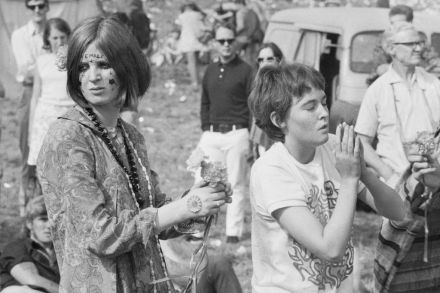
In her 1970 essay “On the Morning After the Sixties,” author Joan Didion recalled a Berkeley autumn weekend seventeen years earlier when she was reading Lionel Trilling in a fraternity house instead of going to the football game, a collegiate occasion fixed in the memory of an earlier era, “so exotic as to be almost czarist.” It suggested “the extent to which the narrative on which many of us grew up no longer applies,” Didion observed in her crisp, distinctive tone. Before the Sixties, youthful elites were close enough to their patrimony to respect its intellect, energy, values and travail. Liberal guilt, such as it was, rarely went further left than Rockefeller Republican.

Joan Didion got inside all of us

When asked what they knew about Joan Didion, a not insignificant number of people might mention her famous essay "Slouching Towards Bethlehem." It is the eponymous essay of Didion’s 1968 collection, the first non-fiction collection of her career. The essay ends with the oft-repeated description of Susan, a five-year-old in the Haight-Ashbury district of San Francisco. She wants a bicycle for Christmas, likes ice cream, Coca-Cola, and the beach — and gets high on acid. Didion describes the domestic setup, and her own discomfort: she "falter[s] at the key words" when asking her if she has other friends on drugs. Didion immortalized the scene of Sixties freedom gone wrong; there is no utopia here. Other Didion fans might be drawn to her essay "Goodbye to All That.

From Cool to Cringe: what’s happened to American culture?

Back in March, around 4,000 years ago, the world was ending. Plague swept in from the east like a horde. Clam-tight lockdowns, unthinkable even days before, were announced everywhere. Who could save us? On March 18 our prayers were answered. An honor roll of Hollywood bluebloods took action. Assembled by Wonder Woman herself, Gal Gadot, they created a video montage cover of John Lennon’s masterpiece — yes! — ‘Imagine’, which she posted — thank goodness! — on Instagram. ‘We’re all in this together,’ said Gadot’s expensive oval face, and, in a sense, she was right. Will Ferrell and Mark Ruffalo, Sia and Zoë Kravitz, Norah Jones and Amy Adams: they were all in this big wet bathful of tears together.

cool cringe