Silent film

More silent films, less Twitter

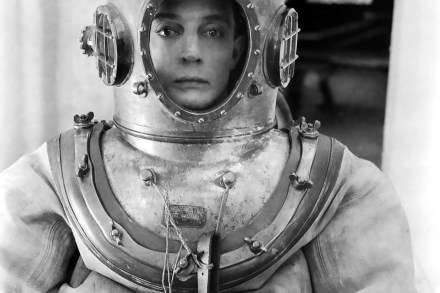
News that billionaire Elon Musk is buying Twitter has shaken the world to the point that left-wingers are threatening to deprive us of their every thought by quitting the platform. My guess is this blustering will take those celebrities about as far away as they went when they pledged to leave the country if Trump was elected president. And though Twitter is likely far from rid of the Jameela Jamils and Chelsea Handlers of the world, even a brief reprieve from the balderdash could do us wonders. Last weekend, I had the privilege of experiencing a one-of-a-kind event at my local theater. “Rick Benjamin’s Paragon Ragtime Orchestra” came to town and performed the original musical score to Buster Keaton’s Steamboat Bill, Jr., a 1928 silent film.
Buster’s land stand

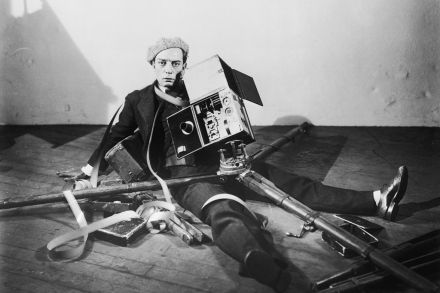
When Shakespeare wrote that “some men are born great, some achieve greatness and some have greatness thrust upon them,” the Bard could not have been thinking of Buster Keaton, who was born nearly three centuries after his death. Yet the idea expressed in that famous line from Twelfth Night — that some men guide their fate while others are controlled by it — carries a curious resonance for fans of the legendary silent performer known for his notably impassive, even indifferent comic persona in masterpieces including The Navigator (1924) and The General (1926). If ever there was a man on whom life, if not greatness, was thrust, it was the one they called the “Great Stone Face.

keaton

May put you off Chaplin for ever: The Real Charlie Chaplin reviewed

From our UK edition

Charlie Chaplin is one of the most famous movie stars ever and is certainly the most famous movie star with a little toothbrush moustache. He was around when I was growing up as his films were often on television, particularly, if I recall rightly, on Saturday mornings. My sisters and I resented that as we wanted to watch The Partridge Family (or The Brady Bunch) on the other side but my father loved him, and I do remember being struck by his childlike innocence, as well as all the falling over. (Chaplin’s, not my father’s.) I now regret watching this documentary. Not because it’s bad (it isn’t) but because I know things about him that I wish I didn’t. It may even have put me off Chaplin for ever.

Riveting – and disgusting: BFI’s ‘Dogs v Cats’ and ‘Eating In’ collections reviewed

From our UK edition

This week I’d like to point you in the direction of the British Film Institute and its free online archive collections, which are properly free. There is no signing up for one of those ‘free trials’ which means that, somewhere down the line, you’ll discover you’ve been paying £4.99 a month for something you didn’t want. And it’s certainly excellent value for the money you don’t pay, as there are 65 of these collections, grouped under various headings — ‘Football on Film’, ‘Black Britain on Film’ — although I plumped for ‘Eating In’, because it’s all any of us do now, and ‘Cats v Dogs’, as if that were even much of a competition…dogs!