Serbia

Was Serbia the real birthplace of the Renaissance?

From our UK edition

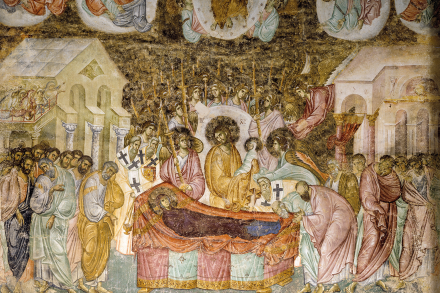
Where did the Renaissance begin? There has been an official answer to that question since 1550, the date that Giorgio Vasari’s Lives of the Artists was first published. According to this version, it all began in Florence and the first painter in the long line that ended with Leonardo, Raphael and Michelangelo was named Cimabue. But here’s another suggestion: you could just as well try looking in the rolling hills of Serbia. My wife and I went travelling there earlier this year. For a couple of nights we stayed in the town of Novi Pazar in the south-east of the country. From the religious point of view this town is a remnant of the Ottoman Empire; according to the census of 2022, nearly 80 per cent of the population is Muslim (with just 71 atheists).

The shadow of communism still looms over the Balkans

From our UK edition

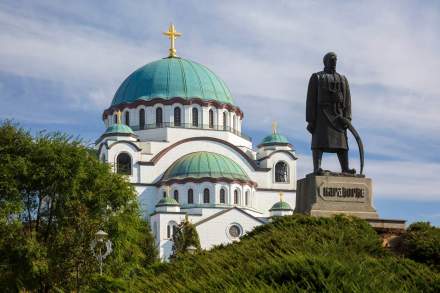
Our Serbian guide Zoran is a jovial fellow and as we rumble through the streets of Belgrade in our minibus he regales us with a joke about the difference between the various nationalities of the former Yugoslavia, all now with countries of their own. ‘We Serbs are rude,’ he says, ‘but the Croatians are self-centred, the Bosnians are thick, the Montenegrins are lazy and the Macedonians are just Serbs with a speech defect. As for the Slovenians, they are so polite they must be gay!’ Joking about each other is a definite improvement on fighting each other, as per so much of their history. The countries on my Balkan tour – Serbia, Romania and Bulgaria – have been struggling for more than three decades with their post-communist problems. But they do like a laugh.

Nick Lloyd takes you through the horrors of the Eastern Front

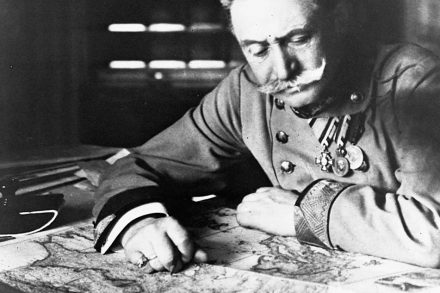
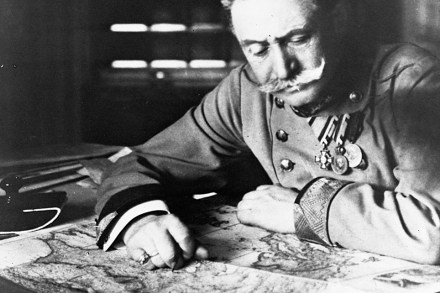
Ten years ago David Cameron, as the British prime minister, pledged $65 million for the centenary of World War One. The focus was on “capturing our national spirit in every corner of the country, something that says something about who we are as a people.” Beyond a celebration of the Tommy on the Western Front and a belated acknowledgement of colonial Britain’s sacrifice, it was a missed opportunity. There was little attempt to better understand the region where the war began — and where, according to Nick Lloyd’s exhaustive The Eastern Front, it never really ended.

Lloyd

They felt they could achieve anything together: two brave women in war-torn Serbia

From our UK edition

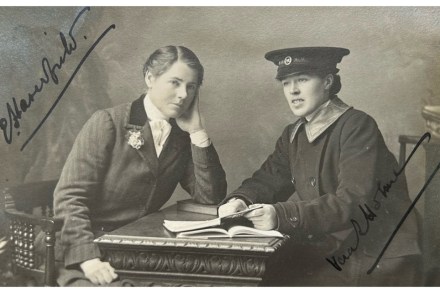
Lesbian military fiction is a popular genre, featuring titles such as Silver Wings and An Army of One, but Jack and Eve is a true story. Written by the journalist Wendy Moore, whose previous books tackled medical and social history, it tells of two suffragettes who caused havoc in the first world war and exposed the absurdity of Edwardian homophobes. Before the war, the jobbing actor Vera Holme, who liked to be known as Jack, changed careers to become Emmeline Pankhurst’s mechanic and chauffeur. In 1908 she met Evelina Haverfield, the conventionally beautiful, wealthy daughter of a Scottish baron. The two fell in love, began living together and soon became the public faces of the suffragette movement. Brave and out-spoken, they fought their corner fearlessly and went to prison.

The horrors of the Eastern Front

From our UK edition

Ten years ago David Cameron, as prime minister, pledged £50 million for the centenary of the first world war. The focus was on ‘capturing our national spirit in every corner of the country, something that says something about who we are as a people’. Beyond a celebration of the Tommy on the Western Front and a belated acknowledgement of colonial Britain’s sacrifice, it was a missed opportunity. There was little attempt to better understand the region where the war began – and where, according to Nick Lloyd’s exhaustive The Eastern Front, it never really ended.

Why mass shootings won’t change Serbia’s gun culture

From our UK edition

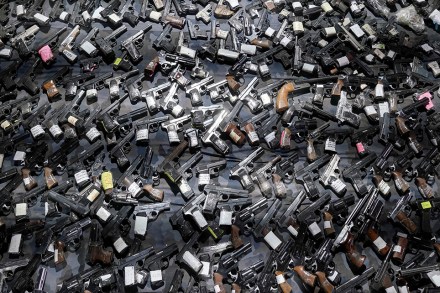
Two mass shootings in Serbia have left 17 people dead, many of them children, and there are protests on the streets of Belgrade. Demonstrators blame Serbia’s populist president, Aleksandar Vucic, and so Vucic has his own series of anti-gun rallies planned and has ordered a swift crackdown on gun ownership, a ‘practical disarmament’. But Vucic has his work cut out for him. Weapons are embedded in Serbia’s culture and it’s hard to imagine a significant number of Serbians simply handing them over. In Serbia, the gun is a way of life. ‘It’s part of our tradition; in villages they fire in the air to celebrate a wedding or a baby’ When I worked in the Balkans as a journalist, a man felt underdressed without a Kalashnikov.

Putin is copying the propaganda playbook of Serbian war criminals

From our UK edition

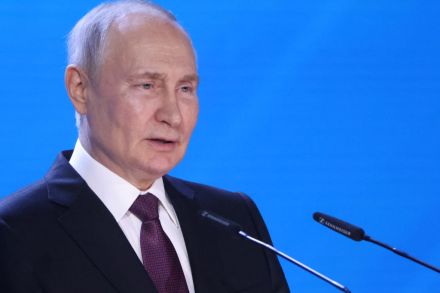
A year ago, Ukrainian soldiers discovered evidence of the Bucha massacre in which Russian forces slaughtered hundreds of Ukrainians in cold blood. Far from owning up to its crimes, Russia has spent the past 12 months trying to spin the massacre as a Western-inspired conspiracy.  The Kremlin said the allegations are a ‘monstrous forgery’ aimed at denigrating the Russian army. This attempt to whitewash the truth has disturbing parallels with the cover up of atrocities that occurred in my home country, Bosnia, during the 1990s.

Is war brewing between Serbia and Kosovo?

From our UK edition

Serbia and Kosovo are close to conflict. Of all things, a dispute over car number plates is threatening the fragile peace won 23 years ago, after a Nato bombing campaign against then-Yugoslavia. For that, Serbs have never truly forgiven the West. On Sunday night, roads were blockaded by Serbs in northern Kosovo. Their anger was directed at an edict from the Kosovan government requiring Serbs to re-register their cars with Kosovar number plates. Serbs currently use number plates with acronyms of Kosovar cities, just one example of Serbia’s ongoing refusal to accept Kosovan independence. New documentation requirements were also to be imposed on Serbs entering and leaving Kosovo. Some have claimed that tensions have calmed, but they are only on hold.

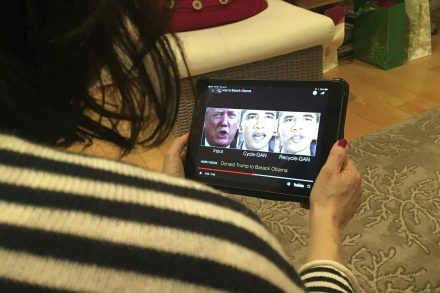
If a video is viral, who cares if it’s fake?

After two months, the 'mostly peaceful' label for the riots gripping American cities is wearing a touch thin. That’s not just because it fails to satisfy conservatives and moderates, who puzzle over how 'mostly peaceful' demonstrations leave so many downtowns torched. It also fails to satisfy the actual rioters. They insist their demonstrations are very violent, courtesy of brutal tactics from the police officers they want abolished.'Proof' of such violence went viral on Wednesday. The video was first shared by Twitter user @Andy_Resist, but was swiftly magnified by a different Andy. This one bore Twitter’s hallowed blue checkmark and enough followers to populate a small city, or a few dozen 'mostly peaceful' protests. https://twitter.

fake news

The Nobel Committee honors an apologist for genocide

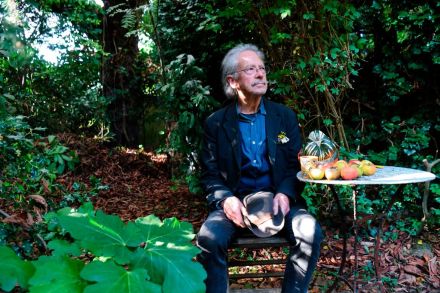
Peter Handke’s Nobel win is the latest in a series of unfortunate incidents surrounding the Nobel prize in literature, from the weird decision to give it to Bob Dylan in 2016 to last year’s sexual assault scandal. When Handke called for the prize to be abolished in 2014 he said it was a 'false canonization' of literature. The fact that he has now won it proves he was right. This is what Sweden is today – if the Nobel committee had any courage they would give the peace prize to Julian Assange (one of the true heroes of our time), yet instead they would rather honor an apologist for genocide.

peter handke nobel

Ghosts of the Balkan wars are returning in unlikely places

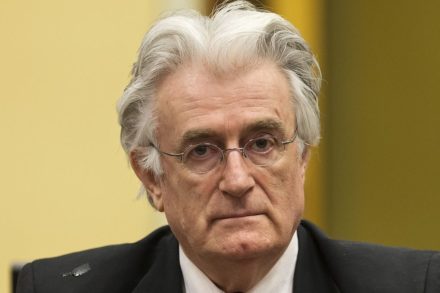
Why is the Christchurch far-right terrorist obsessed with the crazy-haired Serb that the UN just sentenced to life in prison? How Balkan war criminals became idols to Western extremists is a bizarre story that shouldn’t be real, but is. Twenty years ago this week, NATO decided to take Kosovo away from Serbia. The Rambouillet Agreement of March 18, 1999, named for the château outside Paris where negotiations failed to resolve that Balkan crisis without wider war, set the stage for an independent Kosovo under NATO administration and protection. Five days after US, British, and Albanian delegations signed the Rambouillet Agreement – Serbian and Russian delegations refused to sign – NATO bombs started to fall on Serbia, and they kept falling for 78 days.

radovan karadžić balkan