Seinfeld

The greatness of Bob Odenkirk

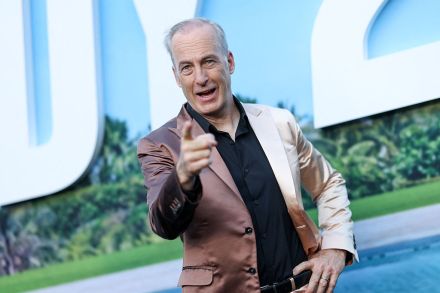
If viewers of Breaking Bad had taken bets during the show’s original run on which of the cast was likely to become a breakout action-film star a decade after the series finished airing, Bob Odenkirk would likely have been near the bottom of that list. The young actor Aaron Paul was perhaps the most obvious prediction, but Jesse Plemons, Dean Norris – even a grizzled and pumped Bryan Cranston – were all more predictable choices to do an alpha-male Liam Neeson-meets-Keanu Reeves act than the foppish comic relief Jimmy McGill, aka criminal lawyer (in both senses) Saul Goodman.
Bob Odenkirk (Getty)

Michael Richards’s memoir is heavier on introspection than laughs

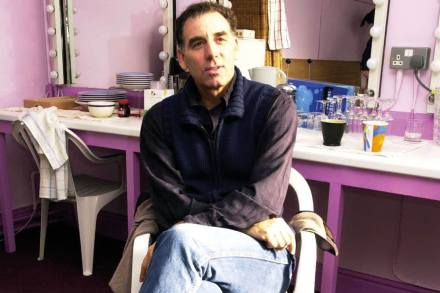
An unusual disclaimer greets the reader on the title page of this memoir of an actor chiefly known for starring as the lovable goofball Cosmo Kramer on the hit TV sitcom Seinfeld. “Neither the US Army nor any other component of the Department of Defense has approved, endorsed, or authorized this book,” it notes. But in the event the Pentagon probably needn’t have worried. Drafted into the army in 1970, the actor in question, Michael Richards, seems to have avoided any Sergeant Bilko-like shenanigans and instead separated from the service with a heightened appreciation for the punctuality, discipline and meticulous preparation that characterized his later career.

Richards

This month in culture: June 2024

The Fall Guy In theaters now Ryan Gosling’s career is rather bizarre if you think about it, from drippy romcom protagonist in The Notebook to brooding car noir hero in Drive to laughable failure in The Nice Guys to musical star in La La Land and Barbie. Now he takes a stab at renewing his hardass ways in The Fall Guy, an adaptation of Lee Majors’s 1980s series which pairs him with Emily Blunt and is, in a way, an homage to the careers of “stars who do their own stunts” even if Gosling does not do so himself. There’s even a stunt show planned for Universal Studios’ Hollywood theme park based on the movie, prior to its release.

culture

Curb Your Enthusiasm’s finale was a mission statement for the show

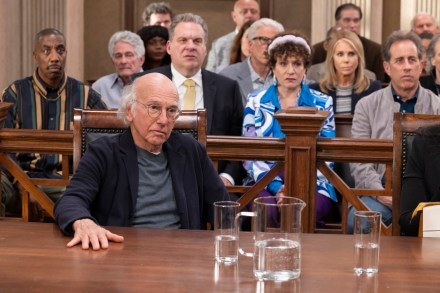
And so, after twelve seasons and twenty-four years, Larry David’s Curb Your Enthusiasm has finally come to an end. Opinion online has been divided as to the effectiveness of the ending, in which, spoilers, Larry is placed on trial in Atlanta for inadvertently breaking the Electoral Integrity Act by offering a voter a bottle of water in the line; a rare act of kindness he suffers for. It was an intentionally low-key ending that can nonetheless allow for callbacks to early episodes and brief returning cameos from the guest stars who have somehow been maligned, offended or otherwise dismayed by Larry’s antisocial antics in the previous quarter-century.

curb your enthusiasm

So we’re canceling AI for being transphobic now

With the dramatic expansion of artificial intelligence-generated text, the speed and frequency of the internet's milkshake-ducking has become all the more essential. If you believe that problematic speech is the same as violence, it's hard enough to be on the lookout for material generated by living and breathing human beings — now you have a horde of AI chatbots to monitor as well. And unlike their human counterparts, these chatbots lack the shame and fear to prevent them from saying things at odds with cultural trends. Consider the latest example of this, which comes with the Twitch stream "Nothing, Forever," an AI-and-video-game-engine-generated parody of Seinfeld that has been streaming for several months.

Thinking of Seinfeld as Roe v. Wade ends

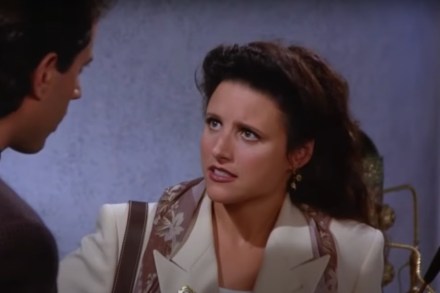
After a bit of a hiatus, my wife and I decided Thursday night to pick up where we left off with Seinfeld. As fate would have it, we ended up watching the episode “The Couch.” Jerry and Elaine go to a local restaurant. The owner, Poppy, swings by the table to assure them that the duck is succulent. Jerry tells Elaine he’d just as soon have stayed home and ordered pizza from Pokeno’s. Elaine tells him she refuses to eat Pokeno’s pizza because the owner donates to radical anti-abortion groups. Jerry, testing Elaine’s resolve, then calls Poppy over to the table and asks where he stands on the abortion issue. Poppy tells a story (heartbreaking in its content but hilarious in its delivery) of his mother undergoing a forced abortion in a Cuban re-education camp.