SCOTUS

Trump’s presence won’t sway the Supreme Court

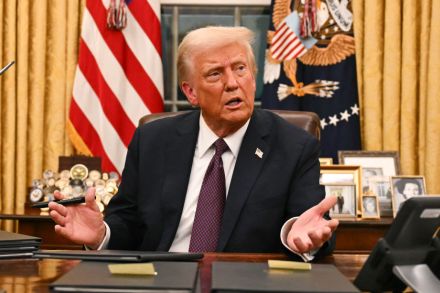
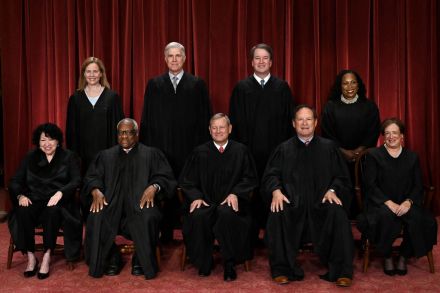
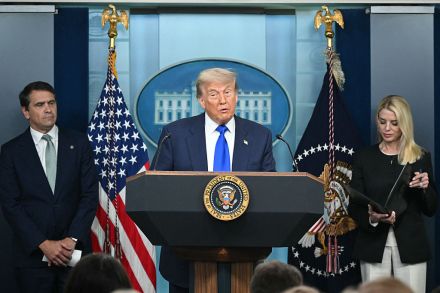
For the first time in memory – and perhaps in history – an American president has attended a Supreme Court argument in person. I recall attorney general Robert Kennedy attending an argument back when I was a law clerk in the early 1960s. But I have seen no record of presidential attendance. Not that there is anything wrong with that, even if it was intended to convey the president’s strong belief in his side of the argument. Any fear that President Trump’s presence would influence the justices was immediately belied by the nature of the justices’ questions – which suggested some hostility to the Solicitor General’s argument limiting birthright citizenship.

Supreme Court

Celebrity Justices compromise the Supreme Court

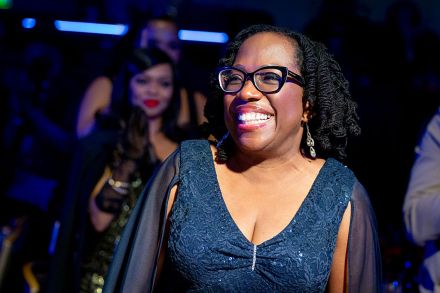
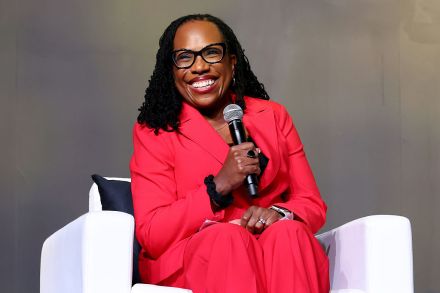
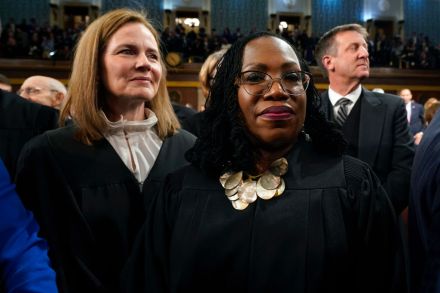
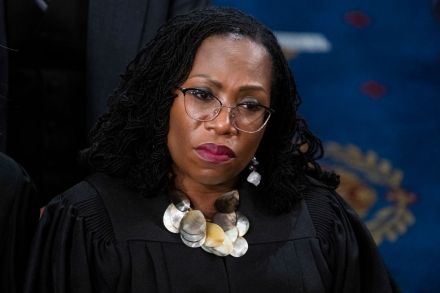
The real problem with US Supreme Court Justice Ketanji Brown Jackson attending the Grammys wasn’t that it revealed her true colors as a liberal, but that it showed the slow and steady erosion of the court’s institutional reserve.Senator Marsha Blackburn, the Tennessee Republican, demanded that Chief Justice John Roberts launch an investigation into Jackson alleging she breached ethics rules by appearing at the anti-ICE event.“Americans deserve a Supreme Court that is impartial and above political influence,” Blackburn gravely pronounced. “When a Justice participates in such a highly politicized event, it raises ethical questions. We need an investigation into Justice Jackson’s ability to remain impartial.

Ketanji

Is the Supreme Court poised to protect the Fed from Trump?

Rarely has the ideologically divided US Supreme Court seemed so much on the same wavelength. And that is not good news for President Trump.In arguments Wednesday in a case that centers on President Trump’s authority to fire members of the Federal Reserve, the US central bank, both Republican and Democratic appointees suggested giving the president unfettered control would harm financial markets and damage public confidence.“Your position – no judicial review, very low bar (for dismissal) and that the president alone makes the determination – would weaken if not shatter the independence of the Federal Reserve,” said Justice Brett Kavanaugh in an exchange with US Solicitor General John Sauer, representing the Trump administration.

Lisa Cook

Trump must follow the law on TikTok

Donald Trump ended his first term in praise of Xi Jinping and China’s overall handling of a global pandemic that up-ended the world, which likely led to his opponent’s election victory over him — and now he appears to re-enter office with same kind of capitulation. It’s not a good look.Trump has attempted to insert an unconstitutional level of presidential power with an Executive Order on his first night in office by blocking the Department of Justice from enforcing a US ban on the popular Chinese spyware app, TikTok. Trump himself once called for a ban on the app, but told reporters in the Oval Office on Monday night that he had never used it before.

The trouble with Jerome Powell

Lost in the hysterical media bleating about a new criminal investigation into Jerome Powell is any attempt to report fairly on his alleged transgressions. The singular lens through which the investigation is being reported in many openly and not-so-openly left leaning outlets is that it is Donald Trump's revenge after Powell refused to do as instructed and lower interest rates But the aperture needs to be widened to see the full picture: the case is about more than the Chair of the Federal Reserve not bending the knee. It is about Powell's competency as the nation’s chief money man after presiding over the central bank’s vast and scandalous renovation project – that started at $1.9 billion, now stands at $2.

Powell

How the Supreme Court could sway the midterms

Each Supreme Court term typically includes at least one explosive case that inflames political passions and captures the public imagination. When the court overturned Roe v. Wade in 2022, or when it greatly broadened presidential immunity, as it did last year in Trump v. the United States, or when it ruled against race-based college admissions in 2023, it reaffirmed its centrality and reminded voters that it mattered. As it happens, very few Americans can name the chief justice of the Supreme Court of the United States (surveys show it is consistently under 16 percent), but most know instinctively the high court’s opinions deeply impact governance, politics and culture.

Supreme Court

Will the Supreme Court force Trump to repay tariffs?

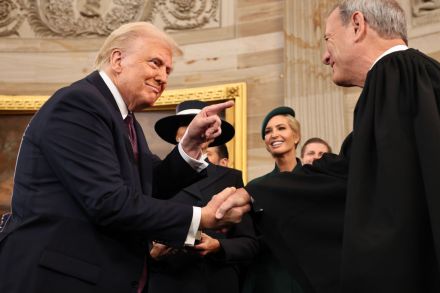
The most important thing to know about the Trump administration’s defense of its hotly contested use of tariffs to bring allies and opponents to heel is not that it is a novel and unprecedented legal argument but rather a full-throated articulation of the campaign themes that got the president elected – in both 2016 and 2000.In its legal documents, and in the oral arguments that took place before the Supreme Court Wednesday, the Trump administration paints a picture of America under siege.Once thriving industrial towns in the Midwest hollowed out. Factories dismantled as supply chains have been moved offshore. Hostile foreign nations flooding the US with drugs and once productive workers turning to opioids and alcohol for solace as opportunities slip away.

Trump

The real scandal of Zohran Mamdani’s college application

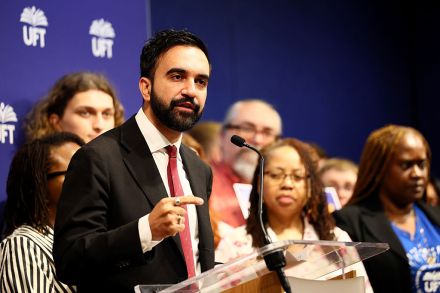
While the fact that Zohran Mamdani had identified as black on his Columbia University application stole the headlines, the hack that exposed this information highlighted something much more insidious in the college admissions system.Admitting the accuracy of the leaked data, Mamdani claimed that he was simply trying “to capture the fullness of [his] background” by checking the “Black or African American” box in 2019. New Yorkers raised an eyebrow. But what would have alarmed them more was the revelation buried in the trove of hacked data: that affirmative action is alive and well in America. The leak of Columbia’s admissions data demonstrates that, even after the Supreme Court ruled affirmative action policies unconstitutional in SFFA v.

Mamdani

Ketanji Brown Jackson pushes ideology over the Constitution

When a Supreme Court justice warns that the decisions of her colleagues pose an “existential threat to the rule of law,” it’s not just a legal disagreement – it’s a performance. Justice Ketanji Brown Jackson’s recent dissents, particularly in Trump v. Casa, show a troubling shift in the role of a justice. Instead of offering careful counterpoints rooted in constitutional reasoning, she delivers ideological monologues that sound tailor-made for MSNBC clips and Essence Fest applause lines. This isn’t a critique of dissent itself. Dissent is vital to the integrity of the Court. The late Antonin Scalia built an entire legacy on it – scorching in tone, yes, but always grounded in jurisprudence.

Ketanji Jackson

Amy Coney Barrett v. Ketanji Brown Jackson

The Supreme Court has reined in the authority of district court judges by ruling unconstitutional the ever more common practice of universal injunctions, an abuse of Article III power that cried out for the Court’s intervention. Trump v. Casa is a long overdue vindication of the limits of constitutional power. Sadly, yet increasingly predictably, some progressives claimed the end was nigh… again. In dissent, Justice Ketanji Brown Jackson’s words fairly smoldered from the page: “It is not difficult to predict how this all ends. Eventually, executive power will become completely uncontainable, and our beloved constitutional Republic will be no more.” She further lambasted her colleagues’ 6-3 majority decision as “an existential threat to the rule of law.

Supreme Court
Supreme Court

Supreme Court allows Trump to recast America

Donald Trump is on a roll. Last week, he bombed Iran and imposed a ceasefire on Tehran and Jerusalem. Now the Supreme Court, in its final day of session, has handed him another victory by constraining the power of federal judges to constrain the executive branch. The verdict is clear: the Trump administration will have much more latitude to recast America.In essence, the Supreme Court is consolidating a conservative counter-revolution that began, as Sam Tanenhaus notes in his exemplary new biography of William F. Buckley, Jr., after World War II and is reaching full flower under Trump. Once upon a time, liberals enacted sweeping policies and programs through the courts. Now it is the right’s turn.

Progressive Justice Ketanji Brown Jackson hammers nail into DEI coffin

The Supreme Court’s recent decision in Ames v. Ohio Department of Youth Services didn’t dominate the headlines – but it should have. In a unanimous ruling, the Court quietly dismantled a legal fiction that has distorted civil rights law for decades. And in a twist no one saw coming, the opinion was authored by Justice Ketanji Brown Jackson, the progressive icon of the bench. At the heart of Ames was a question few Americans knew they needed to ask: can equality before the law coexist with unequal legal standards? “In 2019, Ames – a straight, white woman – interviewed and was passed over for a newly created management role, which was instead awarded to a lesbian.

Ketanji Jackson

Time is running out for TikTok

TikTok’s days may be numbered in America after all. Following a presidential campaign in which both Donald Trump and Kamala Harris promoted themselves heavily on the platform, despite bipartisan national security concerns over its ownership’s ties to the Chinese Communist Party, a federal appeals court today ruled that the app must break ties with the Beijing-based ByteDance within a few weeks or be banned in the United States.Until the decision, everything was looking up for TikTok. Trump trounced Harris on the platform, and his campaign and top surrogates were active all over the popular social media app.

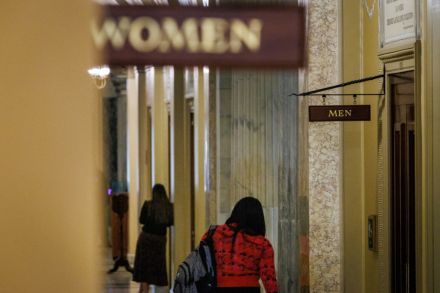
Where’s the nonbinary restroom at the Supreme Court?

Lincoln in the Bardo “The economy has never been better,” top Democrats and their surrogates told voters during the 2024 elections. It turns out that’s because the economy was doing just fine for a lot of the party’s top vendors. After all, Kamala Harris’s $1 billion of campaign expenditures had to wet some beaks, if not win votes. One series of outlays stood out in particular: the millions of dollars spent by the Lincoln Project, despite the Democratic Party’s top infrastructure rolling out focus groups showing that the group’s work had zero impact on the 2020 presidential election. “Tragic,” elections analyst Rob Pyers wrote on X. “After raising $15.5 million for the year and burning through $16.

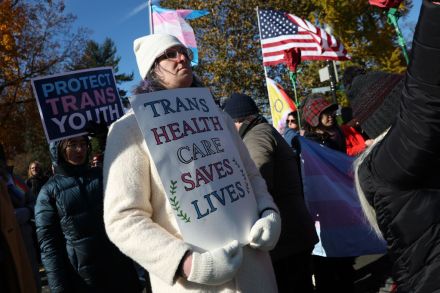
Supreme Court hears arguments against puberty blocker ban

The Supreme Court today is hearing arguments against Tennessee’s statewide ban on prescribing puberty blockers and hormone replacement therapy for minors with gender dysphoria. The challenge to the state law is being led by the Biden administration and the American Civil Liberties Union and is brought on behalf of three teens with gender dysphoria, their parents and a doctor. Their lawyer is also transgender. The Tennessee law came about during a period of very fraught debate over how to treat children who suffer from gender dysphoria.

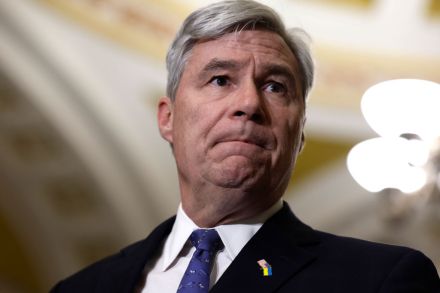
The life and times of Sheldon Whitehouse, the last patrician liberal

It is not often that an American politician publishes a book of genuine interest. It is even less often, breaking through the veil of ghostwriters and marketers and political risk consultants, that such a book provides real insight into its author. Hillbilly Elegy is an obvious example: an unusually vulnerable self-portrait whose sales shot through the roof after J.D. Vance was tapped to be Donald Trump’s running mate this summer. Josh Hawley may never be vice president, but his ambitions and his politics are already apparent in the biography of Teddy Roosevelt he published a full sixteen years ago.

Whitehouse

President Biden’s plan to overhaul SCOTUS

President Biden unveiled his outline for changes to the Supreme Court, which includes term limits for justices and a new code of ethics. He also called for a constitutional amendment saying former presidents do not have immunity from any federal criminal indictments, trials, convictions or sentencing — a direct dig at the Court’s recent immunity ruling in Trump’s favor. The plan comes amid a series of landmark decisions by the Supreme Court that favored conservatives, such as the overturning of Chevron and rulings on abortion and affirmative action, that sparked Democrats to criticize the 6-3 conservative controlled-court for an alleged lack of impartiality.

On the ground at the RNC

It is day three of the Republican convention in Milwaukee and tonight Trump’s vice presidential pick J.D. Vance will take the stage. The reaction was muted in the arena when Trump anointed Vance on Monday, likely due to a combination of low name identification and concerns from the establishment that he is not helping Trump’s electability. This will therefore be an important moment for Vance to introduce himself to the broader Republican electorate. Outside of the security perimeter this morning, a Trump supporter was holding court with the following sign: “Advance America, vote Trump and Vance.

Joe Biden — to quit or not to quit

President Joe Biden is up against a wall following his disastrous debate performance last week, and his family is pulling out all the stops to try and ward off any last-minute intra-party challengers. They’re relying on a famous photographer and top surrogates to convince the Democratic Party that last week’s debacle was a one-off and not how the leader of the free world normally functions.Biden’s family is lashing out at staff for poorly preparing him for the debate, according to reports, rolling out Vogue cover shoots with first lady Jill Biden and and showcasing unwavering endorsements from the Democratic Party’s prime leaders, like former president Barack Obama. For the most part, it’s working.

Congress speaks up on anti-Israel campus protests

Raucous anti-Israel protests at Ivy League Columbia University — which have spread to other campuses following the administration’s crackdown on encampments erected by student activists — are becoming a hot topic on Capitol Hill.Republicans are eager to point out the protests are merely a symptom of the larger rot within academia; college administrators for years tolerated left-wing activists breaking university policy (and often rewarded them for their efforts) while resisting the representation of conservative voices on campus. This posture has allowed radical, hate-filled movements to foment among increasingly progressive student bodies.