Scotland

The UK that Scotland voted to remain within ‘doesn’t exist anymore’

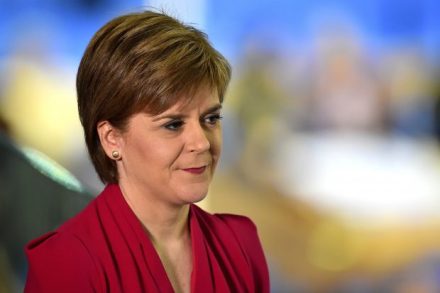
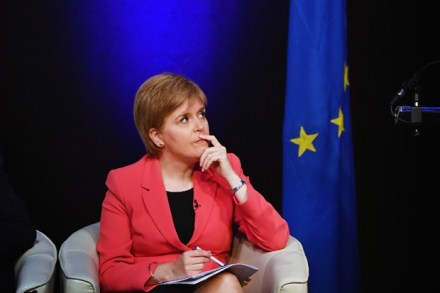
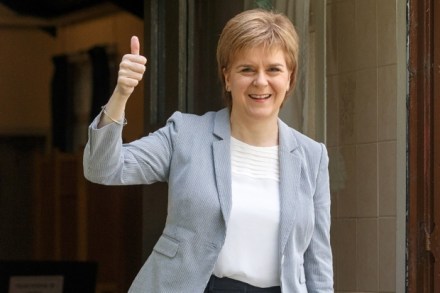
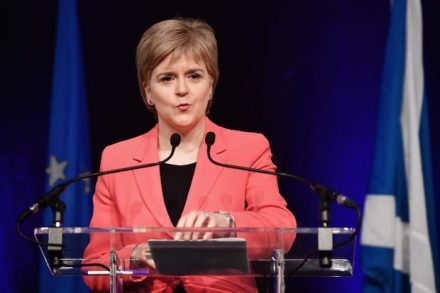
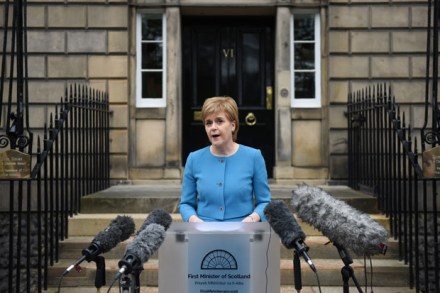
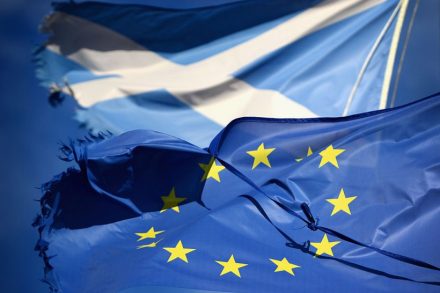
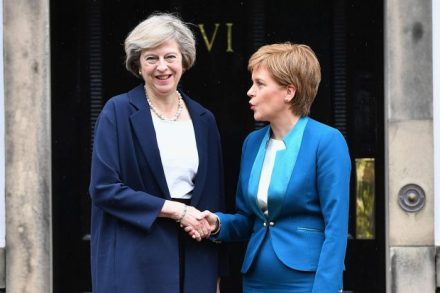
The First Minister gave an interview on Scotland’s position in the UK after Brexit on the Andrew Marr Show this morning. Here’s what she said: Andrew Marr: Can I ask first of all, is it your priority to have a negotiation as Scotland with Brussels to allow Scotland to more or less seamlessly stay inside the EU? Nicola Sturgeon: My short answer to that is yes, but let me perhaps expand on the position that I find myself in. Marr: Please do. Sturgeon: You know, the first thing I should say is that I didn’t want to be in this position this weekend. I hoped very much and campaigned to

Brexit has made a second independence referendum more likely

Just look at the map on the BBC website, there are eerie comparisons with the 2015 general election – Scotland has been painted yellow: again. This time, though, there is a difference. This time the whole of Scotland is yellow. There are no patches of any other colour to break up the picture. And that is the crucial point. The whole of Scotland voted Remain: the whole of Scotland without exception, including those areas, like the Western Isles, which voted to leave the EEC last time round. That sends a very powerful message. Nicola Sturgeon knew that, if the UK was going to vote for Brexit, she needed the point of difference

Map reveals where in Scotland Lyme-infected ticks are most likely to get you

Researchers can now predict where in Scotland you are most likely to encounter ticks that carry Borrelia burgdorferi, the bacterium that causes Lyme disease. If that wasn’t enough to make you reconsider those picnic plans, then they have also forecast that this risk will increase as global temperatures rise. In a recent paper, the researchers predicted that people were more likely to come into contact with an infected tick in the months of August and September. They also identified both the Highlands and Tayside as areas of particular risk. Their map can be viewed in full here. The study authors calculated that the density of infected ticks, a way of

A merry guide

If you have legs, or a bicycle, or indeed both, you are going to love this book. Chaps, no matter how old or how fat or otherwise incapacitated you are, if you haven’t already received it for Father’s Day the chances are it’s coming your way this Christmas. Ladies: if you are a fell-runner, a hill-walker or a budding Victoria Pendleton, pop this into your backpack or saddlebag with your energy bars and your old Ordnance Survey. Graham Robb — yes, that Graham Robb, the biographer and historian of all persons and all things French, and also the author of an excellent history of homosexuality, Strangers: Homosexual Love in the

Scottish Brexit poll shows big drop in support for ‘Remain’

‘Remain’ have being having a woeful time in the polls lately, with numerous surveys putting ‘Leave’ ahead. But north of the border, it’s been widely thought that it’s a different picture and that those wanting Britain to remain in the EU outnumbered those backing Brexit. A new poll out just now suggests that whilst that might still be the case, ‘Leave’ has also gained considerable ground in Scotland. The STV poll, put together by Ipsos Mori, shows that support for ‘Remain’ has been slashed by 13 per cent since April. Back then, 66 per cent of Scots surveyed backed Remain, compared to just 29 per cent who were planning on

Brodie Castle

Is there a more forlornly romantic spot in Britain than the moors east of Inverness where the Jacobite dream died? There is surely no more romantic location from which to explore the area than Brodie Castle, a turreted fortress looking out towards the Moray coast. Now owned by the National Trust for Scotland, Brodie Castle allows groups of up to 14 to live like a laird, playing croquet on the lawns, eating in the grand dining room, spotting red squirrels and generally absorbing the dark history that culminated on the moors of Culloden. The adventure has to start at Euston. You could fly to Inverness and arrive with the taste

Letters | 19 May 2016

Republican party schisms Sir: Jacob Heilbrunn astutely analyses the predicament Donald Trump creates for America’s neoconservatives (‘Lumped with Trump’, 14 May). But the ideological schisms within the Republican party are even more profound than he indicates. In fact, Trump not only divides the populist right from movement conservatives — and neoconservatives — based in Washington, DC, he also divides neoconservatives against themselves. William Kristol, the neoconservative kingpin in Washington, has lately found himself under intense attack by David Horowitz, a California-based ex-radical-turned-rightist in the classic neoconservative mould. Horowitz has excoriated Kristol for dividing Republicans and effectively helping Hillary Clinton. Trump, Horowitz argues, is not only obviously better than Clinton on

Which polls are you going to believe?

Today’s ICM phone and online polls are a reminder that the polls aren’t going to offer much certainty about the result of the EU referendum. ICM’s traditional phone poll has IN ahead 47 to 39, and with the don’t knows excluded up 55% to 45%. This would suggest that IN is on course for a fairly comfortable victory. But its online poll has Out up 47 to 43, and with the don’t knows excluded ahead 52% to 48%. Phone polls are generally regarded as slightly superior to online ones, they are certainly more expensive. So, I suspect that most people in Westminster will take these polls as a sign that

Letters | 12 May 2016

Europe is already divided Sir: The Archbishop Emeritus of Westminster writes eloquently about the historical purpose of a ‘union’ in Europe as being primarily to eliminate the wars that for centuries had characterised Europe (‘Let’s renew the EU’, 7 May). He, and Pope Emeritus Benedict, both point to the shared Christian beliefs that defined all nations of Europe. But the EU, as it has evolved, is now no expression of such an underlying faith — in fact, the opposite. As he points out, it has removed any official reference to Europe’s common heritage, and is increasingly set on a shallow, utilitarian course. Europe is now more divided than ever, and it

These results have made Labour’s problems worse

As the dust settles on Thursday’s election, it becomes ever clearer that—with the exception of London—these were awful results for Labour. They were bad enough to suggest that the party is on course for a third successive general election defeat. But, as I say in The Sun, not disastrous enough to persuade the Labour membership that they need to dump Corbyn. One Tory Minister remarked to me yesterday, ‘Labour have done well enough to keep Corbyn. I can live with that.’ Before adding, ‘Corbyn’s survival is the single most important thing for 2020’. The result that should worry Labour most, though, is the Scottish one. As the third party of

What will Labour moderates do now?

The election results that we’ve had through so far are a pretty potent combination for the Labour party. Diane Abbott said this morning that they show that Labour is on course to win the 2020 general election, while Jeremy Corbyn skirted around what they actually meant for the party in the long-term when he gave his reaction. The potency lies in the party’s devastation in Scotland that points to a long-term structural inability to win a majority coupled with English council results that, by being less bad than expected, deceive about the challenge the party faces in winning in those areas in 2020. The party’s moderates are concerned this morning

The SNP’s decline has finally begun

We are past peak SNP. The party has won a third successive Scottish Parliamentary election, an achievement that is not to be sniffed at, but it has lost its overall majority. There are signs that the normal rules of political gravity are beginning to apply in Scotland again. Equally telling is that the SNP is out of big ideas. Its manifesto was a thoroughly managerialist document. It also now seems highly unlikely that there will be another independence referendum before 2021, and the next Scottish Parliament elections. The SNP now faces a challenge of how to use the extensive powers that are coming the Scottish Parliament’s way. If it doesn’t

The Spectator podcast: Erdogan’s Europe

To subscribe to The Spectator’s weekly podcast, for free, visit the iTunes store or click here for our RSS feed. Alternatively, you can follow us on SoundCloud. Has Erdogan brought Europe to heel? In his Spectator cover piece, Douglas Murray argues that the Turkish President has used a mixture of intimidation, threats and blackmail to do just that and throw open the doors of Europe to Turkey. Douglas says Erdogan is a ‘wretched Islamist bully’ who has shown just how the EU works. But in pushing Europe around, is Erdogan now more powerful than Merkel, Juncker and Cameron? And how does the Turkish PM’s resignation this week changed the country’s

Letters | 5 May 2016

The EU gravy train Sir: Despite his splendid forename, your deputy editor Freddy Gray has a very tenuous grasp of human nature. Having accurately detected a simmering voter mutiny across much of Europe and the UK, he decrees that those heartily sick and tired of being constantly lied to and thus treated with contempt by the EU gravy-train-riding establishments must be either extreme right-wing or mad (‘A right mess’, 30 April). Actually, we are neither. Does he really believe it to be coincidental that 95 per cent of the UK establishment (there are still a few good ’uns in the mix) are screaming, desperate that their gravy train not be derailed

May 2016 elections: The Spectator guide

Britain goes to the polls this week, as electoral contests take place in London, Scotland, Wales and across England. They’re the elections which James Forsyth described in the Spectator last week as the ones ‘no one has even heard of’. So what will happen on Thursday night and when will the results be announced? Here’s The Spectator’s run-through of the May 2016 elections: London Mayoral election: Zac Goldsmith and Sadiq Khan go head-to-head in the London Mayoral contest. In 2012, Boris and Ken ran a close-fought race, with Boris getting 971,000 first-round votes to Ken’s 889,918. The relatively small margin between the two meant the result didn’t filter through until

Fear and loathing

Strange as it may seem, there are still people around David Cameron who regard the Scottish referendum campaign as a great success. Yes, they say, the nationalists didn’t like the original ‘Project Fear’ — the attempt to frighten Scotland into voting no — but it worked. Alex Salmond was defeated by a 10 per cent margin — proof, it’s argued, that relentless negativity works. Those who complain about it are either losers, or too squeamish to win. Andrew Cooper, chief of the Scottish ‘in’ campaign, said afterwards that the only criticism he would accept is that it was not negative enough. This attitude is a poison in the bloodstream of

The SNP manifesto reveals a new approach to Scottish nationalism

Do you want to know what it looks like when one party has become the most dominant force in its country’s political history, when one in every 30-odd voters is a member of that party and when it is regularly topping 50 per cent in the polls? Then look no further than central Edinburgh this morning where Nicola Sturgeon was launching the SNP’s Holyrood election manifesto. The queues to get in to the Edinburgh International Conference Centre stretched back for several streets as supporters and party members waited eagerly in the warm spring sunshine for the chance to hear, and see, their leader in person. The inside of the hall

Cameron and Mugabe: spot the difference

It is not what Robert Mugabe would do. Calm down. These are ‘spiv Robert Mugabe antics’, said the Tory backbencher Nigel Evans, of the government’s alleged £9 million mailshot making the case for staying in the European Union. But no. They aren’t. If David Cameron was behaving like Robert Mugabe, then he wouldn’t just be sending a leaflet to your house. He’d be sending a gang of thugs to your house, who all claimed to have fought in the second world war and yet had an average age of about 22, and then they’d come into your house and make you leave your house, and say it was their house. And

Will Ruth Davidson’s ski-doo stunts pay off at the ballot box?

Just a few days into the official campaign for the Holyrood elections and Ruth Davidson has had to change her tactics. The plan had originally been for the Scottish Conservatives to run a serious campaign which has fewer tanks than the election campaign, and more serious speeches. ‘We tried that whole idea of you know we’re going to do this really stripped down, just speeches, and just like listening to people bla bla bla,’ says Davidson. ‘And then kind of all the press went this is really boring and we went, yeah, it kind of is.’ And so Davidson has been playing ice hockey, racing blue and red cars, and

The iceberg cometh

Every second novel is fated to be measured against its predecessor; and that comparison is particularly hard when the debut in question was acclaimed (Jenni Fagan’s The Panopticon was shortlisted for the Desmond Elliott Prize) or held to exemplify some modish literary sub-genre. Fagan’s style was tagged as ‘gritty Scottish realism’, and ill-served by comparisons to Irvine Welsh, which made much of her use of profanity and dialect. But where Welsh’s style has long since descended into shtick, Fagan’s coarseness of language was never more than surface detail. It was clearly in the service of authenticity of voice, and Anais Hendricks, the disturbed but resilient protagonist of The Panopticon, is