Schumann

Rattle makes Schumann shine and sing

From our UK edition

Phrenology, eh? It’s cobblers, plainly, but Robert Schumann didn’t know that and his biographer Martin Geck tells how in 1846, near Dresden, he submitted to a full once-over from Europe’s leading cranium-fondler Robert Noel. Noel clearly knew his patient, because his analysis echoes what anyone who knows Schumann’s music might say about the personality of this supreme romantic. Noel detected ‘sense of form – modesty – strength of purpose’. Touchingly, he also detected ‘anxiety that stands in the way of happiness’. Then the clincher, the observation that grabs straight at the heart of any Schumann fan: ‘emotional through and through’. Well, we Schumann-lovers will take all the back-up we can get.

The orchestra that makes pros go weak at the knees

From our UK edition

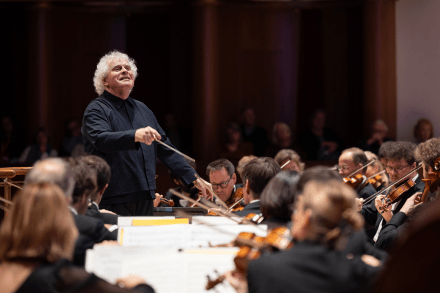
Stravinsky’s The Firebird begins in darkness, and it might be the softest, deepest darkness in all music. Basses and cellos rock slowly, pianissimo, in their lowest register; using mutes to give the sound that added touch of velvet. Far beneath them rumbles the bass drum: a halo of blackness, perceptible only at the very edge of the senses. In Liverpool Philharmonic Hall, with Sir Simon Rattle conducting the Bavarian Radio Symphony Orchestra, you felt your hairs tingle before you discerned a note. Seconds later, the very air within the hall seemed to be quivering with sensuous, engulfing bass warmth. You can be sure that Rattle anticipated that sensation; planned for it, in fact, from the moment that he confirmed this short British tour with his new orchestra.

The musical event of the year: Wigmore Hall BBC Radio 3 Special Broadcasts reviewed

From our UK edition

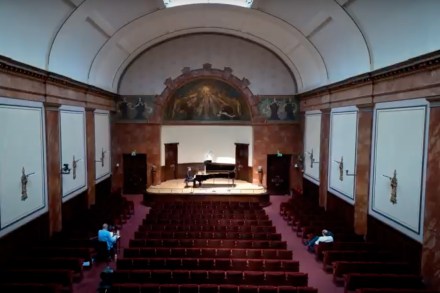
Remember when 2020 was going to be Beethoven year? There were going to be cycles and festivals, recordings and reappraisals; and if you weren’t actively promoting old Ludwig Van there was money to be made whinging about overkill. So was Stephen Hough’s decision to end his Wigmore Hall recital last Monday with Schumann’s Fantasie in C — a work conceived at least partly in homage to Beethoven, which opens with a fragmented musical landscape that Schumann at one point called ‘Ruins’ — a conscious reflection of the musical world’s changed circumstances? Or would that be reading too much into a situation in which a once-routine lunchtime concert suddenly feels like the musical event of the year?