Scandal

In this week’s Spectator | 27 January 2011

From our UK edition

The new issue of The Spectator is out in the shops today – subscribers can read it online, or on Kindle/iPad – and here are a few pieces that I thought might interest CoffeeHousers.   1. The death of meritocracy. Social mobility - or the lack thereof - is a subject that no political party feels comfortable with. And why? For the very good reasons that Andrew Neil outlines in the cover story of this week's Spectator. One vignette is that when Cameron's inner circle convened to discuss the recent school sports fiasco, the conversation turned to who played which positions in the Eton Wall game. If you missed his documentary last night, and even if you didn't, it's a must-read.   2. Why Cameron should adopt a King's Speech strategy.
Coulson resigns

From our UK edition

Andy Coulson has resigned today. David Cameron has issued a statement paying effusive tribute to his departing communications director. But there will be questions asked about his judgment in appointing Coulson after he had resigned from the editorship of the News of the World over the phone hacking scandal.

Cameron’s rough ride on Today

From our UK edition

David Cameron’s interview on the Today Programme this morning was another reminder of what a hard year it is going to be for the government. The bulk of it was devoted to Cameron doing his best to defend and explain the government’s planned reforms to the NHS. Cameron, normally so assured in these interviews, seemed frustrated as John Humphrys kept pushing him on why he was doing it having condemned NHS reorganisations in the past.   Then, the interview moved on to bankers’ bonuses. As he did on Andrew Marr earlier in the month, Cameron implied that action was coming. But there were no specifics set out, and if action is coming it will contradict with the signals that the Treasury was sending out last week.

More Tory discontent with the Speaker

From our UK edition

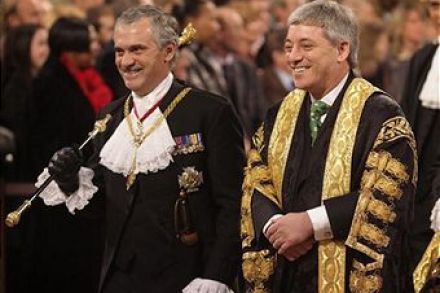
Guido and Benedict Brogan have already drawn attention to Paul Waugh's latest post. But a story this good deserves repeating, at length: "Tory MP Mark Pritchard is not one to swear. In fact he's ribbed by colleagues in the Tea Room for saying "Schmidt" instead of sh*t. But today, he exploded when the Commons Speaker confronted him over an alleged breach of the courtesies of the House. It all started when Pritchard got to his feet towards the end of Business Questions. As he rose, the Tory backbencher was told by John Bercow that as he was not present for the beginning of Sir George Young's business statement, he could not ask a question.

Eric Illsley announces his resignation

From our UK edition

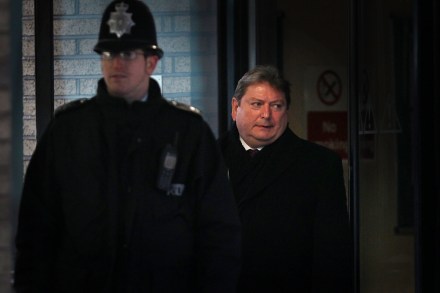
With the Labour party motioning to unseat him, and David Cameron and Ed Miliband speaking out against him, it was always likely to end thus for Eric Illsley. The receipt offender has just issued this statement: "I would like to apologise to my constituents, family and friends, following my court appearance, for the distress and embarrassment caused by my actions that I deeply, deeply regret. I have begun to wind down my parliamentary office, following which I will resign from Parliament before my next court appearance. I will be making no further comment." Which leaves us with the prospect of a by-election in Barnsley Central, probably in May. It's one that Labour will expect to win, not least because they achieved 47.

Illsley’s untenable position

From our UK edition

After David Chaytor's conviction last week, the dominoes just keep on tumbling. Today, it was Eric Illsley's turn to confess to his expenses-related sins – and he did so by pleading guilty to three "false accounting" charges in Southwark Crown Court. Given that he's still MP for Barnsley Central – although now as an independent, rather than the Labour MP he was elected as – that makes him the first sitting parliamentarian to face sentencing as a receipt offender. A dubious accolade, to be sure. In terms of day-to-day politics, the next question is whether Illsley will be able to hang on to his seat. He could, theoretically, remain in place if his sentence is under a year's jail time.

An arena where words are dangerous

From our UK edition

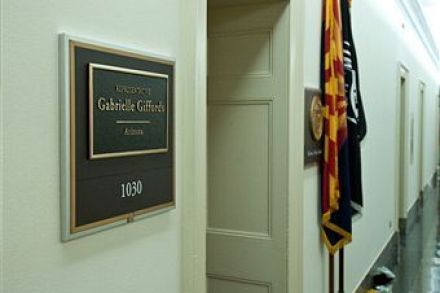
‘it was a deranged individual living in a time and place where anger and vitriol had reached such a fever pitch that we had dehumanized those in public life’ The words of Andrei Cherny on the shooting of Gabrielle Giffords are worth reflecting on. Political discourse has a tendency to hyperbole. But sometimes people need to think through the logic of their rage. For example, all those people who carried round signs saying ‘Bush=Hitler’ should have considered the implications of what they were saying—who of us would not have thought it right to assassinate Hitler if possible? Equally, those who talk about people being traitors should remember what the traditional punishment for treason is and whether treason is what they are really alleging.

Chaytor in chokey

From our UK edition

Log it in your diaries, CoffeeHousers: on this day – Friday, 7th January, 2011 – a former MP was sent to jail for abusing the parliamentary expenses system. Yes, David Chaytor has been sentenced to eighteen months for, ahem, "false accounting" his way to £18,000 of taxpayers' cash. He's the first former parliamentarian to be sent down since Jeffrey Archer in 2001. As fallout from the expenses scandal goes, it's probably the most searing example yet. But the question now is whether there will be any fallout from the fallout, so to speak.

A tale of ego and hypocrisy

From our UK edition

Sarah Ellison has profiled Julian Assange and his relationship with the Guardian for Vanity Fair. Read the whole piece for each petulant tantrum, sordid disclosure and twist of hypocrisy, but here are the opening paragraphs to get you started. ‘On the afternoon of November 1, 2010, Julian Assange, the Australian-born founder of WikiLeaks.org, marched with his lawyer into the London office of Alan Rusbridger, the editor of The Guardian. Assange was pallid and sweaty, his thin frame racked by a cough that had been plaguing him for weeks. He was also angry, and his message was simple: he would sue the newspaper if it went ahead and published stories based on the quarter of a million documents that he had handed over to The Guardian just three months earlier.

Dissecting operation Coulson

From our UK edition

Tom Baldwin's inaugeration as Labour spin guru occasions Tim Montgomerie to appraise Andy Coulson. For many, Coulson has committed the spin doctor’s cardinal sin and become the story, and not just his more voluble opponents on the left. Tim rejects that analysis, but concedes that Coulson may drift to pastures new in 2011. Coulson’s record is quite impressive. He snared the tabloid press, and, together with George Osborne, ended Gordon Brown’s short honeymoon, exposing the Labour leader’s indecision with well-timed tax cut promises. The Election That Never Was spawned a far more enduring theme: Labour’s internal fissures and the timidity of its senior figures. If Coulson goes, that will be his legacy.

Rome smoulders

From our UK edition

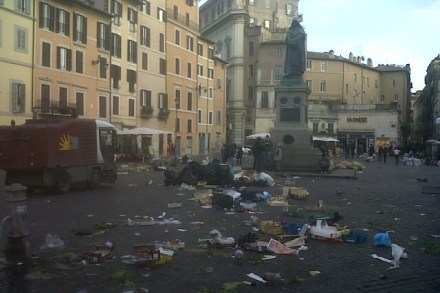
I'm visiting a stylish but tense Rome today, just as the Italian legislature has voted down a non-confidence vote in Silvio Berlusconi, Italy's mogul-cum-leader. "Rome is at war" my taxi driver told me and numerous demonstrations are going on. Ill Cavaliere, as Berlusconi is sometimes known, put in a strong defence of his record in the Senate and managed to coax, cajole and, some claim, bribe enough parliamentarians in the Chamber of Deputies to secure a small victory. He pulled not a Full Monty but a "Full Andreotti", using every trick and tactic in the book (and some scribbled in the margin too). For now, Berlusconi survives and can resume a life of partying pleasure-seeking and friendship with Vladimir Putin, which caused the political ructions in the first place.

What now?

From our UK edition

The BBC is reporting that the embattled Silvio Berlusconi has survived confidence votes in both of Italy’s Houses. The vote in the second House is understood to have been particularly close; apparently, there were just a couple of votes in it.   Theoretically, Berlusconi could soldier on. But his governing coalition is extremely fragile, and Berlusconi’s credibility is surely irretrievable. That said, the memory of Romano Prodi’s debacle of a government casts a long shadow and the opposition left remains totally disorganised by all accounts. Plus, Berlusconi was expected to lose both votes, particularly the second, so he now has a little momentum. Will it be a case of better the devil the Italian centre and right knows?

Controlling the message

From our UK edition

Shane Warne’s statement on his separation from his wife, which makes no mention of his alleged affair with Liz Hurley, is a classic example of how difficult it is for celebrities—or politicians—to both engage online and control a message. The first comment from a Greg Quinn says, ‘thanks shane for sticking it up the poms’. One imagines this was not the tone that Warne was planning to strike. The second is from someone calling himself Denis Angeleri and is a full-on assault on Warne’s character which includes the allegation that Warne pursued this man’s wife.

Woolas loses his appeal

From our UK edition

Phil Woolas has lost his appeal against the election court declaring his victory in Oldham East and Saddleworth. As I understand it, Woolas has not exhausted his legal options and could take the whole matter to judicial review. Word is that no decision will be made on a by-election until it is known whether or not Woolas will appeal.   Interestingly, Woolas was accompanied to court today by John Healey, the shadow Health minister. Healey is extremely popular with his Labour colleagues, he came second in the shadow Cabinet elections, and his decision to stand by Woolas today is a sign of where the emotional energy in the Parliamentary Labour Party is on this issue.

What’s with the Wiki-fuss?

From our UK edition

The whole Wikileaks scandal reminds me of a recent conversation I had, at his request, with a member of a foreign diplomatic service. The country he represented is a long-standing British ally and I saw no harm in talking to him as I didn’t say anything which I hadn’t said, or wouldn’t say, in print. Most of the chat was the usual stuff: what are Cameron’s prospects, what does he believe, will the Lib Dems last out five years, who are the real powers in Downing Street, what will happen to Andy Coulson, who are the new MPs worth watching etc. I suspect that what we discussed, along with many other conversations this man will have had, will have shaped the analysis he sent back.

Flight’s loose tongue

From our UK edition

Has Howard Flight just done a Keith Joseph? The latter’s run for Tory leader ended when he made a speech about poor people breeding.  As David said earlier, plain speaking can have its problems. But Flight’s danger is in being mistranslated. He sought to make a simple point: that many working families can't afford to expand their families, while the state provides a substantial cash incentive for those on benefits to do so. But his use of the word “breeding” sounds like he’s into eugenics, and the language – talking about the poor – sounds dodgier still. Given his struggle with foot-in-mouth disease, it’s surprising that Cameron ennobled him.  But still, his quote is a far cry from what Joseph said in Edgbaston.

Coulson to stay

From our UK edition

The indefatigable Paul Waugh reports that Andy Coulson plans to break Tom Watson’s delicate heart: the government’s communications director is not going to resign for whatever it is that he is alleged to have done. Pity poor Tom. Coulson may be an anonymous figure, certainly by comparison with Alistair Campbell, and the government may have problems articulating a growth strategy. But Coulson’s survival will warm the cockles of Tory MPs, who rely on him to uphold those issues the leadership ignores. Witness Coulson’s savage reprimand for Crispin Blunt over the prisoners’ entertainment plans.

Lord Young resigns

From our UK edition

Yet another GOAT fails to stay the course. Sky News reports that the gaffe-prone peer, Lord Young, has resigned, following his ill-considered comments about the 'so-called recession'. As the morning progressed, there was a growing sense of inevitability that he would resign. Once again, the government has been unable to steer a communications strategy through a brief and not very serious crisis: after all, Young was chatting idly to a journalist, not expounding government policy. I don't think his position was totally untenable: if Nick Clegg can hold forth on the legality of the Iraq war, why are the loose private opinions of an underling so unacceptable?

Phil Woolas, four investigations and a funeral wreath

From our UK edition

It may take another week to discover if Phil Woolas has the right to challenge the election court ruling that destroyed his career. To the delight of his cadre of supporters in the House, judges have said there are "difficult questions to resolve" - not about the evidence of Woolas' campaign making "false statements", but about the specific application of the Representation of the People Act (RPA). Before the last die is cast, here are two quick contextual points. First, it is not just Harriet Harman who is keen to shut down this episode - many folks on all sides of the House of Commons would like to pretend skulduggery of this kind is exceptional. It is not - Phil Woolas' behaviour is far from untypical of northern politics.

The politics of the student protests

From our UK edition

The student protests really are throwing up some extraordinary images. Who'd have thought that they'd end up smashing their way in to the lobby of Tory HQ, setting fire to placards, hurling bricks and other objects – and all as news helicopters buzz insistently overhead? It's not Paris '68, but it's certainly not traditional British reserve either. I'd be tempted to say that this is the fury of a generation which, as I've written before, has generally been excluded from the political conversation – if, like Iain Dale, I didn't suspect that this demonstration had been overtaken by a bunch of dubious fringe groups. So, instead, I'll refer CoffeeHousers to this argument made by the Guardian's Julian Glover a few months ago, and which I've highlighted before.