Saul bellow

Stop enabling the crisis junkies

Did you make good use of the neatly palindromic 2/22/22? To refresh your memory, it was a day that turned out be the narrow window between the moment when the evolving “science” suddenly allowed Democratic governors to start lifting their states’ mask mandates, and Vladimir Putin launching his special mission to “protect the people” in eastern Ukraine. I hope you enjoyed it, because given the way the mainstream media portray the news these days, it may be a while before we’re all allowed our next respite from the seemingly permanent existential crisis that runs as a through-line to our human condition.

crisis

Style and substance

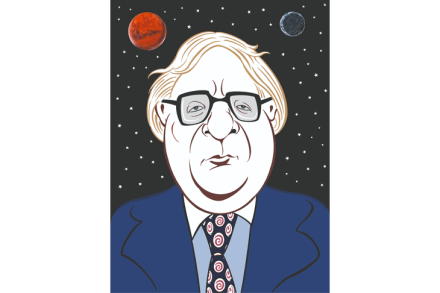
In Ravelstein, Saul Bellow’s thinly disguised account of the final years of the University of Chicago professor Allan Bloom, the narrator Chick and his close friend Abe Ravelstein go on a shopping spree in Paris sometime in the 1990s. For all their highfalutin philosophical talk about Athens versus Jerusalem and the like, Bellow makes it clear that there is a Dionysian as well as Apollonian cast to the bond between Chick and Abe. After departing the Hôtel de Crillon, their first stop is Lanvin. There, Abe is smitten by a beautiful flannel jacket retailing for $4,500. He buys it.

de mans

Read Ray Bradbury before he’s canceled

I was 14 or 15 when I first read Ray Bradbury, which is not a bad age to enjoy the man fully. It was the short story ‘Boys! Raise Giant Mushrooms in Your Cellar’, in which a lad called Tom does just that and it doesn’t end terribly well. Superficially, it is a silly story, but what hooked me from the outset was the vague yet pervasive sense of unease running throughout this minor small-town saga, disturbing the comfortable ennui of family life. Nothing spelled out — just a deepening disquiet, the common thread in all of Bradbury’s finest little vignettes. Back then, in the 1950s, the Cold War and the possibility of nuclear annihilation were hovering in the background, just beyond the edge of our eyesight, which perhaps explains the author’s state of mind.

bradbury

Who killed the American arts?

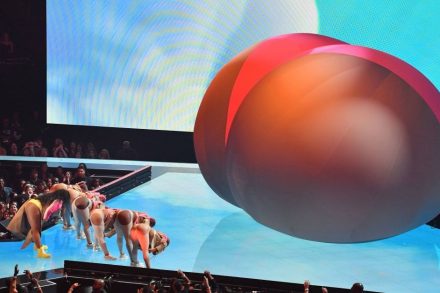
This article is in The Spectator’s inaugural US edition. Subscribe here to get yours. The arts in America are dying. In the 20th century, Americans defined the world’s popular culture, but the 21st century world has no need of America’s arts. Through technology transfer, the world entertains itself with knock offs like Bollywood and K-Pop. In the 20th century, Americans created a new art form in jazz and its derivatives, and turned Hollywood into the world’s dream factory. In the 21st century, African American music has collapsed into monotone misogyny, and digital sex (see Julie Bindel) is America’s real movie business. Americans are in the gutter, looking up at porn stars.

lizzo arts