Royals

The PM turns for his tailcoat

From our UK edition

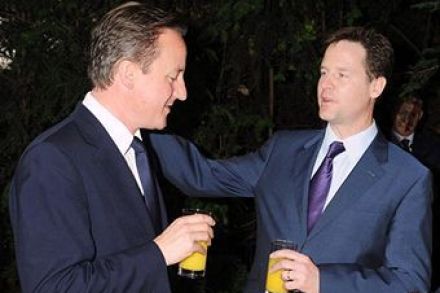
The Prime Minister will now wear a morning suit to the Royal Wedding, Ben Brogan reports. Since I first revealed in the Mail on Sunday that he was planning to wear a lounge suit there has been a slew of complaints that this was not appropriate. Even Bruce Anderson — the columnist most sympathetic to Cameron — joined in the criticism today and used it to tell a broader story about the coalition’s problems.  Downing Street has now clearly listened and realised that the job of a Prime Minister on these occasions is not to make news. I think the issue acquired such salience because it became a question of authenticity.

From the archives: The Royal Marriage Question

From our UK edition

Like father, like son. Prince William took his time to propose to Kate Middleton, almost as long as his father took to take the plunge in 1981. The press brayed on both occasions. Here’s what Auberon Waugh made of the Prince of Wales’ dithering over Diana. It was tragically prescient. The Royal marriage question, The Spectator, 10 January 1981. In the death of Princess Alice of Athlone at 97 last Saturday the Queen lost not only first cousin twice removed but also a great aunt by marriage. Under the circumstances, it might seem humane to allow a period of time to elapse for her to get over this double shock before petitioning her to turn her mind to the Royal Marriage Question.

How to pay for the Royal wedding? Simple: public subscription

From our UK edition

Now that we have a date in the diary, we can begin the traditional rites and customs on the path to the Royal Wedding. These traditions stretch back to Queen Victoria – street parties, pageants, commemorative china, bunting and flags, and an almighty row about how much it’s all costing. The cost of the monarchy is a perpetual controversy, given new impetus by any major monarchical occasion. Already, David Cameron’s decree that the date will be a public holiday is causing disquiet among some business leaders, who will lose a day’s trade. As Guido Fawkes points out, the additional day-off, coupled with Good Friday and Easter Monday, will make for a miserable year-end for many businesses.

Who will benefit from the Royal wedding?

From our UK edition

David Cameron is playing down the effect the Royal Wedding will have on the 5th May elections, especially the AV referendum. Fleet Street’s having none of it however. On the one hand, Benedict Brogan can already hear the pops of champagne corks in the No to AV campaign offices. He reasons: ‘One consequence of the Royal wedding will be to make it even more difficult for AV supporters to get their campaign motoring in time for the referendum.’ On the other, Alex Barker makes the case for the Lib Dems’ Yes to AV campaign. He has a three point-plan, centring on low turnout following reduced campaign time. This, he thinks, will benefit those concerned about the injustice of the current system, rather than its die-hard defenders.

A royal wedding bounce?

From our UK edition

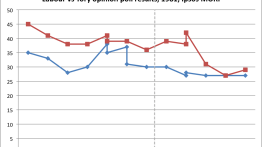
Slap all kinds of health warnings on this, but – in view of speculation that the Wills and Kate nuptials might work in the coalition's favour – I thought CoffeeHousers might like to see what happened to the the Tory government's poll rating in 1981, around when Prince Charles married Diana. So here's a graph I've put together from Ipsos MORI's figures. The dotted line represents the date of the wedding: PoliticsHome suggests that the "royal wedding worked wonders for Thatcher" – but, on the basis of the above, I'm not so sure. It's worth nothing, though, that the Tories surged ahead of Labour as soon as the Falklands War flared up in 1982. By June 1982, Thatcher's party were 27 points ahead of their rivals. P.S.

What Kate should know | 16 November 2010

From our UK edition

CoffeeHousers, you may have heard: Prince William and Kate Middleton are going to marry. Even now, the news helicopters are cluttering the sky above St. James's Park. and their overhead imagery is punctuating the breathless television coverage below. As it happens, The Spectator dealt with this story in 2006, with a piece by Patrick Jephson, Diana's former private secretary, on what Kate Middleton can expect from marriage into the royal family. One or two of its references – such as, "It isn’t just Woolworth’s who are jumping the gun with souvenir wedding plates" – may have dated, but the future Princess Catherine may still care to read it: What Kate should know, Patrick Jephson, The Spectator, 30 December 2006 ‘Perhaps Miss Middleton ...

Bonfire of the vanity photographers

From our UK edition

Today is a very good day to bury bad news. Prince William and Kate Midddleton’s engagement is going to dominate the news and the front pages for at least the next 24 hours. Almost any other story can be slipped out unnoticed in the current circumstances. So it was a convenient time for Downing Street to announce that the photographer and the videographer would be moved off the public payroll and back onto the Tory one. This means that their work will not be able to appear on any government websites. Downing Street’s correction is welcome. But in reality, the damage has already been done by this story. It will be like the car following the bike, a story constantly advanced by those sceptical of the PM.

Saluting the fallen in Afghanistan

From our UK edition

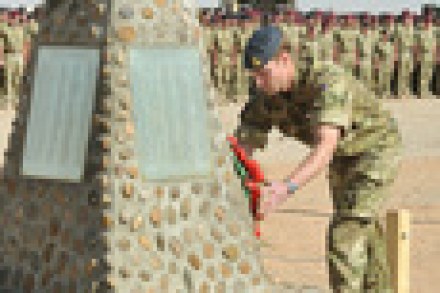
It is to be hoped that Prince William’s visit to Afghanistan for Remembrance Sunday was a morale boost to the troops out there, a reminder that the nation appreciates their courage and salutes their dedication to duty. It was a gesture—but a worthwhile and important one. The idea for Prince William to spend Remembrance Sunday in Afghanistan was Liam Fox’s. Fox was keen to have senior representation in theatre to show the troops that they were not a forgotten army and the whole visit was arranged several months ago. Fox and the Prince flew out to Afghanistan on a scheduled military cargo flight yesterday morning. They was nothing grand about the trip, they bedded down around freight boxes and replacement equipment that is heading out to the front line.

Survival of the fittest

From our UK edition

When I was at Eton, many years before David Cameron, much of the school was run by a self-elected society known as ‘Pop’. When I was at Eton, many years before David Cameron, much of the school was run by a self-elected society known as ‘Pop’. Some members were elected ex officio; but the majority belonged because they stood well with the Society’s membership. Most members of ‘Pop’ in my day put me in mind of David Cameron now. The principal difference is that he is by a distance cleverer than they were. However, the apparent social self- confidence and the toughness of mind and of spirit seem very familiar. It went with a certain cliquishness and a determination to be in charge.

All the Men’s Queen

From our UK edition

It is entirely possible that nobody, not even perhaps Queen Elizabeth herself, has ever known what she was really like, so great the charm, the smiling gaze, the gloved arm, the almost wistful voice, the lilting politeness, yet so strong the nerve, so dogged the spirit, so determined the trajectory. And so many were the gossamer veils that enwrapped her aura that these two extremes invariably melded into a rose-centered sweetness. For nearly 70 years Queen Elizabeth, like most royalty, nurtured the cultivation of a façade. To an adoring mass, she was Titania; few glimpsed the dagger beneath her flower-strewn couch. In William Shawcross’s majestic and elegantly written biography, we come closer than any other to the kernel of Queen Elizabeth’s being.