Rousseau

Why socialism will fail

The philosopher David Hume warned us not to mistake “constant conjunction” for causation. It’s good advice, though it is not the sort of universal disturbance in the force that some philosophers, eager to jettison old certitudes, believe it to be. Hume himself eventually rejected that “pretended skepticism” as a juvenile affectation. Like the rest of us, he recognized that reasoning from induction, from observed realities, introduces us to that great guide in the cognitive adventure of life – probability. Don’t let the appearance of a black swan down under disturb you: good mental hygiene and faith in the soundness of inductive reasoning go together. I indulge in this preliminary expectoration (apologies to Søren Kierkegaard) because I arrived in London on June 22.

The radical power of sentimentality

From our UK edition

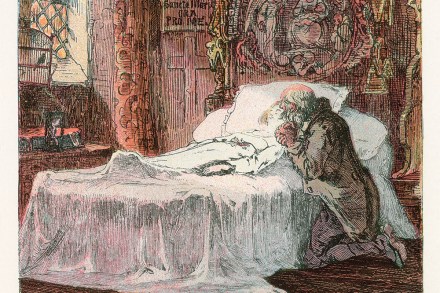
When Samuel Richardson’s Pamela was published in 1740, it unleashed something unprecedented in literary history. This epistolary novel about a virtuous servant girl resisting her predatory master saw new depths of feeling on the printed page, reducing readers across Europe to tears. The revolutionary impact of emotion informs Ferdinand Mount’s ambitious cultural history, Soft. The former TLS editor and one-time head of Margaret Thatcher’s policy unit has crafted what reads like an elegant love letter to the human heart itself. Mount grasps an important truth: emotions do not mean the same thing across time, nor are they consistently valued in the same way. What one era celebrates as virtuous emoting, another dismisses as mawkish excess.

‘Poor devils’: the hopeful scribblers of the French Revolution

From our UK edition

In 1778, Louis-Sébastien Mercier, dramatist and author of the early science fiction novel L’an 2440, claimed that only a small minority of writers in ancien régime France lived by their pens: ‘One exclaims everywhere that the number of authors is enormous… But in fact, there are not more than 30 writers in France who make writing a career.’ The rest needed patrons, protectors, pensions, privileges and sinecures to scrape a subsistence, or else were reduced to peddling libels and pornography, or spying for the police.

Was the French Revolution inevitable?

From our UK edition

In the middle of the 18th century, on the north side of the Palais Royal gardens in Paris, there stood a magnificent chestnut tree called the Tree of Cracow. In his presidential address to the American Historical Association in 2000, Robert Darnton explained that the name Cracow probably derived from the heated debates that took place in Paris during the War of the Polish Succession, but also from the French verb craquer: to tell dubious stories. News-mongers or nouvellistes de bouche, agents for foreign diplomats and curious members of the public gathered round the tree, which was at the heart of Paris’s news network, a nerve centre for transmitting information, gossip and rumours.

Democracy by numbers

The world of 2023, which scarcely speaks for the intelligence, the competence, or the success of the human race, does revive the age-old question of whether the individual is wiser than the species. One answer, stated in its simplest form, is the old saw that two heads are better than one. But is that true? And if so, are three heads better than two, und so weiter? Where do we come to the end of this? The key to the conundrum relates to government. Does oligarchy provide wiser rule than monarchy, aristocracy than oligarchy, and democracy than aristocracy? Consider the history of Britain and British government over the past centuries. Has democracy, in progressively greater measure, improved the management of British affairs since the eighteenth century?

democracy numbers

Why globalism is the enemy of freedom

I was recently asked to say a few words about “Globalism and Freedom” at a conference sponsored by Hillsdale College in Boise. Globalism, I said, is the enemy of freedom. Why? Because globalism systematically attacks and undermines the moral and political filiations that make genuine freedom possible. In order to understand why this should be so, we must begin by pondering the word “globalism” and its adjectival personification “globalist.” Neither occurs in my thirteen-volume edition of the Oxford English Dictionary, which dates from the early 1960s. What does that tell us? For one thing, it tells us that the term “globalism” and its cognates are neologisms. Neologisms come into being for a couple of different reasons.

globalism

Who needs Jordan Peterson when we have Ferdinand Mount?

You will by now doubtless be familiar with the University of Toronto academic Jordan Peterson. He’s the unlikely YouTube star and scourge of political correctness whose book 12 Rules for Life: An Antidote to Chaos has become a worldwide bestseller, beloved of serious young men seeking intellectual challenge and good old-fashioned fatherly advice. Summary: ‘Sort yourself out, bucko.’ We don’t really need the likes of Peterson here: we’ve got Ferdinand Mount. The book we should all be reading to sort ourselves out, buckos, is Prime Movers. Mount is, admittedly, an unlikely intellectual hero.