Rock music

The photographer who connects Bob Dylan and the Beatles

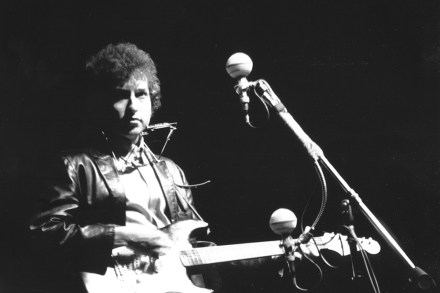
MAX JONES: “What do you think of the Beatles as artists and people?” BOB DYLAN: “Oh, I think they’re the best. They’re artists and they’re people.” —Melody Maker, March 1965 For more than 60 years, people have been fascinated by the connections between Bob Dylan and the Beatles. All were born during World War Two. All loved the music of Little Richard and Elvis Presley and Eddie Cochran; all were blues fans swept off their feet by rock and roll. Dylan was a Minnesota boy who early in his life became the avatar of the American folk scene, and then a protean man containing multitudes, both musically and otherwise.

bob dylan

The golden years of David Bowie

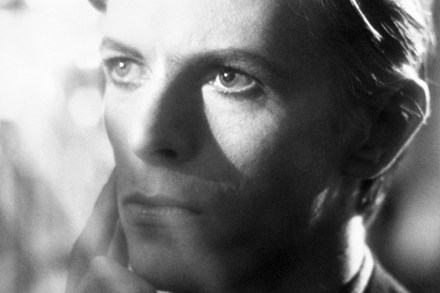
This year marks the anniversaries of two of David Bowie’s most compelling and powerful albums: 1976’s Station to Station and 2016’s Blackstar. Given that they are often – rightly – described as Bowie’s crowning artistic achievements, amid severe competition from his other releases, they also have the intriguing fillip that both were originally released in January: a fortunate time for the musician, who was born on January 8, 1947, even if it was also the month in which he finally departed this Earth. Yet the comparisons between Station to Station and Blackstar, which came out 40 years apart, are far more pervasive – and persuasive – than the serendipity of their release dates.

david bowie

What is it about Bob Dylan that sends writers mad?

From our UK edition

Ron Rosenbaum is a man of galactic learning. Theology, neuroscience, American history, psychology, Shakespeare, cosmology, ‘all of Dickens’, nuclear weapons, quantum theory, iron ore – nothing escapes his hungry eye. Except, perhaps, Bob Dylan. Which is unfortunate, given that he’s written a book about him. What is it about Dylan that sends writers mad? Christopher Ricks’s usual mellifluousness succumbs to a pun-overdose; Clinton Heylin’s blindingly completist biographies are as impenetrable as their subject; Sean Wilentz lurches from the unlikely to the banal. With Things Have Changed, Ron Rosenbaum, the de facto ‘Dylan correspondent’ for the Village Voice in the early 1970s, proves that even ‘being there’ confers no immunity.

The spiritual yearnings of David Bowie

From our UK edition

What did David Bowie mean by ‘No confessions/ No religion’ in his lyrics to ‘Modern Love’? Peter Ormerod proposes what at first seems an unlikely theory – that Bowie was talking about Gnosticism, the complex spiritual, though not religious, belief that God lies beyond the material world and that all humans carry a divine spark within. Ormerod admits that perceiving intellectual depths in a hit single sounds far-fetched – ‘an attempt to find weight in a scrap of fluff’. But he points out that Gnosticism, with its rejection of organised religion and its trust in God and man, was one of Bowie’s lifelong obsessions: a sincere enthusiasm he shared with Leo Tolstoy and Carl Jung.

The strange afterlife of This is Spinal Tap

From our UK edition

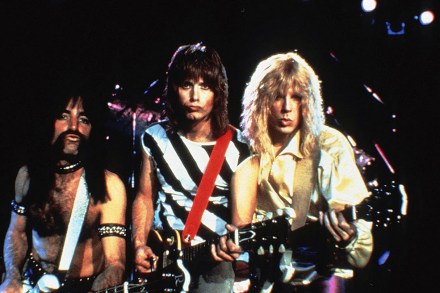
A Fine Line Between Stupid and Clever – credited to the late Rob Reiner, with Christopher Guest, Michael McKean and Harry Shearer, as well as to their Tap alter-egos Marty Dibergi, Nigel Tufnel, David St Hubbins and Derek Smalls – serves as a fitting companion to This is Spinal Tap (1984), the mother of all mockumentaries, much beloved by middle-aged men and their poor put-upon children. (My wife and my daughter, I should say, absolutely hate it: but then they prefer Pitch Perfect – and Pitch Perfect 2. So there’s no accounting for taste.) Part oral history, part behind-the-scenes memoir and part self-aware parody of rock memoir, the book’s a bit of a mess – much like the fictional band.

Arcade Fire extinguished

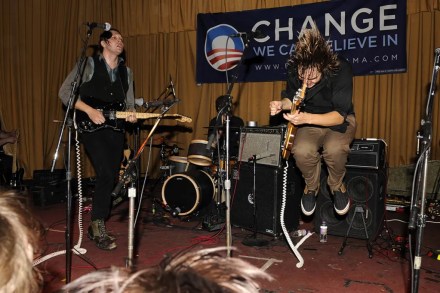
Amid the many disappointments and commercial flops the music industry saw this year, perhaps the most egregious was the complete failure of Arcade Fire’s album Pink Elephant. The failure represents not merely the probable end of the band, but also the death of Obama-era rock. Pink Elephant received dismal reviews and didn’t even chart on the Billboard 200. Given that their last album, We, reached #6 as recently as 2022, and their previous LPs, Reflektor and Everything Now, topped the charts, this is a near-unparalleled fall from grace for a once-mighty act. That the married pair who compose the nucleus of the band, Win Butler and Régine Chassagne, announced their separation a few months later was the particularly rancid icing on the already-stale cake.

arcade fire

Justin Currie’s truly remarkable rock memoir

From our UK edition

In 2022, at the age of 58, Justin Currie – singer, bass-player and main songwriter with the Scottish rock band Del Amitri – faced what might be mildly termed a series of setbacks. In short order his mother died, his long-term partner suffered a catastrophic stroke, leaving her requiring constant care, and he was diagnosed with Parkinson’s. About the first two there was not much to be done but weep. When it came to the third, Currie decided he would manage the ‘Ghastly Affliction’ (the ‘GA’ as he calls it) as best he could with medication and keep playing music as long as he was able to. The following year his band undertook a mammoth 52-day trek across North America as support act to the 1990s Canadian rockers the Barenaked Ladies.

David Bowie’s plastic soul: Young Americans at fifty

When the Puerto Rican guitarist Carlos Alomar first met David Bowie, he didn’t think a man could turn a whiter shade of pale. The singer looked emaciated; his complexion teetered on translucency, and weighing only 95 pounds, the only signs of life were a pulse and a mop of orange hair. It was the mid-Seventies, and Bowie was touring America deep in the throes of addiction — the “darkest years” of his life — surviving on a paltry diet of red peppers, cigarettes, milk and cocaine. Yet somehow, through the haze of these drug-fueled years, Bowie underwent a chameleonic reinvention of self and sound — and finally broke America. Bowie had cast a sheen of suspicion over America as an aspiring artist, even admitting to hating it initially.

david bowie

Born in the USA: how Bruce Springsteen’s 1984 album bridged the American political divide

From our UK edition

In 1977, in the wake of the death of the king of rock’n’roll, the American journalist and music critic Lester Bangs said: ‘We will never again agree on anything like we agreed on Elvis.’ The ‘we’ was America. And Bangs was right – until June 1984, when Bruce Springsteen released Born in the U.S.A. The album’s blend of synths, guitars and colossal drums would vault Springsteen into stadiums. It went on to sell 17 million copies, and for a time made its creator the biggest rock star in the world. Steven Hyden looks to trace who Springsteen was before this moment, what happened to him during it, who he became after it – and, with more difficulty, what became of his audience.

My summer of love with God’s gift

From our UK edition

When the author and podcaster Viv Groskop first visited Ukraine, she travelled there from Moscow, on a long train that ran eventually beside a field of sunflowers. They were, she recalls in her lovely and modestly scaled memoir, like a ‘blast of sunshine screaming: “Welcome to Ukraine! You are no longer in Russia!”’ The year was 1994, and Groskop had been in the former USSR for a little under a year. A modern languages undergraduate at Cambridge, she had decided to take her year abroad in St Petersburg. Until she got there, she had barely thought of Ukraine. It was one of a bunch of newly independent states; it hadn’t come up on her course.

Tina Turner was greater than a rock star

Even rock and roll can have produced few stranger paths than the one that led a then physically unprepossessing, raspy-voiced African-American named Anna Mae Bullock from her early days as a devoutly Baptist sharecropper’s daughter in Depression-era Tennessee, to her final years as a practicing Buddhist living in a whitewashed mansion overlooking the dove-blue haze of Lake Geneva. That was the life trajectory of the artist known to the world as Tina Turner, who died Wednesday at the age of eighty-three.

tina turner

The National is the next great American rock band

The title “America’s Radiohead” has been flung around a lot, either admiringly or despairingly, over the past quarter-century, but the Brooklyn-Cincinnati rock band The National have done more than most to merit the description. Like Radiohead, they specialize in doom-laden, portentous but oddly beautiful songs that seem entirely out of kilter in today’s homogenized musical landscape. As with their Oxford cousins, the band contains two brothers. One is an eminent classical musician, while the other has one of the most distinctive voices in contemporary rock. And they are unashamedly, even defiantly cerebral at a time where intellectualism has been surgically removed from the genre.

the national

Tiananmen and the Tang: the rise of rock in China

From our UK edition

35 min listen

Every protest needs an anthem, and for the 1989 Tiananmen Square protests, 'Nothing to My Name' by Cui Jian became that emblem. Cui was one of China's earliest rockers, taking inspiration from the peasant music of China's northwest and fusing it with the rock 'n' roll that was beginning to arrive in the country. It put rock music – and the Chinese interpretation of it – under the national spotlight. On this episode I talk to Kaiser Kuo, host of the China Project's Sinica podcast, who also happens to be a founding member of Tang Dynasty, one of China's earliest and greatest rock bands.

Spiky, sticky, silly: interviewing Van Morrison

From our UK edition

Q: ‘How would you define transcendence?’ A: ‘Well, how would you define it?’ I interviewed Van Morrison last year. (I’m fine now, thanks.) While the exercise wasn’t quite the near-death experience of industry legend — he was polite and accommodating, if not always exactly forthcoming — it got sticky at times, as the above exchange illustrates. Let’s call it a solid 6.5 on the Lou Reed Scale. Morrison, who turns 75 on the last day of this month, was formed in an age when a people-pleasing public persona wasn’t essential for musical success.

The old monster Elton John appears charmingly self-deprecating

From our UK edition

I don’t care for Elton John. A cross between Violet Elizabeth Bott and Princess Margaret, his temper tantrums are legendary, whether asking fans on to the stage to dance and then screaming at them not to get so close, or demanding that an employee do something about the blustery weather keeping him awake. They say you get the face you deserve after 50, and he looks every inch the bitter old busybody who divides his time between twitching the curtains and gossiping over the fence about the behaviour of those younger and prettier than himself. He has now become drearily bound into the liberal establishment — see his recent puffed-up pronouncement about Brexit: ‘I’m ashamed of my country… I am sick to death of Brexit. I am a European.

Nick Lowe is that rare phenomenon — the veteran rock star who improves with age

From our UK edition

It is to Nick Lowe’s everlasting credit that in May 1977, a few months after David Bowie released the album Low, Lowe issued an EP entitled Bowi. Appearing on Stiff Records at the height of punk, the record contained ‘Marie Provost’ (sic), an account in two and a half minutes of the unhappy life and bizarre death of the silent movie star Marie Prevost: ‘She was a winner/ Who became the doggie’s dinner,’ chorused a heavenly choir of multi-tracked Lowes.

Real rock

From our UK edition

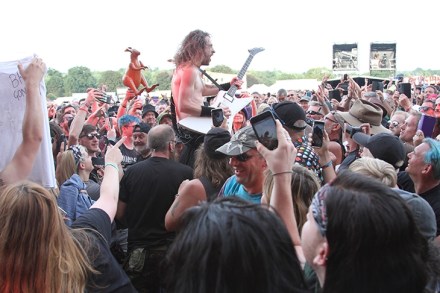
Last weekend, in a pleasant park outside Maidstone, a most unusual rock festival took place. For one thing, it was a rock festival. Despite ‘rock festival’ being a common term for any live music event featuring multiple artists taking place outdoors, there are very few actual rock festivals any more. There are festivals for specific forms of rock — the metal events Download and Bloodstock — and there are festivals that have a few rock bands amid everything else. But not festivals that feature a broad range of bands, all of whom can be called ‘rock’ — hard rock, prog rock, country rock, blues rock. For another, there was the crowd.

Music and revolt

From our UK edition

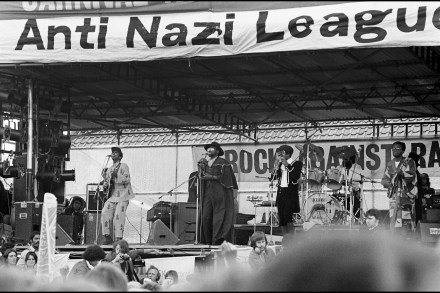
On 13 August 1977, a demonstration by the National Front was routed in the streets of Lewisham by thousands of anti-fascist activists. The latter’s elation palled, however, when they saw the evening news frame the event as a battle between rival extremists. Among the critical voices were Labour’s deputy leader Michael Foot and the Daily Mirror, which branded the anti-fascists ‘as bad as the National Front’. The NF’s opponents learned a valuable lesson at remarkable speed. Just weeks later, they launched the Anti-Nazi League at the House of Commons, with Neil Kinnock and Peter Hain on the steering committee and a medley of celebrity supporters that included Iris Murdoch, Brian Clough, Melvyn Bragg, Dave Allen, Warren Mitchell and Prunella Scales.

Beat it

From our UK edition

Here’s a tricky quiz question for you. What word completes this sentence from a BBC4 documentary on Friday: ‘The world as we know it was created by the…’? The answer, bizarrely enough, is ‘backbeat’ — because the documentary in question was On Drums… Stewart Copeland!, in which the former Police percussionist took a fiercely drum-centric view of well, more or less everything. This was a programme, for example, that compared Elvin Jones’s stick work for John Coltrane to Moses’s parting of the Red Sea; that attributed the Beatles’ success largely to Ringo; and that put forward Dee Dee Chandler as one of the key figures of 20th-century global history.

The birth of minimalism

From our UK edition

The Spectator is responsible for many coinages. One of the most significant came in 1968, when an article by our 24-year-old music critic, Michael Nyman, appeared with the headline ‘Minimal Music’ (reprinted below). It was a wry joke about music that was more experimental than strictly minimal but it stuck and a musical style that, whatever you think of it, has rarely been matched in influence or reach was born. Walking home from the Fugs’ concert, organised by the Middle Earth at the Round House last week, I was shocked by the 4 a.m. silence — by its awesome superiority to a lot of modern music, and by its unfamiliarity.