Robin diAngelo

Why woke doesn’t work

Many conservatives will have long suspected that “woke” language – the cocktail of victimhood narratives and group identity – alienates most Americans. It is simply too grating, and it is simply too divisive. And no matter what your politics, it is almost impossible to imagine a healthy society that is built on an aggressive competition over who is the most historically aggrieved.  Up until now this has been mostly an intuition. But a new study by the Network Contagion Research Institute (NCRI) finally puts evidence on the table: that this “woke” language actively provokes real anger, defensiveness and bile in respondents.
A reckoning with DEI pedagogy

Diversity, Equity and Inclusion bureaucracies and programs have become ubiquitous in the corporate and educational sectors. More than half of American employees have DEI meetings or training events at work, at a cost of an estimated $8 billion annually. These initiatives are championed as tools to reduce bias and discrimination, build inclusive and empathetic environments — and redress systemic racism,  Yet the effectiveness of such trainings has rarely been rigorously and systematically evaluated. When studies have been undertaken, not only are results mixed at best, the prevailing focus has been on potential benefits, with notable exceptions: some programs have been found to reduce organizational diversity and others to produce resentment.

dei

The trouble with ‘white privilege’

This article is an excerpt from Kenan Malik's new book, Not So Black and White: A History of Race from White Supremacy to Identity Politics. In 1935, while writing his masterpiece Black Reconstruction in America, W.E.B. Du Bois pondered the question of why, in the wake of the Civil War, there had not developed working-class solidarity across racial lines. “The South, after the war,” he observed, “presented the greatest opportunity for a real national labor movement which the nation ever saw or is likely to see for many decades.” Yet, he lamented, “the labor movement, with but few exceptions, never realized the situation.

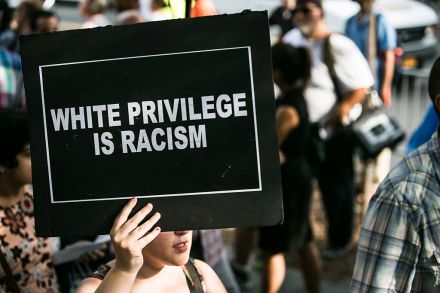
white privilege

Exposing the logical fallacies of Critical Race Theory

In a late September article for the Washington Post magazine, staff writer DeNeen L. Brown declared that she has “decided to eventually leave America.” Though when or where she will go she “can’t say for sure,” she is “finally ready.” “I want to engage in intellectual debates without having to explain the history of this country’s racism,” she writes. "I want to live in a country where racism is not a constant threat.” There are other things about America that frustrate Brown. It's a country that “seem[s] to be increasingly dangerous for Black people” — an observation that is, in fact, true, though, as data indisputably demonstrates, this stems far more from black-on-black crime than it does from a supposedly “white supremacist” regime.

A rogues’ gallery of diversity consultants

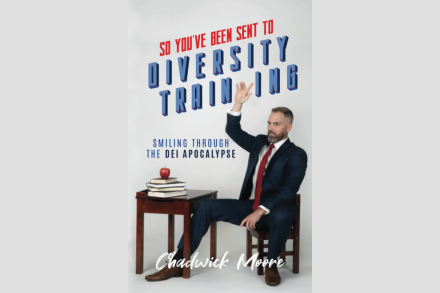
Last Thursday, the Biden administration launched what its calling a Chief Diversity Officers Executive Council to help implement strategy for diversity, equity, and inclusion training across the federal government. While researching my book, So You’ve Been Sent to Diversity Training: Smiling Through the DEI Apocalypse, I was plagued by the question: what kind of person aspires to become a diversity czar? Unfortunately, no czars would speak to me, perhaps suspecting I may not have their best interests in mind. Instead, I talked to workers from across the economy about their experiences with DEI training on the job. From our conversations, I drew up a taxonomy of the DEI consultant.

dei

I apologize for my white baby

I’m here to apologize to my brothers and sisters of color — my white daughter’s pale skin has brought me nothing but shame. I have failed as an ally. For if whiteness is the root cause of systemic racism, then what does that make me for having a white child? How can I extol the virtues of anti-racism and dismantle white supremacy while simultaneously birthing another white person? These two seem incompatible. If I were truly honoring my commitment to decolonizing white spaces, I would have had my tubes tied or had myself euthanized and done the BIPOC community and the planet a favor. I’m such a coward. My therapists will have their work cut out for them this week. “Love is love,” unless you fall in love with a cishet white male.

white

Stop reading

Like you, I enjoy reading. I know, of course, because you are reading this. But perhaps you also share my interest in preventing others from reading. In case you are not yet enlisted in the Restricted Literacy Movement, allow me to point out our three basic claims. (Call it RLM, why don’t we: acronyms don’t have to be read, after all.) First, literacy beyond the rudimentary has become unnecessary. Most people can do their jobs and find fulfilling leisure without it. Second, attempting to produce literacy in the unwilling is an expensive, typically futile undertaking. Third, literacy is simply harmful to many who have acquired it. It engenders discontent, self-doubt and destructive impulses.

reading

Shelter and the world of white homeless privilege

The biggest homeless charity in the UK appears to be teaching its staff that white people who live on the street need to check their privilege because they benefit from white supremacy. This is the latest Wokeyleak from a source inside Shelter, which manages some £70 million ($96.3 million) in donations a year. The charity subjected employees to over 12 hours of excruciatingly woke Zoom tutorials on such edifying topics as ‘Mitigating Whiteness at Work’. Extracurricular reading included courses on ‘Learning How To Apologise’. Some of Shelter’s diverse staff objected to this controversial critical race theory training but were told that participation was ‘not optional’. Every single one of Shelter’s executive team, incidentally, is white.

shelter

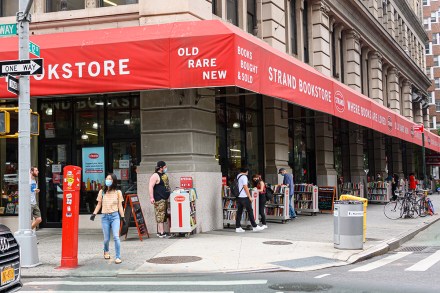
Why should The Strand survive?

On Friday book-loving New Yorkers got a shock as the city’s largest bookstore — The Strand — announced that it risked going out of business. A post on Twitter from the company said: ‘We need your help. This is the post we hoped to never write, but today marks a huge turning point in The Strand's history. Our revenue has dropped nearly 70% compared to last year, and the loans and cash reserves that have kept us afloat these past months are depleted.’ https://twitter.com/strandbookstore/status/1319686649798905856 What followed included an appeal to the public to return to the store to ensure that the 93-year-old business could keep trading. Prominent writers and pundits rallied around, and in recent days lines have appeared outside.

strand

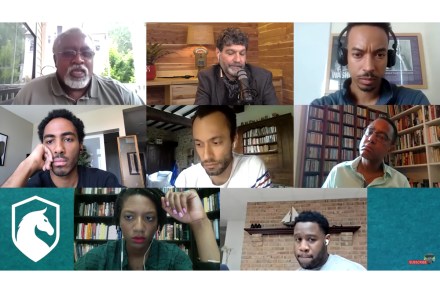
Is this the sanest debate on race yet?

The race debate is rapidly descending into a one-note diatribe where white accountability has become the only game in town. White liberal voices now dominate an increasingly febrile narrative but alongside mainstream flagellations about systemic racism and white supremacy, a less hysterical, more nuanced discussion is taking place. Black centrist and conservative intellectuals have been quietly trying to unpick what's really been going on across western democracies. Their conclusions run counter to the mainstream story we are all being impelled to sign up to, namely that injustice runs deeper than mere skin color.

bret weinstein

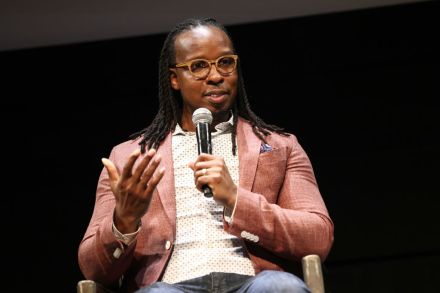
Forget White Fragility: here are 10 books America should be reading about race

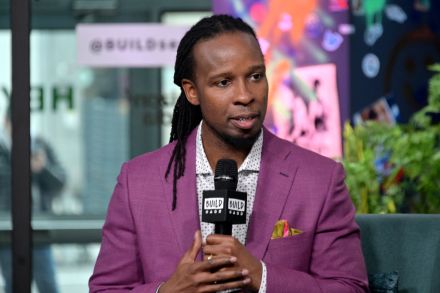
This extraordinary summer of protest and upheaval has sparked the most pervasive and sustained interest in the question of what it means to be black in the United States that I have witnessed. The American people, it can be said in all earnestness, are finally having that proverbial ‘national conversation’ on racism. And yet, one of the more fascinating consequences thus far has been the emergence of White Fragility, a text written by the Italian-American academic and corporate consultant Robin DiAngelo, and How to Be an Antiracist, by the historian Ibram X. Kendi, as the two most sought after (by a wide margin) explanatory aids for understanding our moment. Both books posit race — and racial difference — as something real and practically essential.

Anti-Semitism