Robert rintoul

The Spectator, war and slavery: a note on our history

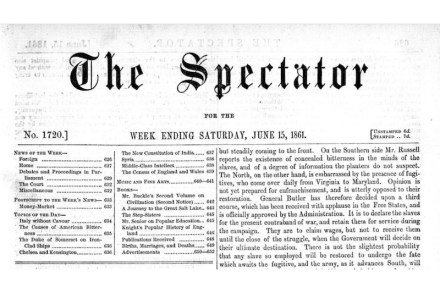
In her article about the point of protest, Tali Fraser mentions the support of Manchester in the 1860s for the North against the slave-owning South in the US civil war. At the time, this was an unpopular cause amongst the British elite. Of all the publications still around today, only one backed Abraham Lincoln then: The Spectator. The magazine almost went bust as a result. I remarked a few days ago that what sets us apart from other long-running magazines is that our values have not changed much since we were founded in 1828 – or, indeed, since the The Spectator appeared in its original form in 1711. That aroused some teasing: surely, some asked, a magazine needs to change with the times?

slavery

The case for trusting the public is stronger than ever

From our UK edition

Our Plan is entirely new, comprising – 1. The whole News of the Week: selected, sifted, condensed and arranged as to be readable throughout. 2. A full and impartial exhibition of all the leading Politics of the Day. 3. A separate Discussion of Interesting Topics of a general nature, with a view to instruction and entertainment at the same time. 4. A Department devoted to Literatures… 5. Dramatic and Musical Criticism. 6. Scientific and Miscellaneous information. — R.S. Rintoul’s announcement of a new weekly, July 1828 In the history of publishing, no magazine has ever printed a 10,000th issue. Until now. The Spectator is unusual not only in that it is the world’s oldest weekly, but that it still follows the formula that R.S.

Sugared with wit: How ‘Mr Spectator’ came to life

From our UK edition

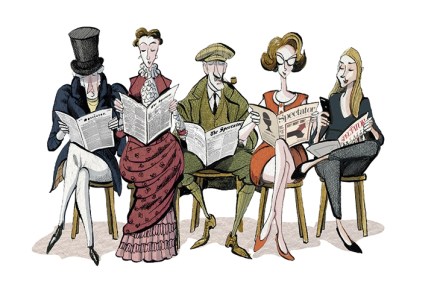
The Spectator is a child of the 19th century, and damned proud of it. First published in 1828, the link provided by its 10,000 issues to a long-vanished age of Regency waistlines and Romantic poets is one of the great wonders of journalism. Its success was built upon Victorian foundations, yet it is a peculiarity of the current media landscape that The Spectator, the only current affairs magazine actually to have been published in the 19th century, should in many ways seem the least Victorian of the lot. The New Statesman, Prospect, Standpoint: all have a certain quality of moral earnestness that one could imagine Gladstone admiring. The Spectator, by contrast, seems to breathe the coffee-perfumed air of an earlier age.