Robert maxwell

My sister Ghislaine became a prop in the theatre of global online outrage

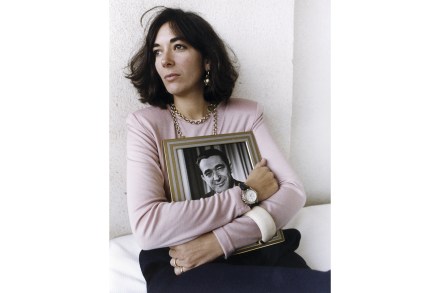
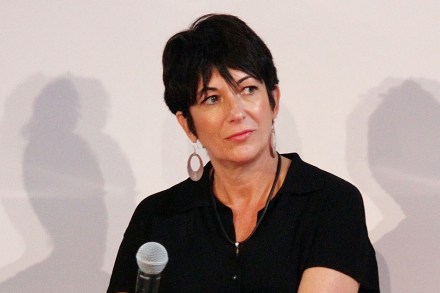
My family name has become a byword for scandal. My father Robert went from press baron to tabloid monster within weeks of his death in 1991. My sister Ghislaine, convicted in New York three decades later for sex-trafficking offences linked to Jeffrey Epstein, became the algorithmically optimised villain of the online age. Last week’s arrest of the former Prince Andrew shows how fully a newer system has taken hold: one in which guilt is first declared on the homepage and only later, if at all, tested in court. My sister became a digital-age Myra Hindley, a single face through which the internet could monetise disgust Old protections – the presumption of innocence, etc – become threadbare once a story enters the global content mill.
Why are publishers such bad judges when it comes to their own memoirs?

From our UK edition

‘The publisher who writes is like a cow in a milk bar,’ Arthur Koestler once declared. For some reason this put-down has never stopped publishers from fathering their memoirs, and the book trade titan’s life and times used to be as much a staple of the library shelf as slim volumes of nature poetry. As in other branches of life-writing, the procedural approach tends to vary. There are practical primers – Stanley Unwin’s The Truth about Publishing, say, from the year of the general strike, or Anthony Blond’s The Publishing Game (1971); there are delightful vagaries in the style pioneered by Grant Richards’s Author Hunting (1934); and there is the emollient, if not absolutely vainglorious, reminiscence, most recently on display in Tom Maschler’s Publisher (2005).

Enjoyably tasteless: Power – The Maxwells reviewed

From our UK edition

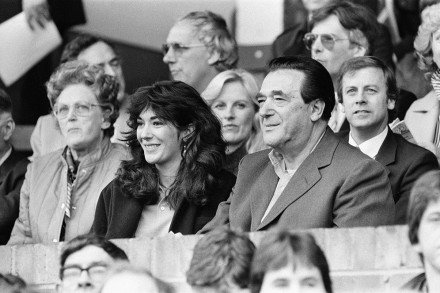
This year marks three decades since Robert Maxwell fell naked to his death from the deck of his yacht, The Lady Ghislaine. Power: The Maxwells is the latest contribution to the never-ending autopsy of Maxwell’s character and the circumstances of his death. It follows a now well-established formula, juxtaposing the lives of Ghislaine and her father, marvelling at how against seemingly unbeatable odds she can have managed to disgrace the good name of Maxwell, and throwing in the occasional Trump soundbite as a garnish of relevance.

What did Ghislaine Maxwell want?

In 1990, Jeffrey Epstein spent $2.5 million on a Palm Beach mansion less than a mile and a half from Donald Trump’s Mar-a-Lago resort. Epstein had money and all the luxuries of wealth: multiple homes, private jets and beautiful women. Yet Epstein had a difficult time fitting in with elite society circles. Friends described him as crass. Epstein might have lived among the elites, but he was not one of them. That is, not until he met Ghislaine Maxwell. She introduced him to class, was his match in every way, and would eventually become his partner in one of the darkest schemes one could ever imagine. In the early 1990s, Ghislaine Maxwell was young, popular, and broke.

ghislaine maxwell

Inside the damaged web of Ghislaine Maxwell’s family

The now-infamous photograph of Ghislaine Maxwell at a California In-and-Out Burger has captivated Western audiences. She is calm. She is poised. She is a British heiress surrounded by fast food and Americana capitalism, a stranger to both empires but not the forces which govern them. Like every new development in the strange, perverted saga of Jeffrey Epstein, the snapshot raises more questions: mainly, what does she know? Amid fallout from Epstein’s death, we are left studying peripheral actors to better understand how the powerful protect their own, arriving at bloodlines.

ghislaine maxwell