Religious belief

An intellectual farce: Rapture of the Deep, by Robert Irwin, reviewed

If Robert Irwin had not existed, then Dan Brown, or better still Umberto Eco, would surely have had to invent him. In his Memoirs of a Dervish, the roller-blading, pinball-playing polymath reported: ‘It was in my first year in Oxford that I decided that I wanted to become a Muslim saint.’ Irwin, who died in 2024, first pursued that esoteric life goal in a Sufi monastery in Algeria. He returned to become not just a vastly erudite scholar of Arab Muslim culture but a madcap maverick of a novelist as well. As a writer, he loved paradox, surprise and reversal. When in 2006 he controversially dismantled the flawed thesis and

The problem with Pascal’s wager

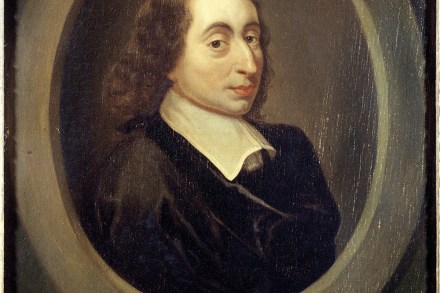
Blaise Pascal resists definition. During a short life (he died in 1662, aged 39) he invented the calculator, laid the foundations for probability theory and created the first public transport system. He was also an austere Catholic, whose call for a return to strict Augustinian doctrines put him outside the religious mainstream. As a philosopher, he is remembered today for his ‘wager’ argument – a challenge to atheists, framed as a cosmic gamble. As Graham Tomlin shows in this lively, conversational biography, Pascal worked in threes, often steering a course between extremes. As a Catholic, he refused to commit to the new sect of Jansenism, but also abhorred the Jesuits’

Richard Dawkins delights in his own invective

The late Derek Ratcliffe, arguably Britain’s greatest naturalist since Charles Darwin, once explained how he cultivated a technique for finding golden plovers’ nests. As he walked across the featureless moor, ‘the gaze’, he wrote, had to be ‘concentrated as far ahead as possible, not in one place, but scanning continuously over a wide arc from one side to the other and back’. Should you look down at your feet, or allow yourself to be distracted for a second, chances were that this elusive wader would slip off its eggs and you would never work out whenceit came. Reading Richard Dawkins strikes me as requiring a similar kind of disciplined attention.