Regulation

A global MAGA crusade against web regulation?

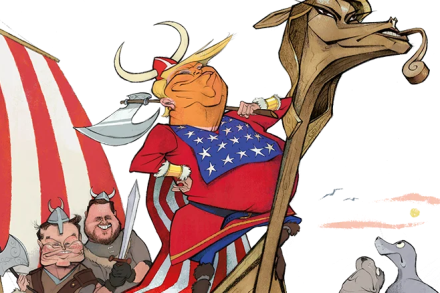
“Censorship is not how we do things in Western civilization”. So said Congressman Scott Fitzgerald (R-WI) of the United Kingdom’s new Online Safety Act (OSA). Its effects on free expression are “dangerous and needs to be addressed,” possibly by means of an international “united front”. The Congressman was fresh from meetings with British and Irish lawmakers and US tech firms, held as part of a House Judiciary Committee fact-finding mission to investigate the impact of the OSA and the European Union’s new Digital Marketing Act on American businesses. The main event was a one-on-one between Committee chair Jim Jordan (R-OH) and Peter Kyle, the United Kingdom’s Secretary of State for Science, Innovation and Technology.

Online Safety Act

Newsom won’t create abundance

With great fanfare, California Governor Gavin Newsom recently signed “historic” legislative package designed to “advance an abundance agenda.” It’s a nod to the recent (and fashionable) book Abundance by the liberal bloggers Ezra Klein and Derek Thompson, and it’s supposed to reform a state best known for a punitive cost of living and chronic shortages of everything essential – including housing, water, and energy.  Key to Newsom’s new legislation are Assembly Bill 130 and Senate Bill 131, both of which make fundamental changes to how the California Environmental Quality Act (CEQA) is enforced.

Newsom abundance

Say no to Democrats’ latest attack on Big Tech

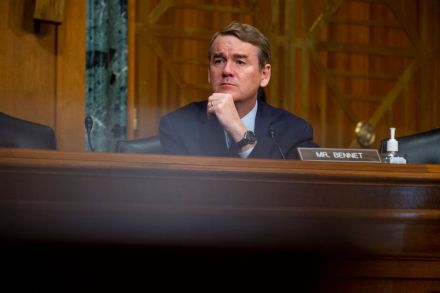
A new proposal from Senator Michael Bennet would effectively put unelected bureaucrats in charge of Big Tech. Bennet, a Colorado Democrat, sees a suggested five-member panel, called the Federal Digital Platform Commission, as a needed brake on the growth and reach of technology companies. “Although the Federal Trade Commission and the Department of Justice have done admirable work to enforce existing antitrust and consumer protection laws, they lack the expert staff, resources, and tech-oriented culture necessary for robust and sustained oversight,” Bennet remarked. “Both bodies to date have acted reactively to challenges raised by Big Tech, when proactive, long-term rules are needed.

Congress’s half-baked assault on Big Tech

A major anti-Big Tech bill is heading to the floor of the Senate after a frustrating markup session in the Judiciary Committee. The American Innovation and Choice Online Act, as it's called, majorly changes how online retailers can sell and promote their own branded wares and apps. It even bans Amazon and Google from suggesting their own products over those of a third party. Supporters from both sides of the aisle are portraying the bill as a great leveler of sorts. They believe it helps consumers and the so-called “little guy” against the Big Tech companies.

antitrust hipsters

Banning anonymity creates more problems than it solves

From our UK edition

There are growing calls to end internet anonymity in the wake of Sir David Amess’s death. The Tory MP Mark Francois argued in the Commons this week for a ‘David’s law’ to do this, to try and bring back civility into politics. Today, Matt Hancock and the Labour MP Rupa Huq have stated that the Online Harms Bill should tackle ‘anonymous abuse’. But outlawing internet anonymity would be a mistake. Two members of parliament have been killed in the past five years. This, one long-serving MP laments, is the kind of statistic you would expect in a failing state, as I write in the magazine this week.

Blame legacy media for spreading disinformation, not Facebook

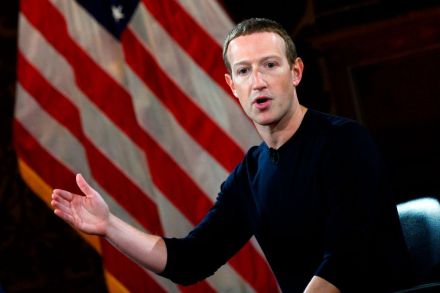
One week after the 2016 election, Hillary Clinton’s digital chief, Teddy Goff, declared Facebook the enemy of the republic and the reason why Clinton had failed to capture the presidency. His diagnosis caught on, and the media and the Democrats had found their excuse for Trump’s election. That war on Facebook continues today. Now, a whistleblower has landed on the scene, buoyed by a powerful Democratic PR firm led by former Obama alum Bill Burton. A wave of media attention has crested that's meant to once again put Facebook in the regulatory crosshairs and demand more censorship from what's deemed to be dangerous and influential 'misinformation’.

mark zuckerberg facebook

Britain has won the biggest Brexit prize of all

From our UK edition

In the end, the fish were only of symbolic importance. Neither does it matter that much what happens to Scottish seed potatoes, no matter how much of a fuss Nicola Sturgeon kicks up. Farming, tariffs and quotas are of relatively little importance given that the exchange rate will simply adjust to compensate for any changes that are made. As the UK and the EU finally agree a trade deal, there was one victory that really mattered: regulatory divergence. And on that the UK appears to have secured a victory.

Is Boris’s gay conversion therapy ban enough?

From our UK edition

Gay conversion therapy has been heading for a ban for a few years now, with Boris Johnson repeatedly pledging to stop the 'absolutely abhorrent' practice. The government is working on the details of such a ban, which is not without its problems, particularly when it comes to therapy for transgender people. But it would be the first time the government has got at all involved in the world of therapy and counselling, which is not currently subject to statutory regulation. Ministers' current position is that government regulation of the sector would not be 'proportionate or effective'.