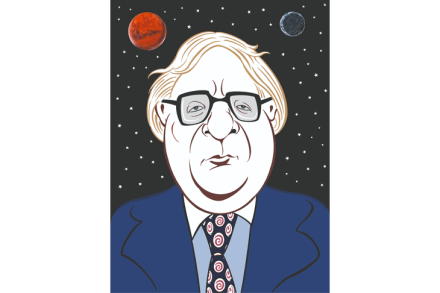
Ray Bradbury

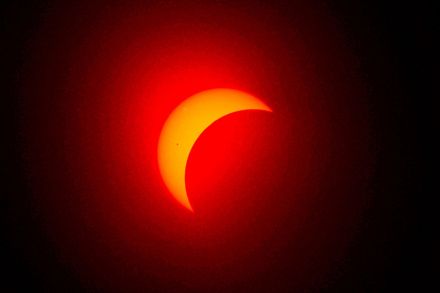
Gazing at the eclipse in Walt Whitman’s perfect silence

The day before the April 8 eclipse — our postage stamp of ground sat smack dab in the middle of totality — we abounded in sunshine and birdsong, with nary a cloud in the sky. The day after, too, was dominated by the yellow star moseying along the ecliptic, but on the big day — we won’t be similarly situated for another 120 years — ole Sol was obscured by thick gray clouds. (Which parted, as if on mischievous cue, two hours after the celestial spectacular.) This is why Western New Yorkers exhibit a cheerful “oh well” fatalism, and why we know that the Buffalo Bills kicker will always miss the game-ending field goal. The hungry and hotel-hunting eclipse trackers who were predicted to overrun our rural county, leaving a spoor of tourist dollars, never showed.
eclipse

How science fiction novels read the future

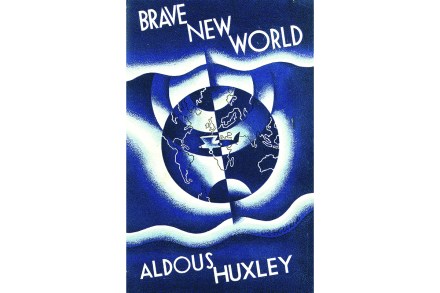
The pandemic is not quite over, but we are getting used to its inconveniences. What disaster will be next? An antibiotic-resistant strain of the bubonic plague? Climate collapse? Coronal mass ejection? Will the next catastrophe be natural — perhaps a massive volcanic eruption, the likes of which we have not seen for more than two centuries, since Tambora in 1815? Or will it be a manmade calamity — nuclear war or a cyberattack? And might we inadvertently descend into a new form of AI-enabled totalitarianism in our efforts to ward off such calamities? To all these potential disasters it is impossible to attach more than made-up probabilities. So what can we do about them? The best answer would be that we should strive to imagine them.

science fiction

Read Ray Bradbury before he’s canceled

I was 14 or 15 when I first read Ray Bradbury, which is not a bad age to enjoy the man fully. It was the short story ‘Boys! Raise Giant Mushrooms in Your Cellar’, in which a lad called Tom does just that and it doesn’t end terribly well. Superficially, it is a silly story, but what hooked me from the outset was the vague yet pervasive sense of unease running throughout this minor small-town saga, disturbing the comfortable ennui of family life. Nothing spelled out — just a deepening disquiet, the common thread in all of Bradbury’s finest little vignettes. Back then, in the 1950s, the Cold War and the possibility of nuclear annihilation were hovering in the background, just beyond the edge of our eyesight, which perhaps explains the author’s state of mind.

bradbury