Rainer Maria Rilke

The potentially catastrophic consequences of reading Kafka

From our UK edition

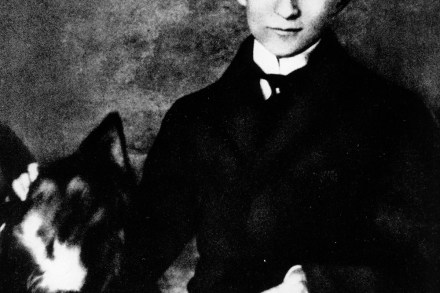
Rainer Maria Rilke’s claim that fame is the ‘sum of all misunderstandings’ is certainly true of Franz Kafka, whose life, work and reception have long been plagued by myriad misunderstandings. Despite publishing comparatively little in his all-too-short lifetime (1883-1924), Kafka gained a reputation as a writer’s writer, whose work was met with keen appreciation by, among others, Rilke, Hermann Hesse and Thomas Mann. In Kafkaesque, which first appeared in French under the title Dix versions de Kafka, Maïa Hruska charts Kafka’s afterlife through the perspective of ten ‘first’ writer-translators.
The truth about beauty

In the late 1940s, the German art historian Hans Sedlmayr observed that ‘many things that are classified as “back-ward”... might be the starting-point of real inner progress’. At a moment when the art establishment has abandoned art for political attitudinizing, the path forward begins with a movement of recuperation. In an age when anything can be a work of art, the question of whether something is art has ceased to be compelling: what matters is whether something is a good work of art, and about this the art world has rendered itself hors de combat. Should we be pleased with this state of affairs? Or, to put it another way, is the celebrity of people like Damien Hirst or Marina Abramović or the Chapman brothers a good thing for art?

beauty