Putin

This diplomatic ‘triumph’ over Syrian WMD could be disastrous

From our UK edition

The age-old question cui bono (who benefits) should be asked regarding Russia and the United States’ diplomatic agreement on the international control and subsequent destruction of Syria’s chemical weapons. Amidst the hopefulness and optimism, the answers to this question prove disturbing. We must remember that it might take a disaster even worse than 100,000 dead and the use of WMDs against civilians before this light touch regulation of crimes against humanity is shown to be immoral and flawed. Who benefits? The Syrian government’s response is indicative, with Ali Haider, who has the Kafkaesque title of Minister of National Reconciliation, claiming ‘a victory for Syria won thanks to our Russian friends’.

G20 summit gets small-minded with ‘small island’ gibe

From our UK edition

What a nice host Vladimir Putin is. Shortly after world leaders gathered in his country for the G20 summit in St Petersburg, a briefing from the President's official spokesman that Britain is 'just a small island no-one pays any attention to' made its way into the media. Nothing like rubbing the nose of one of your guests in the dirt as politicians in this country work out where Britain now stands in the world after rejecting intervention in Syria (more on this in James's column this week).

Long life: Putin, Saatchi, Murdoch…hell hath no fury like an old man scorned

From our UK edition

The days may be long gone when a husband would pretend to commit adultery in a Brighton hotel so as to clear his wife, whatever her faults, of any blame for a divorce. But might it not still be customary for him at least to present their separation as mutually and amicably agreed? Not so, apparently. For such gallantry has been strikingly absent from the three most publicised divorce suits of the summer, in which rich and powerful men have each acted unilaterally and without much regard to their spouses’ dignity. A month ago, Vladimir Putin appeared on Russian television with his wife, Lyudmila, to announce that their 30-year marriage was over.

Cameron wants to change the military balance in Syria, but how do you do that without arming the Islamists?

From our UK edition

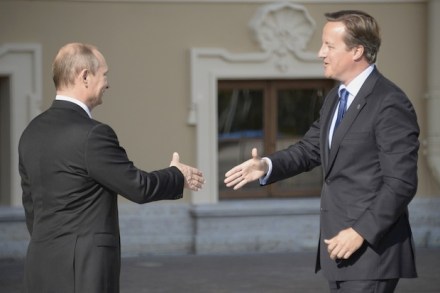
David Cameron and Vladimir Putin have just concluded their pre G8 talks, the main topic of which was Syria. Cameron wants to use the next few days to try and persuade the Russians to stop backing Assad; the weapons they’ve been sending him have enabled him to gain the upper hand on the rebels militarily. Cameron instinctively wants to do something about the slaughter in the Levant for both strategic and moral reasons. As one figure intimately involved in British policy making on Syria told me earlier, ‘The one certainty is that, if nothing is done, not only will lives be lost, not only will Assad not negotiate, but we will also not stop radicalisation.

Little Moscow

From our UK edition

To Kensington last night, to celebrate Russia Day at the glorious mansion of the noble, kind and august ambassador. There was patriotic music, oratory of great distinction and the crowd rejoiced; or so the propagandists will have it. Tongues loosened as the Russian Standard flowed. John Whittingdale, Commissar of the Culture Media and Sport Select Committee, was ripe for gossip: ‘If half of what I hear is true it will be quite a show trial,’ he told me. ‘There is all sorts to come out yet.’ Whatever was he talking about? Guests were reluctant to discuss the forthcoming G8 summit in Northern Ireland. I hear that the Russian delegation’s travel plans are in disarray. Cries of ‘Putin cannot stay here!

Vladimir Putin meets the Munchkins

From our UK edition

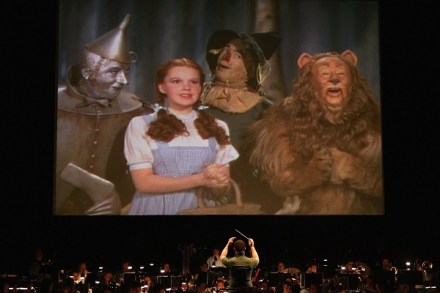
Late on Friday my editor at the Observer called and asked me to dash off a few words on what was wrong with the Mail and some Conservative MPs demanding that the BBC ban 'Ding, dong the witch is dead', a Munchkin chorus, from The Wizard of Oz. I was stuck on a train to Glasgow, but how could I resist? The partially successful attempt to stop the BBC playing a clip from a 1939 children's film is one of the most surreal cases of censorship I have seen. Right wingers were not demanding that the BBC blacklist the song because it was pornographic or libellous. The lyrics the merry Munchkins chirruped were irrelevant to them. They were censoring because they disapproved of the motives of the people who had bought the song, not because of the content of the song itself.

Arraigning a corpse

From our UK edition

Part 1 “Russian Justice” A judge at Moscow’s Tverskoi District Court stopped the trial of Sergei Magnitsky (above) yesterday – but not because the defendant was dead. Magnitsky’s demise was of no concern to the judge. It did not bother him in the slightest. The court merely postponed proceedings until 4 March when the world will see something rarely seen since the Middle Ages: a prosecutor arraigning a corpse. The Putin regime – that mixture of autocracy and gangsterism – is desperate to discredit the late Mr Magnitsky and his employer, Bill Browder of Hermitage Capital. If you don’t know the story, I’ll explain why. Browder exposed corruption in Russian companies. The Russian authorities did not approve.

To Russia with love

From our UK edition

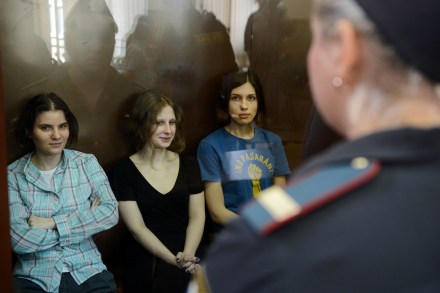
A surprisingly large turn-out last night for the launch of the Conservative Friends of Russia, given the recent 'Pussy Riot' trial mess. A notable absence from the Kremlin ambassador's garden was Sir Malcolm Rifkind, the group's Hon. President. There was also a distinct absence of parliamentarians. Lumbering up to the plate was John Wittingdale, whose proclaimed love of the motherland goes beyond his Russian girlfriend. The Chairman of the Culture Select Committee has been known to be close to the country for years and extolled his love of Russian literature to the two hundred strong crowd. He mentioned the latest Putin controversy and did indeed declare himself a music fan.

Yes, Pussy Riot were – and are – right – Spectator Blogs

From our UK edition

One of the happiest things about writing for the Spectator is that there is no editorial line. Indeed the editor is always pleased by an intra-mural rammy. So there's this: Dennis Sewell's argument that Pussy Riot, the only all-girl Russian punk band you're likely to have heard of, have been asking for trouble and deserve some of the trouble they're receiving is the lamest sort of counter-intuitive, concern-trolling journalism. It helps pay the bills, mind you, so there's that too.

Why Pussy Riot were wrong

From our UK edition

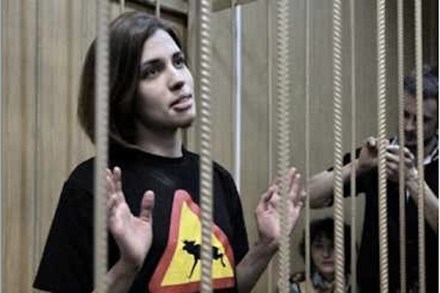
The three members of Pussy Riot have been sentenced to two years each in prison today for hooliganism after performing a 'punk prayer' protesting against Vladimir Putin in Moscow's main cathedral. The sentencing has been denounced as disproportionate and the charges as trumped up, but in last week's issue of the Spectator, Dennis Sewell asked whether the western media had forgotten that what the band did was still wrong. Sewell first explained that the trio's treatment by the Russian legal system was indeed unfair: In case you’re still in doubt about my position, let me remove every scintilla of ambiguity. What has been done to the trio was wrong, wrong and viciously wrong.

Judo diplomacy

From our UK edition

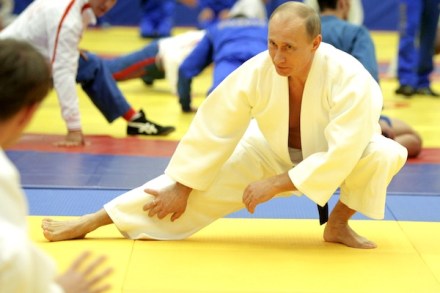
While the ladies' beach volleyball is exciting Boris ‘glistening otters’ Johnson and the peeking Prime Minister, another event could be about to get very political. President Putin is set to arrive in town on Thursday: yes there will be bilateral meetings, but he’s really here for the judo. At a time when UK/Russian relations are particularly low, one Russian Embassy source jokes that perhaps diplomacy should be a little more hands on and that Putin should challenge fellow judo fan William Hague to a match. Sadly this will remain a pipe-dream, which is just as well - we would not want Hague’s old judo partner - Lord Sebastian Coe - to get jealous.

Siege mentality

From our UK edition

The mirrored sunglasses worn by Putin on the cover of Angus Roxburgh’s The Strongman give the Russian president the look of a crude mafia boss, while the half-face photo on the cover of Masha Gessen’s book makes him appear both more ordinary and more sinister. This hints at the difference of the authors’ approach. Gessen focuses on the trajectory of a postwar Soviet boy growing up in a shabby communal flat, fierce and vengeful in street fights, who dreams of joining the KGB. This dream was fulfilled: Putin got a boring job as an agent in East Germany, and ten years after returning home he surprisingly became the most powerful man in Russia — which, 12 years later, he remains. His years in the KGB taught him secrecy.

Putin’s dilemma

From our UK edition

If you enjoy scoring tiny but likely returns on your wagers, then how about putting some money down on Vladimir Putin to win today's presidential election in Russia? William Hill are currently offering odds of 1/100, if you're interested. Like John Simpson, writing for this week's Spectator, they regard this as ‘Russia’s Coronation Day’. A near cert. The rest of Simpson's article is worth reading, but it's his conclusion that we'll pull out here. Putin, he says, will ‘walk it in the first round’ today, but his medium-term future looks far less secure: ‘Russia is changing. It can’t simply be told to shut up any more.

Gorby: Putin’s like Thatcher

From our UK edition

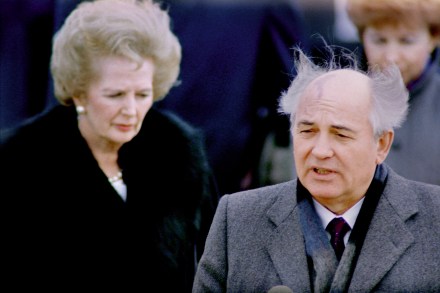
The Times has a fascinating interview (£) with former Soviet leader, Nobel Laureate and two-time Man of the Year Mikhail Gorbachev. He strikes an optimistic tone about the future of democracy in Russia, praising the ‘Moscow Spring’ protesters and saying ‘This is the right moment to start creating as part of this new situation a strong democratic party.’ But perhaps the most eye-catching comes when he compares Vladimir Putin with Margaret Thatcher: ‘Mr Gorbachev recalled Mrs Thatcher, Prime Minister at the time, telling him that she was leaving a summit in Paris early to deal with the challenge to her leadership from within the Conservative Party.

Putin’s end

From our UK edition

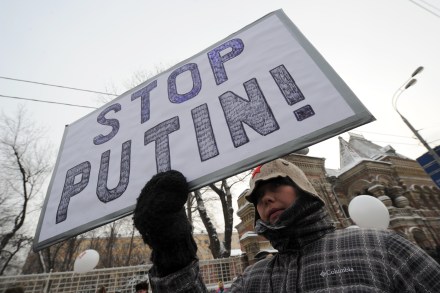
This weekend, thousands of people defied the cold and the control in Moscow to show their dislike for Vladimir Putin and what Russia has become under his leadership: corrupt, energy-reliant, centralised, and uncompetitive. It is now a country that must win externally because it can't help but lose internally. ‘Post-BRIC’, as a new report has it. My guess is that Putin will ‘win’ the presidential election, and will ensure that a sufficient number of counter-protests make it look as if he has more support than he actually has. That's exactly the kind of ‘virtual politics’ that Moscow excels at and which Ukraine expert Andrew Wilson has described so well in a book on the subject.

What didn’t happen in 2011

From our UK edition

In the run-up to every New Year, newspapers and the blogosphere are full of articles about what happened in the year just gone. 2011 was a particularly eventful year so there will be much to pick from. But what about the things that did not happen, though they were widely expected? Here are five things that did not take place — though, as the year unfolded, many people would have bet on their occurrence: 1) Algeria's revolution. As one North African dictator after another fell to pro-democracy protesters, everyone expected Algeria to be next. But it wasn't.

Russia looms significant across 2012

From our UK edition

The Christmas weekend was, I'm sure you noticed, rich with political incident. And yet, from continued turbulence in the Middle East to continued turbulence in Chris Huhne's career, few things stood out as much as the protests against Vladimir Putin in Russia. They were, by most reasonable estimates, the largest in that country since the fall of the Soviet Union. And they add to the wave of disgruntlement that has been swelling since even before this month's disputed parliamentary elections. The wave, of course, hasn't broken yet. But few seem sure about how far it will travel and how much change it will wreak.

Russia’s Tahrir?

From our UK edition

Just a couple of days after Vladimir Putin's electoral setback, Russian police have arrested a number of protesters, including veteran liberal politician Boris Nemtsov and the popular blogger Alexei Navalny. This is the umpteenth time that Nemtsov, the former deputy prime minister of Russia, has been manhandled by the Russian state. He also spent some time in jail at the beginning of 2011 and was subjected to strenuous treatment. But, it is unusual for Navalny to have been pulled in. He is an activist who's gained prominence among Russian bloggers and reformers. He is not "Russia's Erin Brockovich", as hailed by Time Magazine, and many of his recent remarks contain more than a dollop of Russian xenophobia.

Behold post-Putin Russia

From our UK edition

Sunday's parliamentary elections in Russia marked the beginning of the end of the Putin era. It won't feel like it for another few years, as the Russian strongman ascends to the nation's Presidency again and bestrides the international stage. But when future historians come to examine post-Putin Russia, the end of 2011 will be seen as the point at which the transition began. Exit polls showed Prime Minister Vladimir Putin’s United Russia party with less than 50 per cent of the vote. United Russia held a two-thirds majority in the outgoing State Duma.

Putin’s party takes a hit

From our UK edition

Vladimir Putin’s party has taken a hit in Russia’s parliamentary elections. Reuters reports that the United Russia party took 48.5 per cent of the votes, down from 64 per cent in 2007. These results are far from reliable: the BBC reports Russia’s independent election monitoring group has already recorded more than 5,300 complaints of malpractice. But television pundits have been keen to present this election as a referendum on the Russian prime minister, as he paves his way back to the Kremlin. Whatever the precise result, though, the early picture suggests that Putin’s subversive opponents – described by Pavel Stroilov in these pages earlier in the year – have weathered persecution to knock the Muscle Man.