Pronouns

What’s in a pronoun?

“I am Kamala Harris. My pronouns are ‘she’ and ‘her.’ I am a woman sitting at the table wearing a blue suit.” That embarrassing exercise in self-parody was how the former vice president of the United States chose to introduce herself at a July 2022 roundtable on how the Supreme Court’s reversal of Roe v. Wade could affect disabled people. Harris’s pandering indulgence in radical gender ideology barely attracted notice at the time. But two years later, just after she took the mantle of the 2024 Democratic presidential nomination from the addled Joe Biden, a video of her awkward self-presentation resurfaced and went viral as evidence of her intellectual vapidity, poor public speaking skills, and display of a sensibility that most Americans reject.
pronoun

How game developers could kill the industry

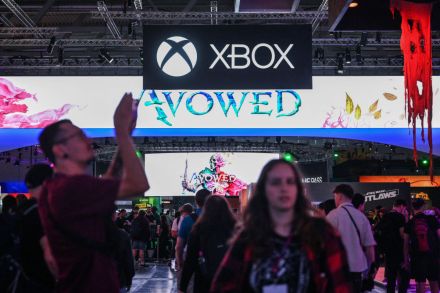
In the golden age of video games, developers and players built relationships through a shared celebration of creativity. Many developers were gamers themselves, which helped foster mutual trust and respect with their audiences. Players assumed developers would prioritize their desires and craft experiences centered on their enjoyment. That mutuality is now gone as many creators have grown more concerned with pushing political ideology and show disdain for their consumers. Many game developers now treat their users not as collaborators in a shared passion but as adversaries, accusing them of bigotry and hate.

game

State Department offers counseling to staff it misgendered

The State Department sent an all-staff email Friday apologizing for misgendering people with its new pronoun system and offered counseling to parties who may have been offended by the systems error. The Spectator is exclusively publishing a copy of the email: The Washington Free Beacon first reported that the State Department's plan to allow employees to add pronouns to their emails backfired spectacularly. Apparently, the State Department's system began randomly assigning pronouns to employees rather than allowing them to choose their preferred pronouns. This "unfortunate mistake" led to "hurt" and "distress", according to the State Department's chief information officer Kelly Fletcher.

US Secretary of State Antony Blinken delivers remarks (Getty Images)

Demi Lovato’s pronoun-based self-deception

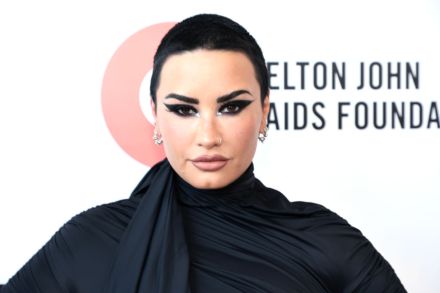
Recently, Demi Lovato has been feeling more feminine. The singer and actress a few days ago told “Spout Podcast” host Tamara Dhiaan that when it comes to pronouns, she’s “adopted she/her again.” Lovato, who came out as nonbinary in 2021, explained her decision: “I’m such a fluid person.” “Fluid” would be one word to describe Lovato, whose Instagram profile since April has read “They/them/she/her.” Cue the confusion from even woke media, though podcaster Dhiaan followed up the interview with this very helpful clarifying tweet: “For the record: Demi Lovato did NOT say she is abandoning they/them as her pronouns, she simply said she is adding she/her.” The Washington Post also chimed in to help make sense of this very important celebrity announcement.

Ain’t that good news

A few Fridays ago, I met Tablet magazine’s incomparable Liel Leibovitz for breakfast. Over inedible gluten-free banana bread, we caught up on everything from Covid to religion, politics and pop culture. The conversation took a depressing turn, as so many seem to these days. I asked Liel if he had seen some recent ridiculous news — now too distant and unremarkable to even remember — but which highlighted the extreme hypocrisy and self-defeating brokenness of our society. He said that he had, and added: “Isn’t it great?” “Great?” I asked. “Great,” he said. “Just terrific. Things like this make me giddily optimistic.” Liel shared his philosophy with me while we walked to the Upper East Side’s premier kosher butcher — Park East.

good

There’s nothing ‘pro-trans’ about deleting women

I can pinpoint the moment I knew I wouldn’t be able to remain, as I had thought of myself until that time, “pro-trans.” I had grown up in 1990s New York City and had known many gender-bending people. Very few called themselves “trans,” but androgyny was in. Drag queens ran the club scene. “Girls who want boys/Who like boys to be girls/Who do boys like they're girls/Who do girls like they're boys,” the 1994 Blur song went. What was the big deal about being a girl who wanted to look like a boy or a boy who wanted to present as a girl? No one was hurting anyone. You like red lipstick, that boy likes wearing a dress. Who cared? I certainly didn’t. It was the early 2000s, the heyday of the blogosphere, and the comment sections were lit.