Progressive

The growing bipartisan backlash against ‘Latinx’

Since its emergence, the term “Latinx” has been unpopular with Hispanics. Yet despite this opposition, progressive activists and organizations continue to use it as a means of identifying people of Latin American heritage in a supposedly more sensitive way. The term's origins remain a subject of debate, although its users argue that the word "Latino" reinforces the patriarchy while the "x" recognizes nonbinary people. According to the Wall Street Journal, it made its debut in academic literature a decade ago in Puerto Rican psychology periodicals as part of an effort to "escape the gender binaries encoded in the Spanish language." Since then it has been adopted by many progressives as part of their ever-expanding twenty-first-century lexicon.


latinx

The generation war and why millennials are drifting leftward

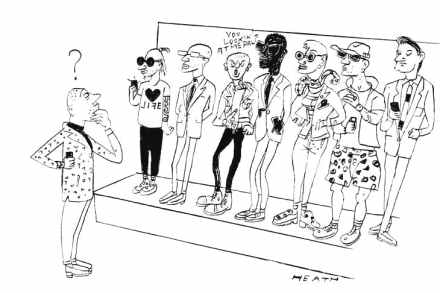
The war between the generations is on, and the battle lines have been drawn. The baby boomers don't like the millennials because they can't understand why the millennials won't just buy a house already. The millennials don't like the boomers because, as they've explained, a house no longer costs $75 with a couple coupons like it did back in 1972. And lately the millennials and Generation Z have been mixing it up as well, over such important issues as hair partings and emojis. So a fractured conflict, this one, a bit like Lebanon's civil war except with more awful Facebook posts. Yet if you're looking to really understand the social media-fueled rifts between the generations, then you have to start with the main combatants, the boomers and the millennials.

crime debate themes matt walsh

Tim Ryan’s phony ‘moderate’ persona

Tim Ryan is cunning. Facing an ultra-tight race against J.D. Vance for Ohio’s US Senate seat, Ryan is hedging his bets by running as a Republican on the Democratic ticket. Ryan strikes me as willing to do and say whatever it takes to win — more so even than your average career politician (he is 49 years old, has served in the US House since 2003 and was in the Ohio State Senate before that). Lately, in an attempt to appear “moderate,” Ryan has been adopting Republican talking points and throwing his own party under the bus. But a trip down memory lane shows Ryan for what he really is: someone who voted “with President Biden and House Speaker Nancy Pelosi 100 percent of the time this Congress,” and only voted in line with President Trump 16 percent of the time.

Don’t Worry Darling was almost interesting

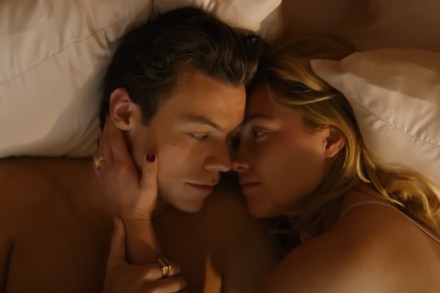
Olivia Wilde’s Don’t Worry Darling is a film more likely to be remembered for its offscreen drama than its substance. If only the final product that made it onscreen was as spicy: here, a promising premise and intriguing themes are let down by languid pacing, scattershot performances, and a willingness to lapse into preachiness that borders on misandry. Don’t Worry Darling is set in the planned community of “Victory” somewhere in the American West, a town led by self-help guru Frank (Chris Pine, playing a mixture of Joe Rogan, Jordan Peterson, and a televangelist — really, he wouldn’t be out of place on The Righteous Gemstones).

The deep state is no conspiracy theory

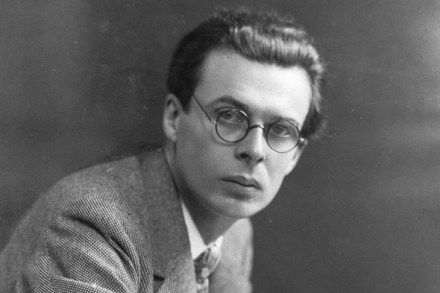
In 1958, Aldous Huxley foresaw a congestion of power able to shape and defy popular will. “Under the relentless thrust of accelerating over-population and increasing over-organization, and by means of ever more effective methods of mind-manipulation, the democracies will change their nature,” he predicted. “The quaint old forms—elections, parliaments, Supreme Courts and all the rest—will remain. The underlying substance will be a new kind of non-violent totalitarianism.” The changes, according to the author of Brave New World, would be almost imperceptible. “All the traditional names, all the hallowed slogans will remain exactly what they were in the good old days. Democracy and freedom will be the theme of every broadcast and editorial,” he continued.

aldous huxley brave new world