Professors

America’s professor: the afterlife of C.S. Lewis

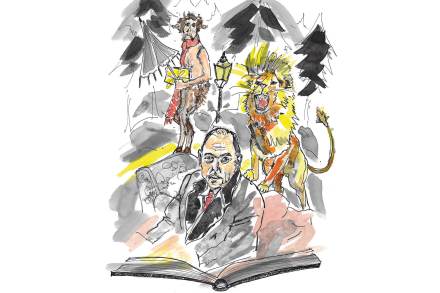
In the summer of 1955, an unusual meeting took place. Billy Graham visited the writer and academic C.S. Lewis in Lewis’s rooms at Magdalene College, Cambridge. It was unusual because leading British academics typically avoided Southern Baptist revivalists. But rather than encountering a fussy, prim don, Graham found a kind, intelligent scholar who was very happy to spend the afternoon with him. Later, Graham admitted he was intimidated by Lewis, but the English professor quickly dispelled any anxiety, probably by offering Graham a cup of tea. Graham’s impact on American religious culture, for good or ill, is unquestioned, but it is difficult to imagine what that same culture would look like without the works of C.S. Lewis.
lewis

In defense of cranky professors

Thanks to a panel of the Fourth Circuit Court of Appeals, firing faculty members for “lack of collegiality” is suddenly a bright prospect for college administrators eager to rid themselves of gadflies, diversiphobes, conservatives and other riffraff. The case involved Stephen Porter, a tenured professor in the school of education at North Carolina State University, who had had the bad grace to object to various forms of mandatory diversity saluting. Some details to follow, but let’s first roll around in the hay of “collegiality.”  The two members (out of three) on the Fourth Circuit who invoked the term were not entirely breaking new ground. The woker sort of faculty and college administrators have been fondling the idea for a while.

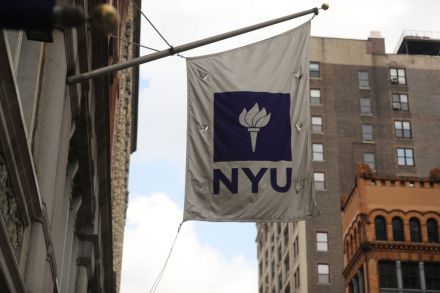
NYU sacks a professor because his class is too hard

Just before the start of the fall semester, New York University fired the distinguished professor in organic chemistry Maitland Jones Jr. NYU’s dean for Science Gregory Gabadadze informed Jones in a terse letter that his work “did not rise to the standards we require from our teaching faculty.” Jones is a legend in his field who literally wrote his subject’s 1,300-page textbook Organic Chemistry. He had been teaching at NYU on a renewable one-year contract since his retirement, in 2007, from a forty-three-year career at Princeton University. During his time at NYU, Jones won teaching awards. In 2017, he was named one of NYU’s “coolest” professors, a distinction he shared with only seven of his nearly 10,000 colleagues. Jones’s offense? His class was too hard.

Professing virtues

Laramie, Wyoming For a good part of the 20th century, the college professor was an object of fun in American popular culture: a long-hair in the 1920s, an egghead in the Thirties, and in the Fifties an absent-minded intellectual at best, at worst a Comsimp suspected of being a sworn agent of Comrade Stalin and the Politburo. In the revolutionary Sixties, he was publicly imagined as a hirsute hippy in jeans and sandals waving the Cuban or Chinese flag, indistinguishable from students made up like Che Guevara. Americans have always been ambivalent about the pedagogue and his intellectual and social contribution to the Republic.

professors