Pro-choice

The Florida abortion question that could shape national policy

Lorien Hershberger checked every box: she grew up in poverty, was pregnant just out of high school and her boyfriend wasn’t interested in being a father. She had an abortion at twenty. When Vice President Kamala Harris talks about abortion, Lorien is not just the exemplar of reproductive freedom — she is the audience. Perhaps that is why she has received so many robocalls and text messages from Amendment 4 campaigners looking to enshrine abortion up until the moment of birth as a right in the Florida state constitution. They are mistaken. “This is a business,” Hershberger, now a pro-life activist, tells The Spectator. “That’s the most disgusting part of it to me. They do come [in] under the banner of, ‘We’re about women and we’re protecting women.

abortion

The new battleground for abortion

It’s been just over a year since the Supreme Court decided in the Dobbs case to overturn Roe v. Wade — and pro-life activists were right when they predicted that the fight against abortion was just getting started.  Of course there was plenty for them to celebrate in the aftermath of Roe, which essentially kicked the issue of abortion back to individual states. Thirteen states had “trigger laws” in place that would almost immediately enact near-total bans on abortion, with some exceptions, in the event Roe were overturned. Other states reacted to the Supreme Court’s ruling by passing gestational bans on abortions ranging between six weeks after conception and fetal viability outside the womb.  The new bans are already saving unborn lives.

abortion

Pro-lifers were the midterms’ biggest losers

When the Supreme Court of the United States ruled in Dobbs v. Jackson Women's Health Organization in favor of the overturning of Roe v. Wade back in June, thus ending a woman's federal right to an abortion, the pro-life movement was jubilant. The decision was the culmination of decades of campaigning by conservative and anti-abortion activists to send the issue back to the states. Republican-controlled legislatures across the country moved immediately to place restrictions on abortion, and for the first time in decades, the pro-life movement finally felt like it had the upper hand. Fast-forward five months to the morning after the midterm elections and much of that optimism must have dissipated.

abortion

Abortion distortion versus prenatal justice

“Abortion distortion” has been a serious problem for decades. And in our post-Dobbs moment, it's grown worse than ever before. This topic somehow manages to transform conservatives into energetic supporters of the kind of powerful government necessary to protect prenatal children, while at the same time making progressives worship at the altar of government staying out of the lives of autonomous individuals. It has caused reputable academic physicians to describe the four-chambered heart of a six-week old prenatal child with Orwellian euphemisms like "cardiac pole vibrations." It has even pushed Republicans to propose significant social programs to support vulnerable women and families — everything from paid family leave to help with child care.

abortion

Asking a rabbi about abortion

When the Roe news broke, my thoughts — myopically — turned not to the millions of Americans who were rejoicing, or the millions of Americans who were mourning, but to a social engagement I had coming up a few days thereafter. The intimate dinner would be populated by a few friends and family on both sides of the aisle, with very different perspectives on abortion and, obviously, very different reactions to the news. I was dreading it. Imagine my surprise when, over steaks and haricots verts, the conversation was productive, the rhetoric thoughtful, and the passions cool... most of the time.

abortion

Is there hope for a compromise on abortion?

We don't really negotiate much in the US and so we're bad at it. The American style of negotiating is to demand everything and settle for nothing less. We ask for an outrageously large amount and "bargain down" after the other side offers an equally outrageous small amount. Starting anywhere near your actual number is considered a sign of weakness. We don't like gray areas and we don't like to feel like we've lost out on something. So being asked to support something that on its face seems reasonable, like allowing two people in love living together in a home they co-own to marry, means buying into a whole LGBTQIA2+ agenda that somehow includes forcing kids to listen to drag queens read stories aloud about sexually ambitious caterpillars and their same-sex tadpole pals.

abortion

Pro-choicers in DC try to get arrested, succeed

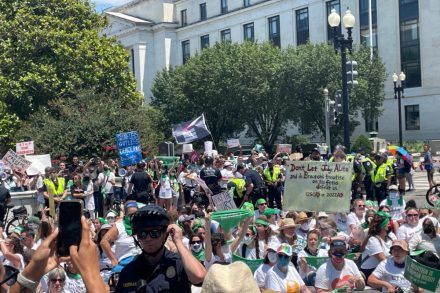
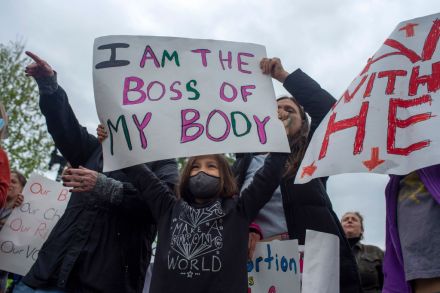
Cockburn isn’t much for parades, but one happened to pass him by on Thursday when protesters with the Center for Popular Democracy rallied to overturn the overturning of Roe v. Wade. For a while, Cockburn walked alongside the protesters, watching as people in blue vests herded them along until they reached an intersection, where they promptly sat down. Cockburn, being the exquisite legal scholar that he is, deduced that this was illegal. And the demonstrators knew it too. The event was intended as a “mass civil disobedience.” Once sat down, they enjoyed chants, songs, and generally being arrested by the police. One particularly excited speaker said into the microphone: Together we gather full of righteous indignation, threatened by a radical minority...

Five things to bear in mind after Dobbs

Are abortion rights guaranteed in the Constitution? In 1973, the Supreme Court handed down a judicially creative interpretation of the 14th Amendment in the case Roe v. Wade, claiming abortion was like other privacy-based rights (such as the rights to contraception, same-sex marriage, adult sexual acts with a consenting partner, and interracial marriage). That is, unenumerated rights, rights inherent in the Constitution but not listed by name, like the right to free speech and the right to bear arms. So that's it. The current decision is illegitimate. Abortion is constitutional! The Supreme Court in its decisions creates precedents, meaning judgments they're supposed to follow in the future. That's the doctrine of stare decisis.

Thinking of Seinfeld as Roe v. Wade ends

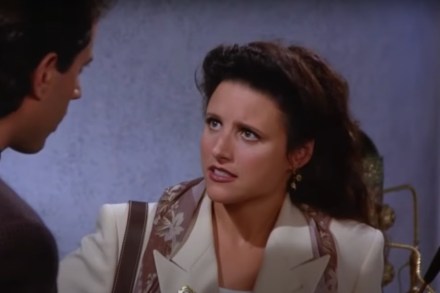
After a bit of a hiatus, my wife and I decided Thursday night to pick up where we left off with Seinfeld. As fate would have it, we ended up watching the episode “The Couch.” Jerry and Elaine go to a local restaurant. The owner, Poppy, swings by the table to assure them that the duck is succulent. Jerry tells Elaine he’d just as soon have stayed home and ordered pizza from Pokeno’s. Elaine tells him she refuses to eat Pokeno’s pizza because the owner donates to radical anti-abortion groups. Jerry, testing Elaine’s resolve, then calls Poppy over to the table and asks where he stands on the abortion issue. Poppy tells a story (heartbreaking in its content but hilarious in its delivery) of his mother undergoing a forced abortion in a Cuban re-education camp.

A pro-life revolution

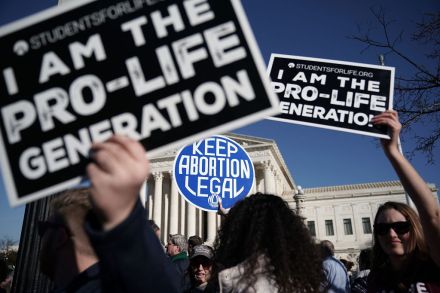
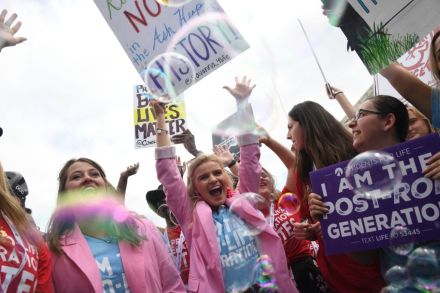
Set aside your opinions about abortion for a moment. Throw down the fluttering placards about "THE PRO-LIFE GENERATION" and "KEEP ABORTION LEGAL"; avert your eyes from the demonstrators praying outside Planned Parenthood. And ask yourself this: was Roe v. Wade good law? Was it sound that a "right to privacy" was conjured out of pseudo-constitutional dust and then used to overturn abortion laws in all fifty states? My guess is that even left-wing law professors have their doubts. Now, the Supreme Court has finally gone and rectified this hideous blunder. Pro-lifers rejoice: the day we've hoped for has finally arrived. The decision in Dobbs v. Jackson Women's Health Center was handed down on a bright and sunny morning in Washington, DC.

At the Supreme Court with pro-life Democrats

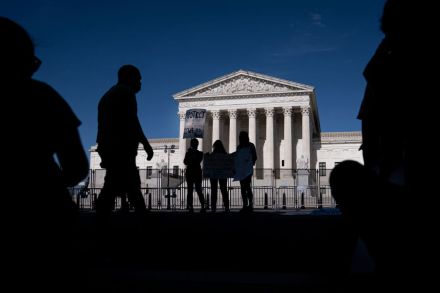
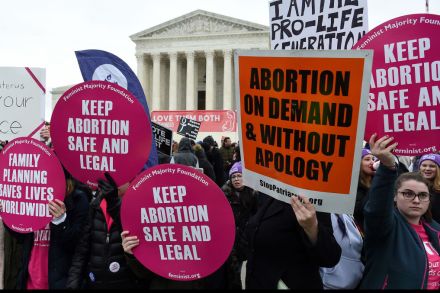
When Cockburn took a rainy-day stroll past the United States Supreme Court on Thursday, he didn’t expect to see many people. To his surprise, there were several protesters outside, anticipating a decision on Dobbs v. Jackson Women's Health Organization, which could overturn Roe v. Wade. Cockburn decided to stop and chat with both pro-life and pro-choice demonstrators, briefly catching interviews between shouting matches laced with obscenities and references to genitalia. “Roe is a barbaric remnant of a eugenic past. [It’s] responsible for the murder of 60 million babies," said Terrisa Bukovinac, the founder and executive director of the Progressive Anti-Abortion Uprising.“I believe in equity, nonviolence, and nondiscrimination.

What’s so ‘progressive’ about abortion?

From the UK Spectator this week comes a pair of essays by Douglas Murray and Melanie McDonagh praising the American abortion debate. That debate can be difficult to admire when you're standing at the bottom of a culture war looking up. But as both Murray and McDonagh note, at least here in the States it's expected that we'll disagree about abortion, whereas throughout much of Europe it's regarded as a settled matter. Why is abortion in America still such a live issue? One reason, I think, is that in most other first-world countries it's been the subject of democratic deliberation, with people finding middle ground through their legislatures or referenda.

The abortion debate turns brutal

Not too long ago, pro-choice activists wished for abortion to be “safe, legal, and rare.” Their argument was that no one was really pro-abortion but that the procedure was a morally complicated but regrettable necessity. In fact, they would have been insulted by the label “pro-abortion." The reaction to the leak of a Supreme Court opinion that would overturn Roe v. Wade shows those days are long past. Take, for example, a tweet from a rabbi scolding those who claim that “nobody is PRO-abortion!” Comparing abortion to an appendectomy, she answers her imagined interlocutor: “Both are life saving medical procedures Why wouldn’t I be ‘pro’ a life-saving medical procedure?

A night of pro-life jubilation

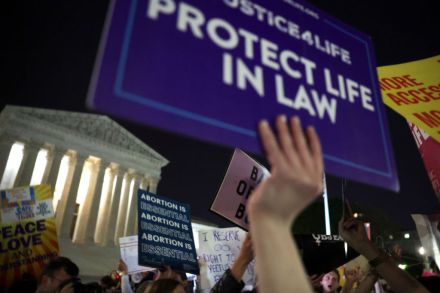
“Everybody want to know what I would do if I didn’t win,” said Kanye West, the only 2020 presidential candidate to truly grapple with the horrors of abortion, as he accepted his award for Best Rap Album at the Grammys in 2005. He paused. The room was silent. Then Ye dropped the bomb: “I guess we’ll never know.” The crowd erupted in applause. That’s the energy I felt Monday night at the Supreme Court as the world learned a majority of justices was prepared to strike down Roe v. Wade. You’ll find no nuance here. The pro-choicers lost, and I’m going to inject 500ccs of their tears straight into my veins. Cope and seethe. At around 9:30 on Monday, I was already in my pajamas, settling in for a quiet night with my wife. Then she showed me her phone.