Prejudices

America is still an English country

Americans have been enjoined, as we approach our country’s 250th anniversary, to be a bit more grateful. Good advice. It is not just the freedom of speech and the purple mountains’ majesties we should be taking stock of. It is also our knack, in recent decades, for miseducating ourselves, failing to read the signs of the times, making wrong choices – and then profiting from the fallout. In the global financial crisis that ran for a decade after 2008, blunders in American financial engineering, from complex derivatives to mortgage-backed securities, bankrupted debtor countries and cost several others their sovereignty, most notoriously Greece.

england

Is ‘international law’ practical?

The acceleration of history and the increasingly rapid advancement of the postmodern project, aimed at the transcendence of humanity by itself, makes consideration of the fundamentals of the progressive project necessary, but also inevitable. Among them is its dedication to the hectic search for hitherto unsuspected “human rights” and their instant realization in the name of “natural law,” a subject the French historian and political philosopher Pierre Manent has studied in depth and brilliantly illuminated in a number of works, most recently Natural Law and Human Rights: Toward a Recovery of Practical Reason.

America’s future looks vulgar

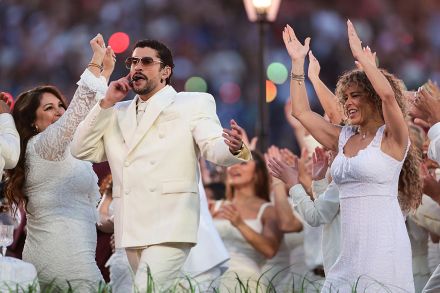
The latest Super Bowl offers the most recent opportunity to reflect on the terminal state of our national culture, held together chiefly by a distractive and unhealthy mania for commercial sports and perfectly exemplified by the infantile yet aggressively transgressive nihilism of a brainless showoff calling himself Bad Bunny and dressed all in white, suggestive perhaps of an anti-Easter Bunny. Why, one wonders, has no political theorist from Hobbes forward posited the ideal human community as one which would combine political democracy with cultural and intellectual aristocracy – as, indeed, America at the time of her founding and for several generations thereafter did? Such an arrangement might satisfy critics of democratic society on the anti-egalitarian right, such as T.S.

Americans will believe in anything

The US has not known social and domestic peace since the start of the present decade, and it is unlikely that it will know it again for the foreseeable future. This is because it has ceased to be a country at all, assuming that nationhood implies fundamental unity, which America no longer has. When novelist John Dos Passos wrote in the late 1930s, “All right, we are two countries,” the boundary he had in mind was economic, separating the rich from the poor. Today the obvious divide is political, between left and right. But what seems obvious is not always true, as in this case.

The evasions of smalltown Alabama: The Land of Sweet Forever, by Harper Lee, reviewed

From our UK edition

Harper Lee’s writing career was brief, but her single novel became one of the most famous in American history. To Kill a Mockingbird (1960) won the Pulitzer Prize, sold tens of millions of copies and remains a fixture of classrooms and popular memory. She published almost nothing else until Go Set a Watchman – an earlier draft of Mockingbird – appeared in 2015, just before her death and perhaps without her meaningful consent. The Land of Sweet Forever gathers apprentice stories written before Mockingbird, along with a few later magazine pieces. Most are slight and the volume is more commercial than literary.