Left-wing politics has repoliticized the arts
No better measure of the degree to which a society has become politicized exists than the content of its public educational curricula and the character of its popular culture.

No better measure of the degree to which a society has become politicized exists than the content of its public educational curricula and the character of its popular culture.
In The Revolt of the Masses — first published in 1930 — José Ortega y Gasset proposed that the most important fact in the public life of Europe was “the accession of the masses to complete social power. As the masses, by definition, neither should nor can direct their own personal existence, and still less rule society in general, this fact means that actually Europe is suffering from the greatest crisis that can afflict peoples, nations and civilization.” What Ortega did not live to witness is the ease with which the mass becomes a mob, or an aggregation of many and various mobs, by mental or emotional contagion similar to that of disease. This fact was left for the generations alive today to experience in the fulness of its reality.

The Western world, once so firmly grounded in Christianity and its Gospels, dogma and teachings, retains in the twenty-first century virtually nothing of them, the almost sole exception being the notion of sin and thus of guilt — not the Christian concept of them, but rather the modern liberal one. To begin with, the liberal idea of sin is collective; it is also highly selective, being limited to the West in general and the Caucasian race in particular. And it is obsessive, as much so as was the Christian version among the Calvinists of Geneva, or the neurotic anticommunism prevalent among the more single-minded and hysterical outliers on the American right during the 1940s and 1950s.

“I like bars just after they open for the evening,” Terry Lennox tells Philip Marlowe in the early pages of The Long Goodbye. “When the air inside is still cool and clean and everything is shiny and the barkeep is giving himself that last look in the mirror to see if his tie is straight and his hair is smooth. I like the neat bottles on the bar back and the lovely shining glasses and the anticipation. I like to watch the man mix the first one of the evening and put it down on a crisp mat and put the little folded napkin beside it. I like to taste it slowly. The first quiet drink of the evening in a quiet bar — that’s wonderful.” They’re drinking gimlets — gin and Rose’s lime juice — which some people, though not me, consider a type of martini.

The present time, which has justly been called the Age of Unreason, is also an exceptionally confused and neurotic one. Indeed, it is unreasonable because it is confused and neurotic, a fact that its blind faith in liberalism and science make it unable to recognize. Confronted by what it views as the existential crisis of climate change caused by human activity, progressive liberalism promotes the widening illusion that Homo sapiens is actually and morally responsible for endangering “the planet”; that humans can accomplish anything, including reversing and even halting the process, supposing they have the moral will to do so.

François-Marie d’Arouet (1694-1778), commonly known as Voltaire, devoted his life to waging intellectual warfare against Christianity — the Catholic Church and Catholic culture in particular — along with its historic political and social allies, royalty and monarchy, which he condemned as a monstrous entity in his famous battle cry“Écrasez l’Infȃme!” Given his aims as a polemicist, a deist and a republican, Voltaire did not misconstrue the enemy whose destruction he called for.
A regular reader of Le Figaro for some years, I have been noting the frequency with which the editors print articles relating to the Académie française, founded by Cardinal Richelieu in 1634 for the purpose of acting as the protector and patron of the French language, fixing its usage and giving it exact rules to make it competent to deal clearly and elegantly with the arts and sciences. It was decreed that the academy should consist of precisely forty members, and that upon the death of any one of them the candidate to replace him should pay court to the remaining thirty-nine to be selected to fill his numbered seat. The sitting forty were known as “les Immortels.
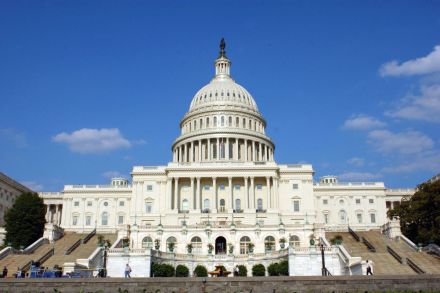
Since the founding of the Republic, the average American, if asked to express in a single word what his country stood for, would likely have answered “Freedom!” (or “Fweedom!” as the childe Kamala spake all those many years ago). The so-called American Dream, a concept dating from the 1930s, has always been materialist in nature. H.L. Mencken predicted that the socialists would ultimately fail in their attempt to transform the United States into a Soviet paradise on the North American continent for the simple reason that every American hopes to become a millionaire before he dies. Almost a century later, money is being progressively eclipsed in the pantheon of national values by power.
When asked at a 2004 Foreign Affairs symposium to identify the most dangerous of all contemporary ideas, Francis Fukuyama — no doubt to the editor’s surprise — did not cite the heretical view, held by many of his critics, that the end of history is not yet, nor indeed is anywhere in sight. Instead, he chose the concept called transhumanism for that honorable nomination. Whether or not transhumanism is the most dangerous of all current mental constructions, it is certainly among the silliest, demonstrating the degree of intellectual insanity to which the fear of mortality is capable of driving educated people who ought to know better.

The world of 2023, which scarcely speaks for the intelligence, the competence, or the success of the human race, does revive the age-old question of whether the individual is wiser than the species. One answer, stated in its simplest form, is the old saw that two heads are better than one. But is that true? And if so, are three heads better than two, und so weiter? Where do we come to the end of this? The key to the conundrum relates to government. Does oligarchy provide wiser rule than monarchy, aristocracy than oligarchy, and democracy than aristocracy? Consider the history of Britain and British government over the past centuries. Has democracy, in progressively greater measure, improved the management of British affairs since the eighteenth century?

Having a close, lifelong acquaintance with the animal kingdom, from small reptiles and farm animals to dogs and cats of the large and domestic varieties, I disagree with G.K. Chesterton’s casual statement that the more one gets to know animals, the greater the distance between them and human beings appears. My own experience suggests the opposite. Chesterton had obviously not considered herd animals such as cattle, with their keen instinct for panic that Homo sapiens, taken as a species, so often exhibits. Humanity’s current panic — of global extent, though demonstrated in exaggerated form in the West — touched off by the phenomenon of “climate change” is only the latest historical manifestation of an endemic human trait.

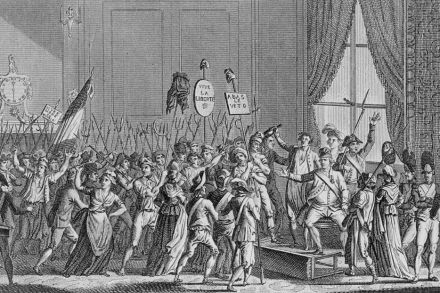
In the first week of October 2022, Jean-Luc Mélenchon, France’s perennial man of the Marxist left, former leader of La France insoumise and present chief of Nupes (Nouvelle Union populaire écologique et social), an alliance of hard-left, left and green parties, invoked the jours d’octobre that commenced on October 5, 1789 with the Women’s March from the Parisian marketplaces to Versailles and ended with the more or less forced departure of the royal family for the capital city in the early morning hours next day after several members of the Palace guard had been decapitated and their heads impaled on pikes. It is unclear what that revolutionary year, and the events of October 5-7, have to do with twenty-first-century France.
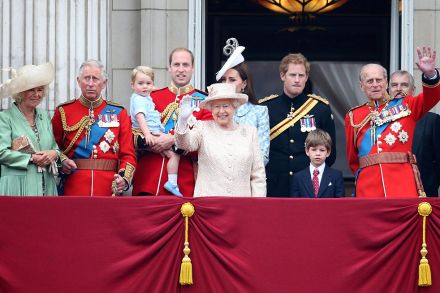
The day after the death of Queen Elizabeth II, I received a note from a friend in the Midwest asking whether I thought the British monarchy would survive her by more than a decade. I replied that of all British institutions the monarchy is the strongest — and that I expect it to last as long as Britain herself. Everything I witnessed in the week after the Queen died seems to me to justify this judgment, in particular the conduct of King Charles III, about whom my friend was skeptical. The events also confirmed my lifelong opinion that British civilization is the finest the world has ever seen; so fine, indeed, that I suspect that the citizens of most countries today are unable to appreciate the nature of its greatness, and how it came to be great; Americans, perhaps, especially.
The countries we call Anglo-Saxon (Great Britain, the Commonwealth and the United States) have been known for centuries for their ability to govern themselves democratically, peacefully and efficiently. In the twenty-first century they have been doing less well. Britain and America are both in dreadful straits politically, economically and socially. The implosion of Boris Johnson and the search for a satisfactory successor have revealed the leadership of the Tory Party as a hapless and embarrassing collection of mediocrities devoid of coherent ideas. Across the Atlantic, one of the two major parties is a gerontocracy at the top and a gang of urban guerrillas with Molotov cocktails at its base.

The modernist movement in the arts got underway around the start of the last century, encouraged by Ezra Pound’s exuberant exhortation to “Make it new!” Somewhat less attention was paid to making it good, as if what was new was inevitably good — better, indeed, than everything that had come before it. Barrels of printers’ ink were expended on the subject in the so-called “little magazines” of the period on both sides of the Atlantic, not all of it wasted; much of the relevant critical commentary was very intelligent and interesting indeed. Modernism as a concept and an aesthetic was less successful in music, painting, the plastic arts and architecture than in literature — though again, some of the work it inspired was very good.

"The liberal conception of society,” the political philosopher Kenneth L. Minogue wrote in The Liberal Mind, “is... determined by the moral and political policies of modern liberalism. It has only a tenuous connection with sociological description.” As well as, we must add, the political realities of the nation state in the twenty-first century. (Minogue’s book was first published in 1963.) Today, liberal policies are the emotional expression, translated into political terms, of liberals’ utopian aspirations toward the complete “inclusion” of every one of society’s “communities” on precisely equal terms. Liberals will not recognize that this goal can never be achieved, and that a multicultural nation is a plain contradiction in terms.

From our UK edition
The moment before the fall of women’s football can be precisely dated. On Boxing Day 1920, Dick, Kerr Ladies FC beat St Helens 4-0 at Everton’s Goodison Park in front of 53,000 paying spectators, a sellout crowd. That was too much for the men at the Football Association. Hysterical at the sight of women running about as they liked and scared of competition from the female game, they banned it a year later. ‘The game of football is quite unsuitable for females,’ its ruling explained. From then on, the FA barred men’s clubs from letting women use their fields. Female players were condemned to jumpers for goalposts in parks. In the following years, many of the world’s other leading football associations followed the FA’s ban.

Historically Americans have had little, if any, respect for college and university professors, for whom they felt a mild though distant and tolerant contempt. As more and more members of the professoriat have been recognized as “experts” in their respective fields, or at least at the edges of them, since World War Two, they have naturally presented themselves to the public under the guise of “specialist,” a vast improvement over their previous reputation as absent-minded eggheads barely able to afford the Ford Motor Company’s cheapest product and a shabby house on the wrong side of the railroad tracks.

From our UK edition
This is the best of times to be writing history, since so much of what has been taken for granted, especially in the West, is being revised. Assumptions about the past that we accepted as fact, and events we once looked upon with pride, are now being questioned. A dark cloud hovers over the Benin Bronzes, Elgin Marbles and Rosetta Stone in the British Museum and looks likely to burst. The same applies to figures who were considered heroes and placed on pedestals. If the statue of Winston Churchill in Parliament Square had not been covered recently, it might have followed the fate of Edward Colston’s.

From our UK edition
In Ladies Can’t Climb Ladders, the social historian Jane Robinson — whose previous books include histories of suffragettes and bluestockings — champions British women who were ‘first-footers’ in the elite fields of academia, architecture, the Church, engineering, law and medicine.One and a half million women joined the workforce during the first world war (at half the pay of their male counterparts). After the war, however, they were expected to cede their jobs to returning servicemen and resume the role of ‘angel in the house’. The 1919 Sex Disqualification (Removal) Act allowed women to qualify for professions, but it was limited in scope.