Poundland

Why the posh go to Poundland

From our UK edition

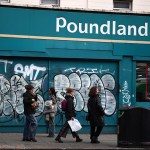
‘Excuse me, will you be closing soon?’ But Denis – the elderly, headset-wearing cashier at Poundland on Witney High Street – can’t hear me. He smiles thinly, in the way the hard of hearing do, before assisting a customer with a pushchair. On the adjacent till, Barbara answers for him: ‘Cash only here.’ Clearly, we are all talking at cross-purposes. It hardly matters: the tills keep ringing. Yet despite a brisk trade here in Oxfordshire, Poundland, the discount store in 600 locations nationwide, is to enter into administration. This would be a tragedy. Poundland is much misunderstood.
Portrait of the week: Trump’s midterms trouble, Poundland’s economic woes and a slavery reparations row

From our UK edition

Home This decade would be the worst for household income growth on record, the Institute for Fiscal Studies said. John Healey, the Chancellor of the Exchequer, would not guarantee that younger workers would receive the same minimum wage as others before the next election, despite an undertaking in the Labour party manifesto. Poundland’s directors filed a notice to appoint administrators; its US-based owners Gordon Brothers, which bought it last year for a nominal £1, rejected a takeover offer from the Irish company Martin Property Group. Thousands of Virgin Media O2 staff faced redundancy, while BT agreed to acquire TalkTalk. Nicola Shaw resigned as Yorkshire Water’s chief executive after the company was given the lowest possible environmental rating by the Environment Agency.

Don’t let Poundland become a symbol of national weakness

From our UK edition

In a metaphorical sense, Poundland is us. We’re the land of the pound, but these days not much else: dwindling industries, failing public services, shrunken armed forces, Budgets that duck every difficult decision. We’re also a nation of half-shuttered high streets, in which Poundland bargain shops are in many places one of the few remaining points of brightness. So news that asset-strippers are seeking to force the 600-store chain into administration feels somehow symbolic of national weakness, with the added irony that government intervention to avert thousands of job losses is being led by Kate Dearden, whose title is ‘Minister for the Future of Work’.