Portrait

The problem with ‘queer art’

In 1911, Duncan Grant’s “Bathing” went on display as part of a design scheme for the dining room of the Borough Polytechnic in Southwark. This large painting depicts a group of strongly muscled male bathers diving, swimming and hauling themselves into a boat. Only one of them is wearing a bathing slip, and while this kind of spectacle might have been familiar to anyone educated at a public school at this period, the art critic of the Times complained that it could well have “a degenerative influence on the children of the working class.” The picture now hangs in Tate Britain, and is used on the gallery’s website to direct people to an account of “Queer Life and Art.
art

The real problem with the Trump portrait

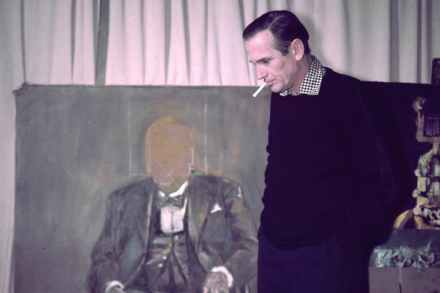
When Winston Churchill saw the portrait commissioned by parliament for his 80th birthday, he called it “filthy and malignant” and said it made him look “half-witted.” The picture, painted by Graham Sutherland, was soon whisked off to Chartwell, Churchill’s estate in Kent. It moldered there unseen for some years before Churchill’s private secretary ferried it to a secluded cottage and burnt the wretched object. Clemmie, Churchill’s long-suffering wife, approved of the conflagration. A similar fate could fall upon Sarah Boardman’s portrait of Donald Trump, which has been hanging in the Colorado Capitol for the last six years. Trump hates that picture, calling it “purposefully distorted” and taking to Truth Social to vent his spleen.

portrait

Why Alice Neel remains a vital presence

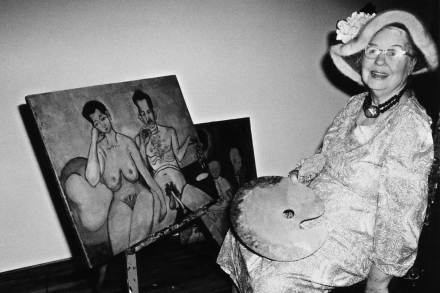
There is no portrait by Alice Neel quite as radical as her own. The artist was one of the first octogenarian women to exhibit a nude of herself with 1980’s “Self-Portrait.” In the painting, Neel grasps her paintbrush and sits exposed at the edge of a blue-and-white striped armchair. There’s no doubt about it; this is a woman of conviction who demands, “Look at me, in all my senescent glory: my silver hair, wrinkled face, sagging breasts, this is a life lived and here are its marks.” It’s only in the last decade or so that Neel has risen from relative obscurity to be acknowledged as one of the twentieth century’s greatest portraitists.

Neel

The portrait that Churchill couldn’t face

From our UK edition

Winston Churchill was no Adonis but most of his portraitists did what they could to flatter him. However, when the British artist Graham Sutherland (1903–80) was commissioned to paint a full-length portrait of Churchill in 1954 for 1,000 guineas (about £27,000 today), paid by the House of Commons and the House of Lords, and to be presented in a lavish public ceremony, things did not go well. Sutherland was chosen not by Churchill but by members of the Houses of Parliament in honour of his 80th birthday. Churchill asked to be portrayed in his Knight of the Garter robes but the commissioners specified he be portrayed as he most commonly dressed when visiting Parliament.