Populism

The triumph of Matteo Salvini

Since becoming leader six years ago Matteo Salvini — Il Capitano as they call him — has transformed the radical-right Lega from small regional separatist party into the largest party in Italy. After last week’s European elections, the Lega is now also the second largest national party in the European Parliament. Its 28 seats place it level with Angela Merkel’s CDU, and just behind the 29 seats of Nigel Farage’s Brexit party. The European Parliament election results confirm Salvini as the undisputed leader of Europe’s populists. Their insurrection is determined to unseat the EU ancien régime. Its latest champion, French president Emmanuel Macron, is ever less convincing and popular in France and elsewhere in Europe.
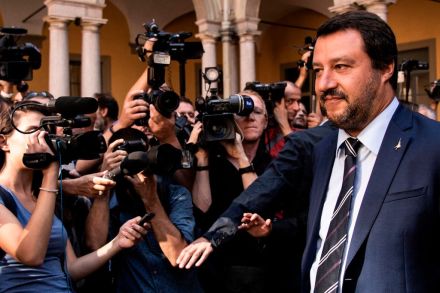
matteo salvini

When populism fails

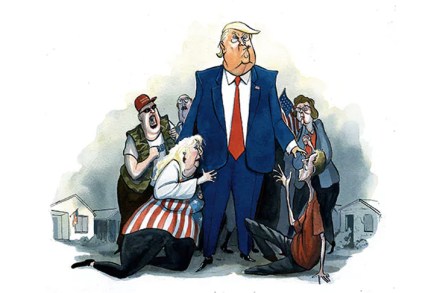
It is scarcely an exaggeration to say that Donald J. Trump ran his insurgency presidential campaign against the coordinated opposition of every single powerful institution in the Western world. The single decisive factor working in Trump’s favor was his ability to appeal to the millions of ‘forgotten’ Americans who felt particularly ill-served by these institutions. Trump’s shock victory was therefore simultaneously a stinging indictment of America’s elite institutions and a surprising vindication of the functional legitimacy of our democracy. After all, if a candidate is able to win in spite of near-unanimous opposition of a country’s elite institutions, this says something reassuring about the workings of democracy per se.

populism

Salvini’s common touch

From our UK edition

While Britain continues to try to struggle its way out of the EU, perhaps it is wise to consider what is happening inside the bloc itself, not just in Paris where the fumes from burning cars fill the apartments and approval ratings for Emmanuel Macron continue to slide as he engages in a national listening exercise (which actually consists of him delivering Chávez-length lectures to the French public). But over the border in Italy, where the tone of the era is being set. Being both interior minister and deputy prime minister is a tremendous position for Matteo Salvini to be in.

Economics is having an identity crisis

From our UK edition

It has become commonplace for news reports to refer to almost any civic unrest, or even unusual patterns of voting, as evidence of ‘resurgent nationalism’ — implicitly suggesting a visceral hatred of foreigners and a desire to set the clock back to the glory days of racial homogeneity and casual homophobia. We should be wary of accepting this media trope: for one thing it may arouse far more fear than is warranted. But apart from the needless fear it generates, it is also slightly dubious to suggest that it is the gilets jaunes or the Five Star Movement or the supporters of Brexit or even Donald Trump who are acting intemperately.

The heart of populism is identity, not race

There have been many efforts to explain the rise of global populism, most of which posit it as a blowback against globalisation and the unequal economic effects that it has had on developed-country populations. The liberal international order has exacerbated income inequality, with middle classes rising in places like China and India at the expense of working classes in North America and Western Europe. But there has been a competing explanation for the shift that is rooted in cultural identity rather than economics. Or rather, identity becomes the way that voters interpret economic decline.

migrants libya populism

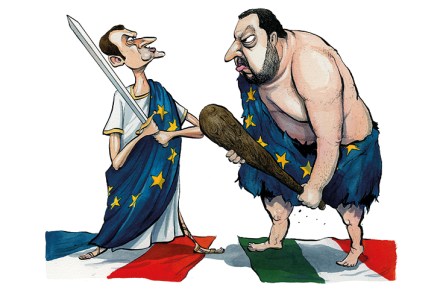
Macron vs Salvini: the ideological battle for Europe’s future

The first sign that Matteo Salvini was destined to do battle with Emmanuel Macron came in June, a few days after he was named Italy’s interior minister. Salvini, whose party, the League, wants to cut immigration drastically, announced that a German-registered rescue ship carrying 629 aspiring migrants from Africa would not be allowed to dock in Sicily. Macron reacted with disgust. ‘The policy of the Italian government,’ a spokesman for his political movement announced, ‘is nauseating.’ Salvini responded that if the French wanted to show their open–heartedness, they might make good on their unfulfilled pledge to feed and shelter some of the 100,000 African migrants Italy had until recently been receiving each year.

salvini macron spectator cartoon

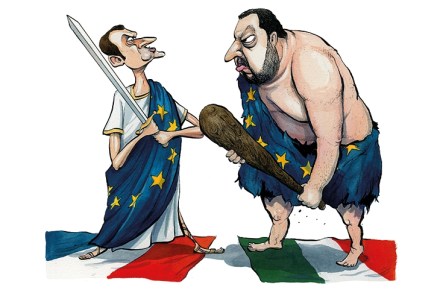
Macron vs Salvini

The first sign that Matteo Salvini was destined to do battle with Emmanuel Macron came in June, a few days after he was named Italy’s interior minister. Salvini, whose party, the League, wants to cut immigration drastically, announced that a German-registered rescue ship carrying 629 aspiring migrants from Africa would not be allowed to dock in Sicily. Macron reacted with disgust. ‘The policy of the Italian government,’ a spokesman for his political movement announced, ‘is nauseating.’ Salvini responded that if the French wanted to show their open--heartedness, they might make good on their unfulfilled pledge to feed and shelter some of the 100,000 African migrants Italy had until recently been receiving each year.

Sweden’s political panic attack

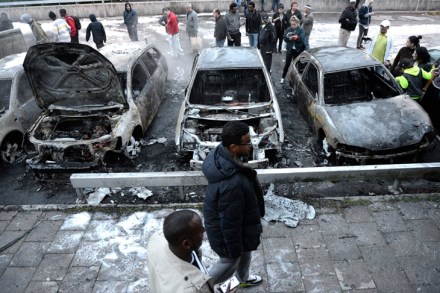
 Uppsala, SwedenWhen I dropped off my kids at school early last week, I noticed that -another parent’s car was covered in ash — it had been parked in a garage where arsonists had been at work, attacking scores of vehicles. His Volvo had got away: just. ‘My car can be cleaned,’ the father told me, ‘but how can I explain this to my young kids?’ As Sweden goes to the polls next weekend, its politicians face another conundrum: how do they explain all this to the country? I live in Uppsala, a leafy and prosperous university town north of Stockholm. Around Gothenburg, the attacks have been far more dramatic: in mid-August, 80 torched vehicles made the city’s normally dull boroughs seem more like Aleppo.

sweden democrats fire

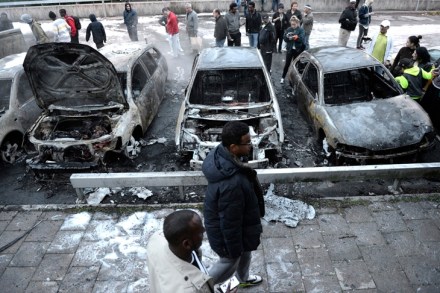
Sweden ablaze

 Uppsala, Sweden When I dropped off my kids at school early last week, I noticed that -another parent’s car was covered in ash — it had been parked in a garage where arsonists had been at work, attacking scores of vehicles. His Volvo had got away: just. ‘My car can be cleaned,’ the father told me, ‘but how can I explain this to my young kids?’ As Sweden goes to the polls next weekend, its politicians face another conundrum: how do they explain all this to the country? I live in Uppsala, a leafy and prosperous university town north of Stockholm. Around Gothenburg, the attacks have been far more dramatic: in mid-August, 80 torched vehicles made the city’s normally dull boroughs seem more like Aleppo.

The more extreme the left’s screeches, the greater the populist surge

The latest exciting news is that it may very soon be possible for surgeons to perform uterine transplants, so endowing a man who has ‘transitioned’ into being a strange approximation of a woman with the ability to gestate a child. And to give birth, after a fashion. The benighted child would need to be hacked out of the man’s midriff, because there’s not enough room down there for a child to come out naturally (yes, because he’s a man). Sweden — the world leader in uterine transplants — is anxious to reclaim the title of the world’s most batshit crazy nation, which the Canadians and that simpering idiot Justin Trudeau currently have in their grasp. The uterus stuff will undoubtedly help.

The more extreme the left’s screeches, the greater the populist surge

The latest exciting news is that it may very soon be possible for surgeons to perform uterine transplants, so endowing a man who has ‘transitioned’ into being a strange approximation of a woman with the ability to gestate a child. And to give birth, after a fashion. The benighted child would need to be hacked out of the man’s midriff, because there’s not enough room down there for a child to come out naturally (yes, because he’s a man). Sweden — the world leader in uterine transplants — is anxious to reclaim the title of the world’s most batshit crazy nation, which the Canadians and that simpering idiot Justin Trudeau currently have in their grasp. The uterus stuff will undoubtedly help.

High life | 5 July 2018

From our UK edition

Oh, to be in England, and almost die of heat after the Austrian Alps. Yes, Sarah Sands was right in her Speccie diary about last week being a great week of summer parties in London, but the really good ones are still to come. This weekend both Blenheim Palace and Badminton House play host to great balls. I only mention them because there are only two English dukes whom I acknowledge, Beaufort and Marlborough, because I knew both men when they were in their teens. There has been some grumbling about the fact that neither house would give in and change the date, but I’m fine with that. Two simultaneous country balls in two ducal houses split the social climbers in half, making it easier and more fun for the rest of us.

Matteo Salvini’s decision to turn away a migrant rescue ship is an historic moment

From our UK edition

The refusal by Italy’s new 'populist' coalition government of the alt-left Five Star Movement and the hard right Lega to allow an NGO vessel with 629 African migrants on board to dock in Italy is an historic moment. The leader of the Lega Matteo Salvini, now Interior Minister and Deputy Prime Minister, is determined to fulfil his campaign pledge. That is to say: I will stop any more migrants being ferried to Italy by sea from Libya and I will deport all of the 500,000 illegal migrants already arrived from Libya by sea who are not refugees – i.e the lot. Since the first government in western Europe of what are popularly known as populists was installed in Italy 10 days ago, Salvini has talked about nothing else but the migrant crisis.

‘Populism, fascism – who cares?’

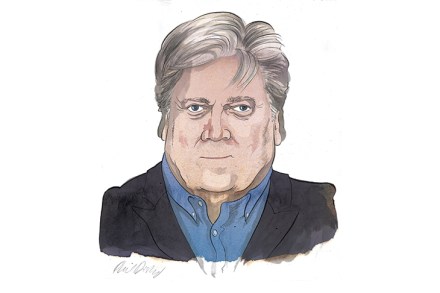
We are in a hotel suite at the Park Hyatt Hotel in Zurich when Stephen K. Bannon tells me he adores the fascist dictator Benito Mussolini. But let’s be clear. Bannon — as far as I can tell — is not a fascist. He is, however, fascinated by fascism, which is understandable, as its founder Benito Mussolini, a revolutionary socialist, was the first populist of the modern era and the first tabloid newspaper journalist. Il Duce, realising that people are more loyal to country than class, invented fascism, which replaced International Socialism with National Socialism. He was thus able to ‘weaponise’ — to use a favourite Bannon word — what the people wanted.

The populist revolution has only just begun

From our UK edition

Why aren’t children called Roger any more? I wondered this when reading about the sad death of Sir Roger Bannister. Coincidentally, the evening before, my young daughter had been watching The Great Escape and most of the Englishmen in it seemed to be called Roger. The only time you hear the name is in early episodes of Midsomer Murders, the ones produced before they were forced to have black people being killed in a ludicrous fashion alongside the whites, to demonstrate our commitment to equality. It does have an awkward connotation with sex — but then it always did, Roger having been a slang word for penis right back to the 17th century. I suppose it has simply drifted out of fashion, along with common decency, emotional continence and heterosexual marriage.

Racism is a grey area

From our UK edition

This book is an exercise in crying wolf that utterly fails to prove its main thesis: that Europe is abandoning its core liberal values under threat from a resurgent populist right. It is a largely fact-free polemic that passes itself off as an open-minded work of interview reportage. Yet if you can ignore the author’s sly interventions on behalf of his left-liberal premises, he does introduce the reader to a fascinating cast of characters, mainly from the European populist right.

Meritocracy isn’t fair

From our UK edition

I’ve just made a programme for Radio 4 about the populist revolts that swept Britain and America last year. Were they predicted in a book written by my father, Michael Young, almost 60 years ago? I’m thinking of The Rise of the Meritocracy, a dystopian satire that imagines a 21st-century Britain governed by a highly educated technocratic elite. Eventually, the intellectual and moral hubris of these Masters of the Universe is too much for ordinary people and they’re overthrown in a bloody revolution in 2034. It often surprises people to learn that my father’s critique of meritocracy was underpinned by his belief that human differences are rooted in genetics, a view many on the left associate with neo-liberal economics and the libertarian right.

The liberals and the deplorables

From our UK edition

In America, an argument has broken out among journalists, writers and intellectuals in the aftermath of the presidential election about whether Trump’s white working-class voters were decent, upright citizens let down by the supercilious liberal establishment or whether they were, in Hilary Clinton’s words, a racist, sexist, homophobic basket of deplorables. The curious thing about this debate is that the defenders of Trump’s supporters are, for the most part, left--wingers, like the Berkeley sociologist Arlie Russell Hochschild, who spent five years chronicling a depressed blue-collar community in Louisiana, while those who disparage them as ‘in thrall to a vicious, selfish culture whose main products are misery and used heroin needles’ are conservatives.

A choice of revolutions

From our UK edition

Is France on the brink of a political revolution? Already, four established candidates for the presidency — two former presidents and two former prime ministers — have backed out or been rejected by the voters, and another, François Fillon, is on the ropes. The campaign is being taken over by outsiders, principally the Front National’s Marine Le Pen and a youthful former banker, Emmanuel Macron, while the Socialists have chosen an eccentric radical, Benoît Hamon. Should we welcome a shake-up in the cradle of European revolutions? What kind of shake-up might it be — socialist (the least likely), liberal with Macron or nationalist with Le Pen? Or can the outsiders still be beaten by an electoral system designed to keep them out of power?

Populism vs post-democracy

From our UK edition

Europeans are usually alarmed or sniffy about American concern for democracy’s fate, but this time liberal opinion on both sides of the pond sings in unison: populism is a threat to democracy. A recent issue of the Journal of Democracy (a sober publication published by America’s National Endowment for Democracy) provided a handy compendium of all the parties, policies and histories that can be included in the vast cabin-trunk of populism. A lead article by Takis S. Pappas, a Greek political theorist living in Hungary, lists 22 different parties he cautiously calls ‘challengers to liberal democracy’. He breaks them down into three categories: anti-democrats, nativists and populists. (All are commonly called populists in European and American media.