Pope

From the archives: John Paul II’s visit to Britain

From our UK edition

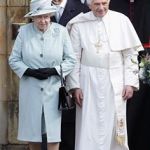
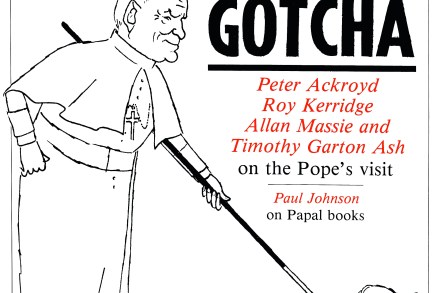
No need to explain why we've disinterred this piece by Peter Ackroyd, on the last papal visit to Britain, from the Spectator archives. And, to the left, the cover image by Garland from that week's issue. As news emerges that five people have been arrested in connection with a terror plot against Benedict XVI, a reminder that papal visits are always replete with global-political significance: The Pope and his princeling, by Peter Ackroyd, The Spectator, 5 June 1982 The pilgrims arrived in Canterbury, carrying their fold-up chairs in plastic Sainsbury bags; strange rumours on the train from London: 'You can't get into town without a permit. They say they've stopped all the cars for three miles … They've taken the door off the cathedral'.
When the Pope met Boris

From our UK edition

A good scoop from The Catholic Herald. Stuart Reid reveals what Mayor Boris Johnson said to the Pontiff last night: 'I’d like to tell you what went on in the Royal Suite at Terminal 4 last night when Boris Johnson, the Mayor of London, met Joseph Ratzinger, the Pope of Rome. “I told the Pope,” said Boris, “that what was wrong with Britain was that the Roman Emperor Honorius told the Brits in 410 AD that Rome was no longer able to protect them. “From that time,” said Boris to the Pope, “the British have had a sense of desertion, of confusion, of rejection.” What did the Pope make of that? I asked Boris. “He looked hunted. His eyes flickered around the room.

The Pope: moderation is Britain’s national instinct

From our UK edition

Another good speech from Pope Benedict XVI, grand in historical sweep and intellectual clarity. His softly spoken, yet heavily-accented, English demands some mental concentration. And it was funny watching some of the tired looking politicians squinting as they tried to figure out what on earth the Pontiff was saying.   But if his voice was tricky to hear, his message was reasonably clear. He was effusive in his praise for this country’s parliamentary history, for common law, and for British democracy. At the same time, he did not shrink from suggesting that modern Britain is at risk of detaching itself from the Christian philosophical tradition that underpins everything that he believes is good about our free society.

Hello Pope!

From our UK edition

And welcome to Scotland and the rest of the United Kingdom. Of all the pointless activities in all the world you'd think telling the Pope he's wrong must rank pretty highly. So I don't think there's much point in standing outside Bellahouston Park today shouting "There is no God you know" at the 70,000 Roman Catholics attending the Papal Mass. Nor do I think there's much to be said for wasting time and energy complaining, in effect, that the Pope has the effrontery to be, well, the Pope. But it seems that there's no exhausting the appetite for being outraged these days. This week it's the Pope's visit but last week it was Tony Blair's memoirs and next week it will be something new and boring again.

Let’s move on from Stephen Fry’s Pope bashing

From our UK edition

Stephen Fry is good at taking himself seriously while pretending not to take himself seriously. But slowly, as he gets older and grander, his self-effacing mask is slipping. He's becoming less and less of a comedian, more and more a sanctimonious bore. Look at the way he has taken it upon himself to denounce, with such gravitas, Pope Benedict XVI's visit to Britain. In his interview with the BBC yesterday – see above – Fry insists that the Pope should be free to come to Britain. "How could I hold my head up if I objected to that?" he says. What Fry cannot not accept, he explains, is that the Pope's time in the UK should be treated as a state visit. Fair enough, I suppose.

On the Pope’s visit

From our UK edition

The Pope, as I'm sure you know, has touched down in Britain. Here, for CoffeeHousers, is the editorial on his visit from this week's new-look issue of the magazine: Benedict brings hope The arrival of Pope Benedict XVI in Britain has provoked protests that, in the intesity of their anger, far exceed those that greet the state visits of blood-drenched dictators. That is because the Pope is seen to represent — in ascending order of secular distaste — religion, Christianity, the Roman Catholic Church and the conservative wing of Catholicism. Fair enough: Benedict does represent all of these things. He opposes atheism, regarding it as a desperately sad alienation of man from his creator.

The Pope might be coming but the Milibands are still Topic A at Westminster

From our UK edition

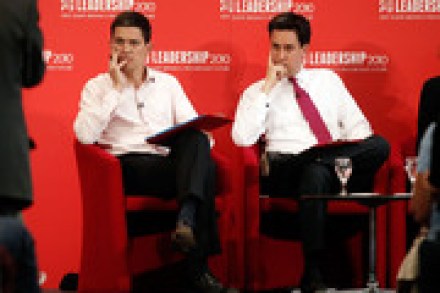
Parliament is busy preparing to receive the Pope, the red carpet has been put down in Westminster Hall and the Commons authorities have announced that they are closing all the bars down from 2pm on Friday. But it is earthly matters that are still preoccupying people here. As you walk through the gothic arches, you see little clumps of people gathering together trying to work out which Miliband will be the next leader of the Labour party. At the moment, the race really does seem too close to call. But it is just worth reflecting for a second how crucial the new leader’s first few weeks will be. 3 days after the result is announced, the leader will need to give the leader’s speech at conference.

The Vatican plays the “Jewish Card”

From our UK edition

Speaking in a Good Friday homily, with the Pope listening, the Pontiff’s personal preacher, Fr Raniero Cantalamessa, likened the drive by the victims of abuse to seek justice from the Vatican, whose priests committed the sexual crimes, with the persecution of Jews. Victims' groups and Jewish organisations have said it was inappropriate to liken the discomfort of the Catholic Church to hundreds of years of violence and abuse. But it is more than inappropriate. It shows either an ignorance of the history of anti-Semitism; a desire to relativise the Holocaust; a near-pathological disregards for other people’s suffering; or a wilful aspiration to shift the blame away from the Vatican.

The Pope: Child Abuse is Liberals’ Fault

From our UK edition

An eyebrow-raising passage from the Pope's letter to the Irish church: In recent decades, however, the Church in your country has had to confront new and serious challenges to the faith arising from the rapid transformation and secularization of Irish society. Fast-paced social change has occurred, often adversely affecting people’s traditional adherence to Catholic teaching and values. All too often, the sacramental and devotional practices that sustain faith and enable it to grow, such as frequent confession, daily prayer and annual retreats, were neglected. Significant too was the tendency during this period, also on the part of priests and religious, to adopt ways of thinking and assessing secular realities without sufficient reference to the Gospel.