Police

Letters: Rod was right about Bob Marley

From our UK edition

Copping out Sir: Both the Police and Crime Commissioner Dr Andrew Billings and your recent correspondent John Pritchard are partly right (Letters, 16 and 23 March). Policing has gone wrong for two reasons. First, the massive cuts in staff instigated by Theresa May as home secretary resulted in a large number of the most experienced officers leaving. Even the replacement of these officers under Boris Johnson took time and could not make up for the loss of experience. Secondly, the inspection regime under the Inspectorate of Constabulary fails to address the crimes that matter to the public. During the years I was PCC for the Thames Valley, I made household burglary, theft, violence on the streets and rural crime our priorities. That was what the vast majority of the public wanted.

If you hate the Irish, you’ll adore this play

From our UK edition

Faith Healer is a classic Oirish wrist-slasher about three sponging half-wits caught in a downward spiral of penury, booze, squalor, sexual repression, bad healthcare, murderous violence and non-stop drizzle. The mood of grinding despair never lets up for a second as the healer, Frank Hardy, along with his moaning wife and their Cockney sidekick, motors around the British Isles trying to cadge pennies from cripples in exchange for bogus cures. Every cliché in the rich thesaurus of Celtic misery is brought together in this rancid melodrama about mob justice.

A ride-along with the King County Sheriff’s Office

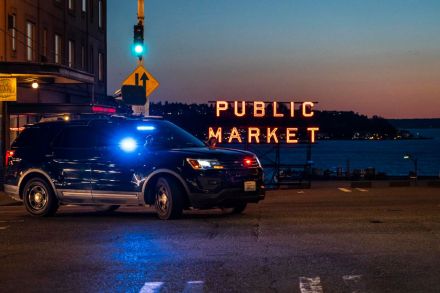
There are probably better ways to start your fifteen-hour work shift than to hear the words: “Fire at the Renton Avenue gas station. Pump still leaking fuel. Possible injuries. Attend scene immediately.”  That was the stark dispatch that came over the radio of the King County Sheriff’s car driven by thirty-two-year-old Deputy Cy Brame, one of 720 law enforcement officers who serve the needs of half a million people living in the sprawling unincorporated areas around Seattle. I recently joined him on a characteristically drizzly early March afternoon on his beat behind the wheel of a black Ford Interceptor SUV. “You’re lucky,” said Deputy Brame, with a thin smile. “The last ride-along I had was here all day without an emergency.

seattle

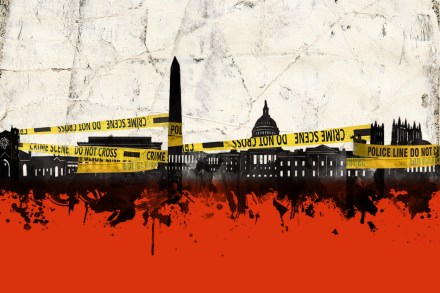
What happened to America’s capital?

Muriel Bowser is a woman with a plan. In late February the mayor of the District of Columbia unveiled a $400 million, five-year economic development strategy to revitalize the capital’s downtown. It involves converting empty office space into residential units and rebranding parts of the neighborhood. Soon, visitors to Washington will be able to watch homeless addicts shoot up in “Historic Green Triangle” and get their phones stolen by moped-riding teenagers in the “Penn West Equity, Innovation & University District.” Bowser has drafted these desperate measures in a belated response to the desperate times.

DC
Dallas

How Dallas curbed violent crime

"He’s smoking meth,” I heard on the police radio. Lieutenant Jordan Colunga promised to take me to the action, but maintained his leisurely pace. He chuckled as the undercover officers dictated their observations from a gas station. The pipe fiend, having wisely decided he had had his fill, unwisely began wandering the pumps to sell his surplus to passersby. Undercover cops don’t blow their cover for spontaneous drug dealers, so the observers passed along the information to a nearby squad car. The suspect was back in his vehicle by the time the beat cops arrived on scene. “He’s getting out of the car, he’s getting out of the car,” an officer said apprehensively on the radio before yelling, “He’s reaching, he’s reaching!” The laughter stopped. Colunga hit the gas.

GOP favorite for Santos seat settling lawsuits after accusations of not paying workers

A leading Republican candidate hoping to be selected for the special election to fill George Santos’s seat is currently settling a class-action lawsuit in California for unpaid wages — at least the second lawsuit for wage violations brought against his company in recent years. Mike Sapraicone, the owner of international security company Squad Security, was accused by two men of violating wage and other laws, according to a 2022 lawsuit. The lawsuit, not previously reported, is the latest revelation to emerge about Long Island’s Sapraicone, amid national scrutiny over how well candidates will be vetted by the Nassau GOP in the district, on the heels of Santos’s year-long scandal and criminal allegations.

mike sapraicone

Why weren’t police forces investigating every theft?

From our UK edition

Police must investigate every theft. This is the message from the Home Secretary as the government heralds an agreement from all 43 police forces in England and Wales to follow up on any evidence where there is a ‘reasonable line of enquiry’. In practice, that means the police should investigate low-level crimes such as stolen bikes, phones and shoplifting when there is reasonable lead such as a GPS tracker, CCTV footage or a doorbell video. As I noted earlier this month in a cover piece for the magazine, ‘investigate every crime’ doesn’t sound like a particularly novel concept. It raises the question: Why weren’t police investigating every theft? Over the past few years, forces – including the Metropolitan Police – have largely given up on low-level crime.

Northern Ireland’s police service is weak and inept

From our UK edition

The data breach at the Police Service of Northern Ireland, which has seen the personal details of all serving officers and just under 2,500 civilian staff accidentally released as part of a response to a Freedom of Information request, is the sort of grotesque, IT foul-up normally reserved for the realms of satire like The Thick of It.  There is a slim chance that any officers in the Province will be laughing. The attempted murder of DCI John Caldwell in front of his young son in Fermanagh earlier this year underlined acutely that dissident republicans hellbent on killing police officers ‘haven’t gone away you know’, to quote Gerry Adams.

Letters: ‘supercops’ won’t save us from rising crime

From our UK edition

Crime stoppers Sir: If the Tories’ reputation on crime lies in the hands of these innovative supercops, then it will be sadly doomed, no matter how enterprising they may be (‘Rise of the supercops’, 5 August). Whether we like to believe it or dismiss it as woolly liberalism, the police and courts have a limited impact upon crime. The reality is that crime is driven by powerful social and economic forces, not the effectiveness of the local constabulary. In a liberal democracy, leaving the police to deal with any complex social problem, particularly one as diverse and intractable as crime, is fraught with danger. The police do have an important role to play but so do many others.

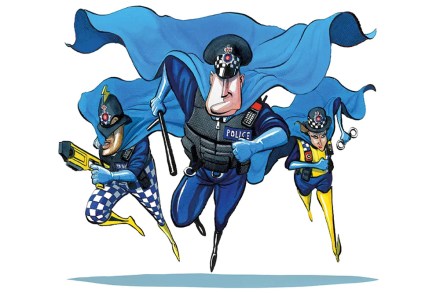
Supercops: the return of tough policing

From our UK edition

40 min listen

In this week’s cover article, The Spectator's political editor Katy Balls takes a look at the bottom-up reform that’s happening in some parts of the country, and asks whether tough policing is making a comeback. Katy joins the podcast together with Kate Green, Greater Manchester's Deputy Mayor of Crime and Policing. (00:50) Next, the war has finally gone to Moscow. Recently, a number of drone strikes have hit targets in the Russian capital. Though Ukraine hasn’t explicitly taken responsibility, in the magazine this week, Owen Matthews writes that it’s all a part of psychological warfare. Owen is the author of Overreach: The Inside Story of Putin and Russia’s War Against Ukraine and he joins the podcast.

Supercops: the return of tough policing

From our UK edition

In a few weeks’ time, police across the country will receive a new order: ‘Investigate every crime’. It may not sound like a novel concept, but over the past few years forces – including the Metropolitan Police – have largely given up on low-level crime. Austerity was seen as a reason to ignore burglaries, thefts and minor assaults if officers believed there was little chance of identifying a suspect. But now a new theory is about to be put into practice: that investigations will lead not just to more convictions, but to more deterrence.

Judge Dredd: the prescience of a 45-year-old comic strip

From our UK edition

In 1977, an enduring character was created for the pages of the IPC comic 2000 AD: Judge Dredd, lawman of the future, the most visible symbol of police procedure – a helmeted, black-clad, motorbike-riding policeman patrolling the streets of Mega-City One, a vast metropolis stretching along the eastern coast of the US, whose remit also allows him – as his honorific implies – to be an on-the-spot judge, jury and, when the occasion demands, executioner. The occasion often demands it. It is interesting that the two longest- running human cartoon characters in Great Britain represent opposite poles of the psyche. Their names both begin with D, for some reason or none. Dennis the Menace is all about anarchy; Dredd very much not so.

How DC crime spiraled out of control

A few weeks before Easter, a staffer for Republican senator Rand Paul was randomly and brutally attacked in downtown Washington, DC. The staffer, Phillip Todd, was leaving dinner with his friend when an assailant stabbed him four times in the abdomen, skull, brain and lungs. He suffered a punctured lung and potential brain bleeding. Todd was rushed to hospital, where he was operated on and ultimately survived the attack.   The man who stabbed Todd is a forty-two-year-old named Glynn Neal. Like many of DC’s violent criminals, Neal has a lengthy rap sheet. Virginians for Safe Communities, a nonprofit organization, detailed the man’s long history of criminal behavior.

washington dc crime

Listen: Emily Thornberry’s car crash interview on Sunak smear

From our UK edition

What do you do when you’re in a hole? Stop digging. Apparently Emily Thornberry didn’t get the memo. The Shadow Attorney General was wheeled out on the Easter Monday media round to defend Labour’s attack advert which claims that Rishi Sunak isn’t tough enough on criminals convicted of child sexual abuse. Thornberry did her best to sound authoritative and lawyerly but came unstuck multiple times during her seven-minute grilling on Radio 4’s Today programme. After allowing Thornberry to sound off on the importance of overhauling the sentencing guidelines on child sexual abuse, host Justin Webb asked her about Sir Keir Starmer’s own role in drawing them up.

The media is too gleeful about anonymous ‘law enforcement sources’

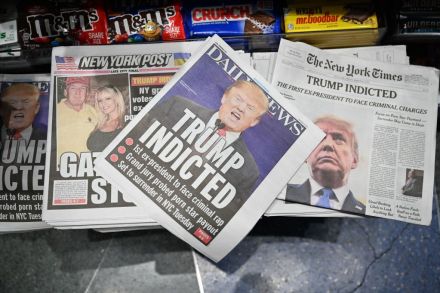
This week I hosted my colleague Amber Athey on our District podcast to talk about her first book, The Snowflakes’ Revolt: How Woke Millennials Hijacked American Media. I began by asking her about the Donald Trump indictment, news of which broke on Thursday night via the New York Times and Associated Press, before Manhattan DA Alvin Bragg’s office had announced the grand jury’s decision. The Times were regularly updating their coverage prior to Bragg’s confirmation about how four, and then five, sources with knowledge had tipped off their reporters about the decision.

media

National Park Service clears prominent DC homeless encampment

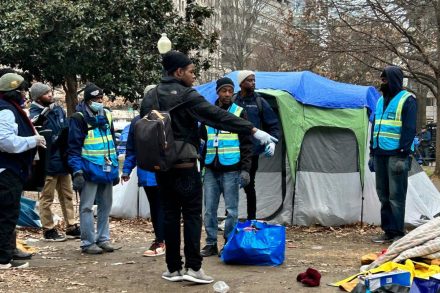
The National Park Service cleared a major homeless encampment in downtown Washington, DC on Wednesday, a move that eased local residents and infuriated activists. McPherson Square, located just blocks from the White House, has been effectively cordoned off from the rest of the public since the proliferation of the tent city during the pandemic. The Spectator was the first to report in December that the NPS would start enforcing its no camping policy on park land in the nation’s capital. Signs went up around McPherson Square last month warning the inhabitants of the tent city that they would be removed on February 15.

mcpherson square homeless

Tyre Nichols and the new black-cop white supremacy

Racism has become an unfalsifiable proposition. Such is the central take-away from the race industry’s tortured reaction to a brutal police beating in Memphis, Tennessee. Five Memphis officers responded to what was initially reported as a car driving the wrong way down a street. The officers’ tactics during the stop of driver Tyre Nichols, captured on video, were an abomination: while shouting contradictory commands, the officers immediately escalated their use of force without apparent cause. It was Nichols who tried to deescalate the chaos — a responsibility usually put on officers, not on suspects. The cops struggled without coordination to cuff him, while delivering gratuitous kicks, punches to the face and baton strikes.

tyre nichols

In defense of catcalling

Nothing says "it’s going to be a fine day" like a catcall. A short line at the coffee shop, great. No pushing and shoving to get on the subway, wonderful. But hearing that whistle when walking past a group of builders up on the scaffolding really makes me smile like nothing else in my morning routine. If I’m lucky, I even get a “looking good, darling.” It’s an act that me and my nameless builder friend have perfected. I blush, he gives me a cheeky smile, we both get on with our day. Yet in London, this morning staple of mine is about to be made punishable by up to two years in prison. Bye bye, builder friend. Late last year, the British government launched their war on ogling.

downtown philadelphia

Down with the American morality police

When, oh, when will the United States catch up with Iran? Those bearded, bomb-building, Koran-quoting clerics — we underestimate them at our peril. They know enough, the ayatollahs, to get rid of their morality police who have for decades subverted Iranian civic life, as they've reportedly done this week after protests in that country continued. The morality police in Iran were known for harassing Iranians — women especially — who were deemed insufficiently devoted to Islamic purity. Yet when the morality cops apparently killed a young women for her gall in showing too much hair, public protests erupted. Morality is one thing, persecution is another, as the ayatollahs appear to have figured out. Morality requiring visible and painful enforcement can’t be sustained.

I’m in trouble with the police

From our UK edition

There is almost nothing I like more than a running battle. As my friend Julie Burchill also says, when a really good row comes along it gives you this warm, cosy feeling inside. So it was not with disappointment that I received a noteworthy response to my column of last week. For those who were sleeping on the job (or only read Rod’s column), I made some pertinent comments about community relations in the Leicestershire area. Community relations, you may recall, have essentially broken down, with Hindu and Muslim gangs facing off in the city and some of the surrounding area.