Polarization

Democrats vexed by Trump’s success in Iran

There are serious, unanswered questions about the impact of America’s bombing of three Iranian nuclear sites. Three stand out. How much was actually destroyed? Where is the highly-enriched uranium that Iran apparently removed from the Fordow site before the bombs fell? And is America threatened by Iranian sleeper cells, perhaps hidden among the more than 700 Iranians whom the Biden administration released into the American interior after they crossed the border illegally? Nor are they the only threat. We have no idea how many terrorists are among the 2 million “got aways” who were seen on surveillance cameras crossing the border but never apprehended.  Those are serious questions about serious threats, and they deserve thoughtful, bipartisan inquiry. They won’t receive it.
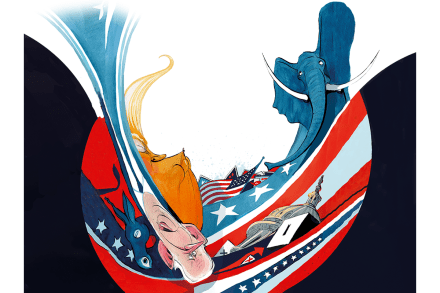
Democrats

The normie election

Since Tuesday’s shocking midterm results started trickling in, the chattering classes have scrambled to make sense of yet another election we forecast so very poorly. The media promised a red wave of epic proportions; instead, President Biden had the best midterm elections of any US president since 2002, despite his dreadful approval ratings. In the lead-up to the vote count, poll after poll found that Americans’ top issues were inflation, the economy, crime and immigration — kitchen table issues on which the Democrats have performed abysmally in recent years. Everything pointed to a very bad night for the president’s party. So why didn’t voters send a clear message to Democrats about their misplaced priorities, as we in the media were so sure they would?

normie midterms

It’s the parallel economy, stupid!

There’s a lot of rumbling about American polarization these days. Sometimes it takes the form of people advocating for a national divorce or dire warnings of a forthcoming civil war. A national divorce seems impractical and America is too fat for a civil war. Better evidence that the country is already fracturing is the talk of the “parallel economy.” We’ve come a long way from the 2016 moment of self-awareness about needing to get out of our echo chambers. By 2020 it seemed everyone wanted their own. Now we’re redecorating the walls of the echo chambers. Adding some throw pillows.

parallel

Heading west to escape liberal tyranny

As our nation navigates a “return to normalcy” in a post-Covid world, one return most workers won’t be making is to the office. And as an estimated 40.7 million American professionals plan to be working fully remotely within the next five years, expect the great political divide to widen as liberals and conservatives move farther apart, both ideologically and physically. With working from home becoming the norm, “home” for many people is changing. “Anywhere from 14 to 23 million Americans are planning to move as a result of remote work,” an Upwork.com study taken at the height of the pandemic found. “[N]ear-term migration rates may be three to four times what they normally are.” Where are workers moving to? Away from cities, for starters. A majority (52.

The monsters we become

Nietzsche would have been great at Twitter. He excelled at epigrams, which are to philosophy as the fortune-cookie motto is to Chinese takeout, and he loved to hate. Scholars divide as to whether his epigrammatic excellence came from using a typewriter — he was the earliest philosophical adopter of this technology — or because he was no good at joined-up thinking but very good at vituperating about the news. It was Nietzsche who spotted that the emerging theme of democratic society was not the reign of reason and universal brotherhood, but the ‘stupidification of the world’ and resentment. He called it ressentiment. Philosophy goes better in French, and Nietzsche had lately turned against Wagner, anti-Semitism and German nationalism.

Nietzsche

My country, right or left

A funny thing happened to me this Fourth of July and, at the risk of having every jaded member of the blue-check Twitterati respond, ‘I’ll take things that didn’t happen for $200, Alex,’ I’m going to tell the story. My aunt and uncle invited me and my husband to join them in their annual excursion to the Fourth of July celebration at the Hollywood Bowl. This has become a ritual for us and as it was the first event at the Bowl since the pandemic, everyone was in a festive mood. For the occasion, I wore American flag leggings and a headband that spelled out U-S-A. On springs. As we settled into our box, we chatted with the women drinking wine and eating tapas next to us. Standard small talk. How excited we were to be back at the Bowl. What a gorgeous night it was.

patriotism

The loyal opposition

Last week, a group of academics published a report that showed over 40 percent of Americans think violence might be justified if the other side wins the election. Both sides talk of the other ‘stealing the election’. Each side claims this is the most important election in US history. For the first time in generations, there’s a sense that the US election could prompt skirmishes, blood in the streets.‘What would the military do?’ people ask. In the world’s most powerful democracy, a nation that fetishizes its Constitution, and obsesses over its checks and balances, how did we come to this?‘Polarization’ is a word we’ve heard a great deal these last years.

belief polarization