Philip roth

Barnes & Noble and me

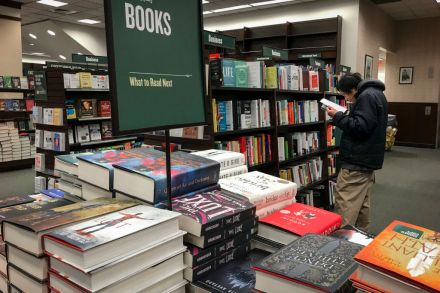
Call it a gift from the book gods: my literary coming of age coincided with the last decade when the existence of good bookstores could be taken for granted. In the mid-1990s, when I was an adolescent who read every new novel by Updike, Roth and Vonnegut, Amazon was still a novelty. Chain bookstores, such as B. Dalton and Waldenbooks, were as ubiquitous in shopping malls as food courts, cheap jewelers and eyewear vendors. And growing up in a suburb of New Orleans, I also had access to an astonishing number of antiquarian bookstores, including what is still officially my favorite bookstore: Faulkner House Books, the teeny-tiny bottom level of a townhouse in the French Quarter in which William Faulkner set down on paper what became his first novel, Soldier’s Pay.

barnes & noble

What makes a novel funny?

What makes a novel funny? As well as being too enormous a question to tackle properly here, such an enterprise would, I suspect, require so clinical an approach to reading comic fiction as to remove entirely any possible joy or amusement. As the old saying goes, deconstructing a joke is like dissecting a frog: nobody laughs, and the frog dies. However, the question came to me again recently, as I reread John Kennedy Toole’s A Confederacy of Dunces. I howled with laughter from the initial farcical scene outside a department store, through Ignatius J.

funny novel

Has the American novel abandoned God?

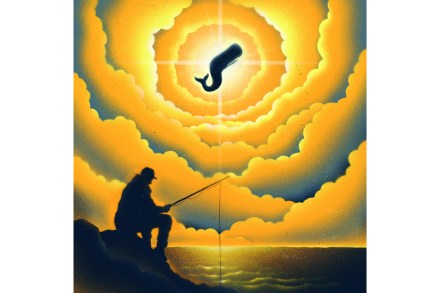
I have always thought “Call me Ishmael” to be a rather camp introduction to a novel. Given the line’s conspiratorial intimacy, I have long imagined it whispered by a drag queen in a dive bar at 3 a.m. This, however, is the fault of my own unseriousness. The resonance of the name Ishmael — Abraham’s illegitimate son by Hagar who is destined to wander the desert — remains the opening example of one of the clearest, cleverest and most consistent of themes in Herman Melville’s magnum opus Moby-Dick, namely, the quest for God. Religion runs through Moby-Dick. We might almost say that the Bible haunts it. There are the names, mostly of Biblical characters, and even the direct invocation of prophets: Ezekiel, Elijah and, of course, the ur-whale wrestler, Jonah.

God

Hilary Mantel — a death before her time

When the Queen died a fortnight ago, it was widely speculated that the perfect writer to describe both her death and its aftermath was Hilary Mantel, but now that will never be. Mantel died from a stroke yesterday at the age of 70, leaving behind a unique legacy in transatlantic literature not merely as someone whose weighty novels about royalty in the Tudor era have sold millions, but as an acute chronicler of our own time, too. Not for nothing is her most controversial short story, The Assassination of Margaret Thatcher, a subversive account of what might have happened if a woman she felt "boiling detestation" for had been killed in 1983.

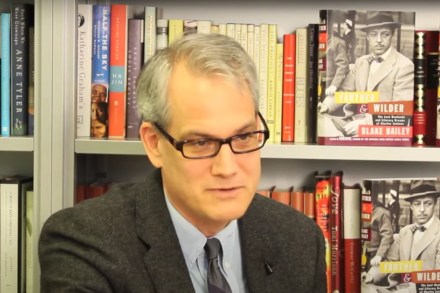
Blake Bailey deserves to be heard one more time

At the beginning of 2021, author Blake Bailey might have been forgiven for thinking that his literary career was not merely assured but stellar. He had gathered significant accolades for his writing, including a Guggenheim Fellowship and the National Books Critics Circle Award, and he was a Pulitzer Prize finalist. He had specialized in writing about heavy-drinking Great American Novelists, including the perennially underrated Richard Yates, John Cheever and The Lost Weekend’s Charles Jackson. His most recent subject was the elusive Philip Roth, a man whose literary brilliance was matched by his checkered reputation both on and off the page. Eighteen months later, matters have changed beyond recognition.

Read Ray Bradbury before he’s canceled

I was 14 or 15 when I first read Ray Bradbury, which is not a bad age to enjoy the man fully. It was the short story ‘Boys! Raise Giant Mushrooms in Your Cellar’, in which a lad called Tom does just that and it doesn’t end terribly well. Superficially, it is a silly story, but what hooked me from the outset was the vague yet pervasive sense of unease running throughout this minor small-town saga, disturbing the comfortable ennui of family life. Nothing spelled out — just a deepening disquiet, the common thread in all of Bradbury’s finest little vignettes. Back then, in the 1950s, the Cold War and the possibility of nuclear annihilation were hovering in the background, just beyond the edge of our eyesight, which perhaps explains the author’s state of mind.

bradbury

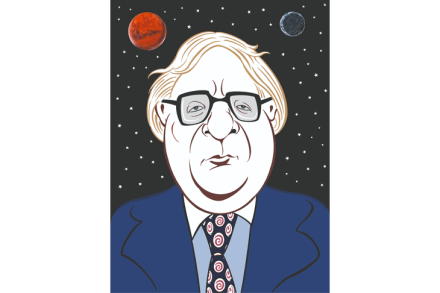
The plot against Philip Roth

Hard to avoid the suspicion the latest clamor for Philip Roth to be canceled isn’t just a marketing gimmick by the publishers of the great man’s latest biography. #MeToo repackaged as a means to shift product, in other words. For what could we possibly now have learned about the author, just three years after his death, that would cause a meaningful reappraisal of his position — with Saul Bellow and Don DeLillo — at the pinnacle of modern literature? That he was very sexy? Is that it? ‘God, I’m fond of adultery,' he is said to have said in Blake Bailey’s Philip Roth: The Biography, apparently while prowling London on the hunt for Chinese prostitutes. Pass the smelling salts.

philip roth