Peter bogdanovich

Buster’s land stand

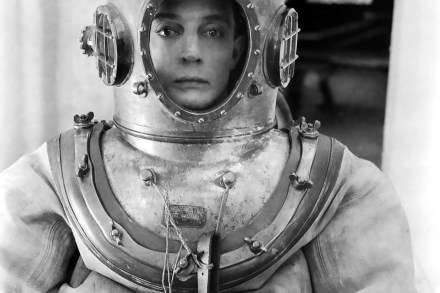
When Shakespeare wrote that “some men are born great, some achieve greatness and some have greatness thrust upon them,” the Bard could not have been thinking of Buster Keaton, who was born nearly three centuries after his death. Yet the idea expressed in that famous line from Twelfth Night — that some men guide their fate while others are controlled by it — carries a curious resonance for fans of the legendary silent performer known for his notably impassive, even indifferent comic persona in masterpieces including The Navigator (1924) and The General (1926). If ever there was a man on whom life, if not greatness, was thrust, it was the one they called the “Great Stone Face.
keaton

The director that everyone loved to hate: David Thomson interviews Peter Bogdanovich

From our UK edition

Peter Bogdanovich’s new documentary about Buster Keaton, The Great Buster, is a match made in movie heaven. I can’t think of two men more devoted to making motion pictures — huge successes in their day — more acquainted with the merciless climate of Hollywood, or more aware that they were as instrumental in their own downfall as in their glory. ‘Buster said he made the great mistake of his life in 1928,’ says Bogdanovich. ‘He had done these masterpieces in the 1920s — Steamboat Bill Jr, Sherlock Jr, The Navigator, The General — and done them the way he wanted with his own production unit... It couldn’t get any better. But then [he was] told to sign with MGM. And Buster was never the same again.