Pat Buchanan

What would Buckley do?

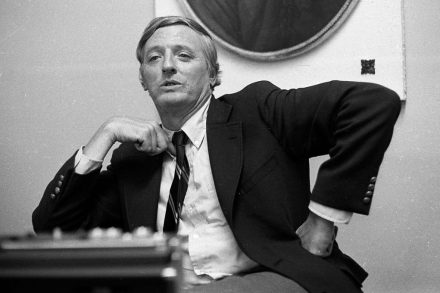
When Sam Tanenhaus’s monumental biography Buckley was published in June, I began a review by noting that William F. Buckley Jr.’s memory is as ill-served by some of his admirers as it is by his critics. The two have in fact largely converged on a single characterization of National Review’s founder: Buckley as the patron saint of purges, who excommunicated anti-Semites and conspiracists (as one side emphasizes) or antiwar dissenters and populists (as the other sees it) from the conservative movement.
william f. buckley jr

The sinister rise of Churchill revisionism

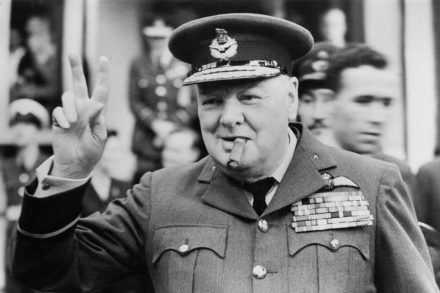
Winston Churchill is one of Britain’s enduring symbols. His relentless drive, deep conviction and steadfast leadership means that he remains admired by millions around the globe. Yet for years, the political mainstream has been compelled to defend his memory from spurious attacks from the left, such as the British politician John McDonnell calling him a “villain.” Depressingly that threat – and the same pernicious desire to denigrate one of the West’s greatest heroes – can now be found on the right. Spawned from a sinister fringe of the ultra-MAGA movement, these views have been propagated to millions. Tucker Carlson hosted the pseudo-historian Darryl Cooper on his podcast in an episode that has attracted over 33 million downloads.

winston churchill

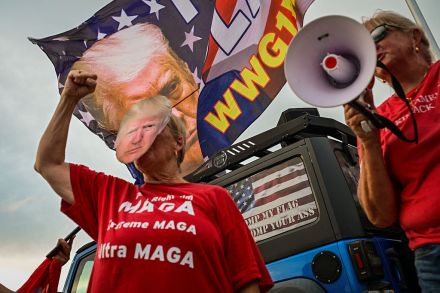
MAGA is America’s third party

Gearing up to launch his new "America Party," Elon Musk now speaks of a GOP-Democratic duopoly that has the country in its grip. But this system died ten years ago at the hands of Donald Trump: America's first third party president.  With a small band of misfit toys drawn from the world of Manhattan real estate Mr. Trump invaded an old and established party, replacing it with his own ideas and – in true cuckoo fashion – his own children. There is almost no intellectual continuity between the faction he now leads and the pre-2015 Republicans beyond a generic commitment to free markets and to law and order.

Third party

Tariff haters don’t live in the Rust Belt

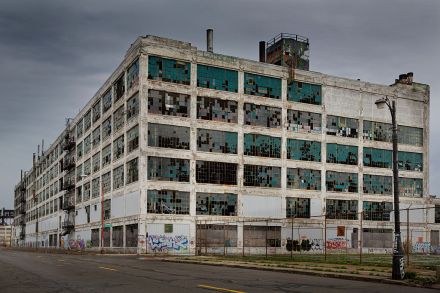
There is a vacant lot at the edge of downtown Philipsburg, Pennsylvania, my hometown. Three years ago, a handsome, sturdy brick factory building stood in that lot, albeit most of the windows were broken, as it had been abandoned for years. After it closed, the building became a favorite hangout for ne’er-do-wells, whose act of arson forced its recent demolition. For decades, though, the clothing factory employed thousands of people and made downtown hum, as workers crowded the restaurants and took care of errands on their lunchbreaks. They – along with the hundreds of people employed by a cigar plant on the outskirts of town – also bought houses and rented properties here and supported locally owned pharmacies, barbers, hardware stores, grocery stores, and the hospital.

The rise of the popcons

The Republican Party has to come to grips with populism. Donald Trump’s commanding lead in the race for the 2024 presidential nomination makes that clear, as does the fact that the next-most popular candidate, Ron DeSantis, also has a populist streak. In fact, the GOP’s base has subscribed to one flavor of populism or another since at least as far back as the start of the Cold War. In the 1950s, Senator Joseph McCarthy’s red-hunting had a pronounced class dimension — elite officials in “striped pants” were a frequent target. By the end of the 1960s, Richard Nixon was appealing to the “silent majority” against a radical campus counterculture. The Moral Majority and other religious right groups of the 1980s and 1990s exhibited a form of Christian populism.

populism

How Pat Buchanan redefined the twenty-first century

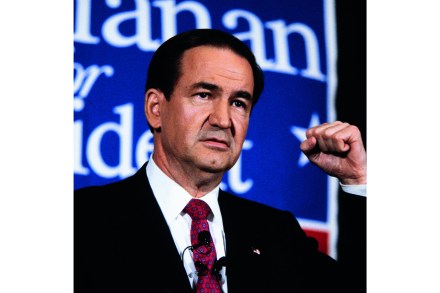
Pat Buchanan recently ended his syndicated column, essentially completing his retirement from public life. Yet it’s hard to think of any writer in his or her prime today whose ideas enjoy the currency that Buchanan’s now do. From trade and foreign policy to immigration and the “culture war” — a term that Buchanan introduced into popular politics — views that once set Buchanan apart from his fellow conservatives are now redefining the right. Buchanan was not the only conservative skeptic of free trade or foreign interventionism in the 1990s, but he was the only one that most newspaper-reading or cable news-watching voters knew about. At the zenith of American power and economic globalization, Buchanan defined the opposition to the spirit of the age.

pat buchanan

Pat Buchanan and thirty years of culture wars

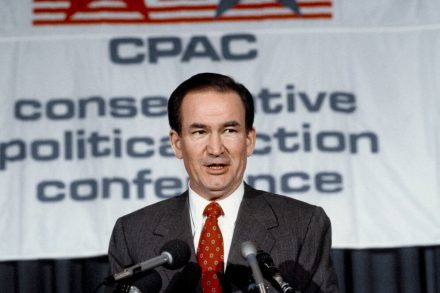
It was a relatively cool 85 degrees in Houston on the August evening thirty years ago when Republicans gathered at the Astrodome to renominate George H.W. Bush for the 1992 presidential election. The opening session’s speakers included Senator John McCain, Stanford professor Condoleezza Rice, and re-election campaign co-chairman Ken Lay, later to gain fame as a major figure in the Enron scandals. But the speech that would be the most memorable by far was delivered by a television commentator, syndicated columnist and former Richard Nixon hatchet man — the fifty-four-year-old Irish Catholic Pat Buchanan, who delivered what came to be known as “The Culture War Speech.

culture

Ross Perot was the populist who betrayed populism

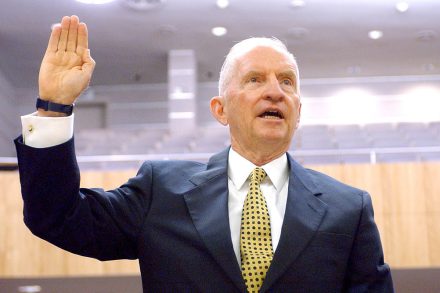
Ross Perot, who has just died at age 89, is wrongly remembered as the man who cost George H.W. Bush his re-election in 1992. He should be remembered as the man who cost his own populist ideas their chance to remake American politics 20 years before the election of Donald Trump. Perot showed the promise of populism — then betrayed it, bottling it up for the next two decades. As far as Perot was concerned, if populism could win without him, it shouldn’t win at all. And so he made it as difficult as possible for anyone else — Jesse Ventura, Pat Buchanan, and yes, even Donald Trump — to build on what Perot achieved in 1992. And maybe Perot did cost Bush I his re-election, just not in the way most people think.

ross perot