Paradise lost

The Spectator’s 2024 Holiday Gift Guide

Matt McDonald, managing editor As we grow older, the idea is that we become wiser. I’ve decided to buck that trend by making progressively dumber decisions that put me further from my goals of attaining professional success, home ownership, emotional stability and nirvana. The most recent of these is increasing the distances I’ve been running; I will be attempting a half-marathon back home on the south coast of England the week before Christmas, with a view to running my first marathon in Berlin next fall. It’s unclear why we as a species decided to adopt the practice of doing marathons a couple of millennia ago — the first man to do it did die at the end, after all.


gift

The important business of idle loafing

From our UK edition

In our godless, post-industrial, hyper-competitive world, rest is seen merely as recuperation: it’s when we man-machines ‘recharge our batteries’, as the cliché goes, before dashing back to the factory or work-station. It’s a negative concept. You rest for a reason, which is to avoid burnout. All you should really do to be happy is read light novels or self-help books, advises Montaigne But as this charming and subtle meditation on the subject from a grand French historian shows, rest used to be far more than just taking time off. It is a religious concept. Take the rest enjoyed by Adam and Eve in Milton’s Paradise Lost.

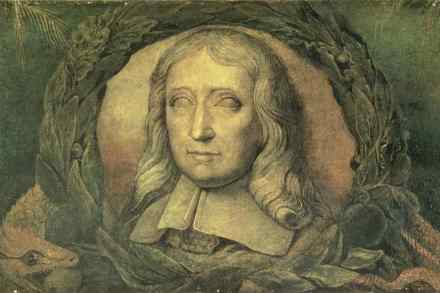
Paradise and paradox: an inner pilgrimage into John Milton

From our UK edition

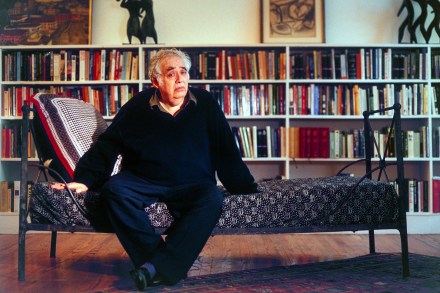
When E. Nesbit published Wet Magic in 1913 (a charming novel in which the children encounter a mermaid), she took it for granted that her young readers would immediately pick up the references to ‘Sabrina Fair’ from Milton’s Comus. Phrases from Milton were part of the language — ‘Tomorrow to fresh woods’; ‘Better to reign in hell than serve in heaven’. Milton was central to the shared experience of life itself for those who spoke English. Throughout the 18th and 19th centuries Milton was inside every literate anglophone head. If Harold Bloom is to be believed, which I think he is in this respect, the English romantic movement grew out of young poets reacting to, against and with Milton.

A podcast about the literary canon that actually deepens your knowledge (sort of)

From our UK edition

While most of life’s pleasures can be shared, reading is lonely. It’s more than possible for six friends to enjoy an exquisite meal, a bottle of wine and then settle down for a four- or five-hour orgy. Food, drink, sex: these things are better shared. But if, as dawn approached, someone cracked open Chaucer’s ‘Parliament of Fowls’ and intimated that it was time to really get down to brass tacks, it could only spoil the mood. Reading is lonely because so much of the reading that matters is hard. The books that change the world and shake the culture are rarely pure pleasure. The heaven sections of Paradise Lost. The war bits of War and Peace. The history bits embedded within the war bits of War and Peace.

Trump is Satan

Donald Trump is Satan. The Satan in question is perhaps the greatest literary character in the finest epic poem in the English language, John Milton’s Paradise Lost. That makes Washington Republicans the other fallen angels. In 2016, Republicans made a deal with the devil. Like Dr Faustus, they sold their souls for power. Now they stifle their consciences, never speak ill of President Trump, hug him closely, fearing the wrath of his base. The same Lindsey Graham who in 2016 wrote, ‘If we nominate Trump, we will get destroyed … and we will deserve it,’ recently said, ‘To every Republican, if you don’t stand behind this president, we’re not going to stand behind you.

donald trump satan