Paintings

‘We’re all members of the Stasi now’: Irvine Welsh interviewed

From our UK edition

The history of the word ‘offend’, from the Latin offendere, to hit, attack, injure, is a revealing one. From its starting point in physical violence to transgression against God in the Middle Ages, today ‘offence’, understood as displeasure or upset, is seemingly everywhere. The word may no longer refer to direct physical harm, but culture of all kinds, from artworks to comedy to literature to music, seems to have an upsetting quality to some. Words, we are told, are ‘violence’, images are hurtful, differing opinions are dangerous and must be suppressed. Even silence is ‘violence’, as this year’s Black Lives Matter protests reminded us.
One of the greatest of all outsider artists: Alfred Wallis at Kettle’s Yard reviewed

From our UK edition

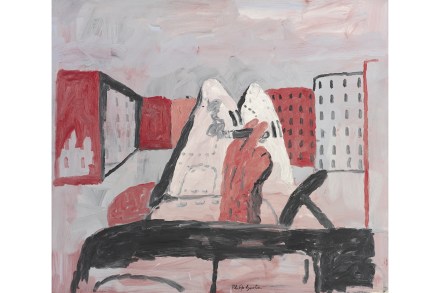
Alfred Wallis (1855-1942) should be an inspiration to all late starters. It was not until he had passed the age of 70 that, after his wife of many years had died and having previously worked as a sailor, fisherman and rag and bone merchant, he decided to take up art. ‘Aw! I dono how to pass away time,’ he explained to a shopkeeper in his native town of St Ives. ‘I think I’ll do a bit a paintin’ — think I’ll draw a bit.’ Three years later, his work was spotted by the leading British modernists Ben Nicholson and Christopher Wood. By and by, Wallis’s pictures were being exhibited in London, and Nicholson presented one to the Museum of Modern Art, New York.

We’re wrong to think the impressionists were chocolate boxy

From our UK edition

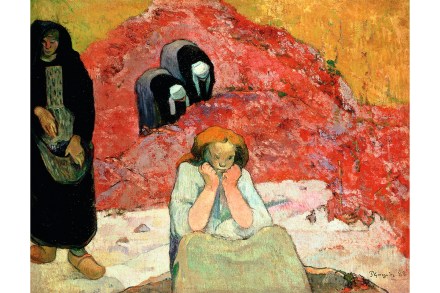
One Sunday evening in the autumn of 1888 Vincent van Gogh and Paul Gauguin went for a walk. They headed out of Arles into the countryside and when they looked back towards town they saw a sunset so splendid that each was inspired to paint a masterpiece. One of these, Gauguin’s painting bearing the timely title ‘Human Misery’, is among the star exhibits in a new exhibition at the Royal Academy. All the works in this show come from a delightful small museum in the northern suburbs of Copenhagen, housed in the early 20th-century mansion from which it takes its name, Ordrupgaard. This was the dwelling of Wilhelm Hansen (1868–1936), a mover-and-shaker in the Danish life insurance business and an avid collector of what was then modern art.

The guileful, soulful art of Khadija Saye

From our UK edition

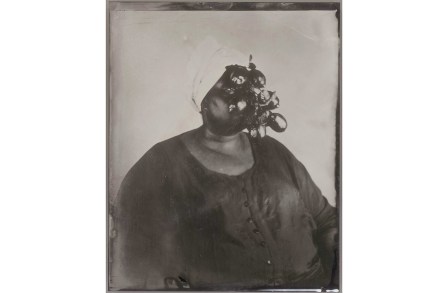
Gwyneth Paltrow has a new neighbour. On the same block in Notting Hill as Gwynie’s Goop store, with its This Smells Like My Vagina scented candles and must-have child-calming essential oil sprays, a shopfront has been taken over to display a poignant series of self-portraits by a rather different woman. Khadija Saye died three summers ago with her mother in the Grenfell Tower fire. Much of the 24-year-old artist’s work was destroyed in the blaze, including three tintype images from a series of nine called ‘in this space we breathe’. The other six were displayed that summer in the Diaspora Pavilion at the Venice Biennale in Saye’s first major international exhibition.

Are there ways in which virtual exhibitions are better than real ones?

From our UK edition

Six months ago I published a book about travelling to look at works of art. One such journey involved a round trip of about 6,000 miles to contemplate minimalist sculptures in the Texan desert. But the point wasn’t so much the distance as the importance of standing physically in front of the works themselves. Seeing the actual thing, I argued, was fundamentally different from looking at it in a book or on a screen. Nowadays, of course, unless you live within walking distance of a notable sculpture, that’s really all there is. A week ago my inbox was flooded with messages announcing that the art institutions of the world were closing until further notice. A few days later there was another deluge of announcements, but this time it was online exhibitions.

Every bit as well observed as Rembrandt – and often funnier: Nicolaes Maes reviewed

From our UK edition

Nicolaes Maes (1634–93) relished the simple moments of daily life during the Dutch Golden Age. A woman peeling parsnips over a bowl; a young girl threading a needle; a peasant lugging pails of milk to sell on the doorstep. His paintings are sensitive, not showy, and, as you would expect from a pupil of Rembrandt, rendered with the most exquisite use of light. Maes was apprenticed to the Dutch master for about five years in his teens. He returned to Amsterdam later in life, but worked for two decades in his hometown of Dordrecht, 11 miles southeast of Rotterdam. Several of his paintings, including ‘The Apostle Thomas’ and ‘Christ Blessing the Children’, have wrongly been attributed to Rembrandt over the years.