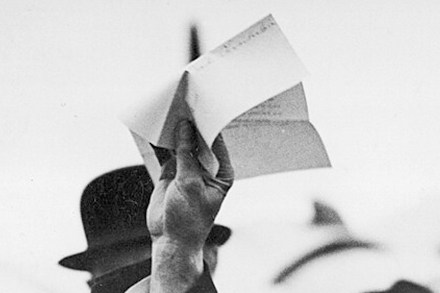
Why ‘peace in our time’ was Neville Chamberlain’s only option
From our UK edition
This is a book not so much about the Oxford Union debate of February 1933, in which a majority of the young men present voted that they would ‘in no circumstances’ fight for King and country, as about subsequent events. Part of that story concerns what happened in the 1930s to bring about the war with Hitler; another part is what became of some of the people who either spoke in the debate or simply attended and voted. The joy of writing about the jeunesse dorée of the 1930s is that they would become famous later on, so have some brand recognition for the reader. It is all too easy to see how silly young fools turned into silly old ones. David Vaiani takes us through the debate itself, not failing to convey some of the preposterous self-importance of those who took part.